
Tis the season for college bowl-game dropouts, where spoiled programs with paid-up players decide commitment is negotiable and postseason obligations are just something else to toss aside for the new model of flatscreen smart TV.
It makes you wonder if they’re giving that same kind of effort in October, and it is completely at odds of this supposed movement of making America great — again or otherwise. Do they actually enjoy the game? Is it too much work? Or is your sense of entitlement the only part of the program that never takes off a play?
Oh, well. Whatever, dude. (Insert one of those hurling emojis here.)
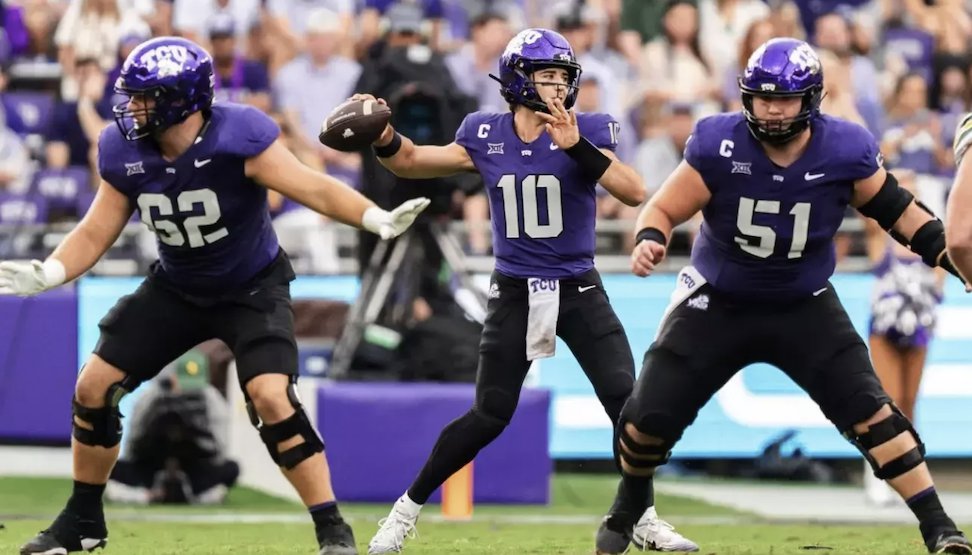
TCU and USC, on the other hand, have chosen to play and fulfill a responsibility to the game, the fans, and this new revenue sharing model. If you’re going to share revenue, you’ve got to make it. (Or do these bowl games cost colleges more money than is made?)
And how exactly would one in good conscience turn down the Alamo Bowl in the Alamo City, where Travis, Crockett, Bowie, and the boys showed up to play despite concerns about facing a superior opponent and their welfare?
So, the Valero Alamo Bowl it is — 8-4 TCU against 9-3 USC, the 16th-ranked team in the country, at 8 p.m. Dec. 30 at the Alamodome in San Antonio.
“If you look at the history of this bowl, there’s a lot of eyes on this game,” said TCU coach Sonny Dykes said. “It’s in a great time slot, the day before New Year’s Eve, I would expect the game to be widely viewed, which obviously helps in recruiting.”
Last year’s Alamo Bowl delivered big on both Coach Prime drama and reach. The broadcast pulled in a record eight million viewers on ABC, the best for any bowl outside the CFP or New Year’s Six since the 2020 Citrus Bowl.
Meanwhile, 64,261 fans packed the Alamodome — the bowl’s 12th sellout in 32 years — boosting its CFP-era average attendance to 60,530, excluding the COVID-restricted season. They watched BYU defeat Colorado 36-14.
We still don’t know if all the players will show up. Many opt out individually to protect against injury or effort.
All things being equal, the game features an intriguing matchup of two coaches who worked together at Texas Tech under Mike Leach. In fact, USC coach Lincoln Riley was the play caller in Texas Tech’s victory over Michigan State in the Alamo Bowl in 2009, the season in which Leach was fired for sending Craig James’ son to the concussion closet.
Dykes had already moved on to the position of offensive coordinator at Arizona.
Moreover, Riley’s brother, Garrett, was the offensive coordinator at TCU for one season (2022) before taking the same job at Clemson.
“It’ll be great to see my friend Sonny Dykes on the other sideline,” Riley said. “He’s somebody I have a long history with and has been a great friend. He’s a tremendous coach, his track record speaks for itself, and he’s done an awesome job at TCU.”
Said Dykes: “Lincoln and I go way back. He was one of those guys you could tell early on in his career that he was going to be really successful.”
USC is central to the story of TCU’s football resurgence in the late 1990s under coach Dennis Franchione and Gary Patterson. It all began with a 28-19 victory over the Trojans in the Sun Bowl in El Paso. That sparked something. TCU went on to win four conference championships in the next seven seasons and double-digit win totals under Franchione and Patterson in nine of the next 13 seasons. The Frogs are 3-2 all-time against USC and have not met since that Sun Bowl game.
TCU, of course, has a great history in San Antonio.
This year’s game will mark the 10th anniversary of one of the most improbable comebacks in college football history. TCU rallied from a 31-0 halftime deficit to beat Oregon 47-41.
Backup quarterback Bram Kohlhausen, playing for a suspended Trevone Boykin, earned offensive MVP honors as he threw for 351 yards and accounted for four touchdowns including the triple-overtime winner, a rush around the right end.
In the 2017 game, the No. 13 Frogs defeated No. 15 Stanford 39-37 tha featured 22 fourth-quarter points between the two schools. Linebacker Travin Howard repeated as defensive MVP, and Cole Bunce’s 33-yard field goal with 3:07 remaining proved to be the game winner.