
Note: the following is part of Glasstire’s series of short videos, Five-Minute Tours, for which commercial galleries, museums, nonprofits, and artist-run spaces across the state of Texas send us video walk-throughs of their current exhibitions. Let’s get your show in front of an audience.
See other Five-Minute Tours here.
Tricia Earl: What Cannot Be Erased at Landmark Arts Gallery, School of Art, Texas Tech University, Lubbock. Dates: November 17 – December 10, 2025.
Via the gallery:
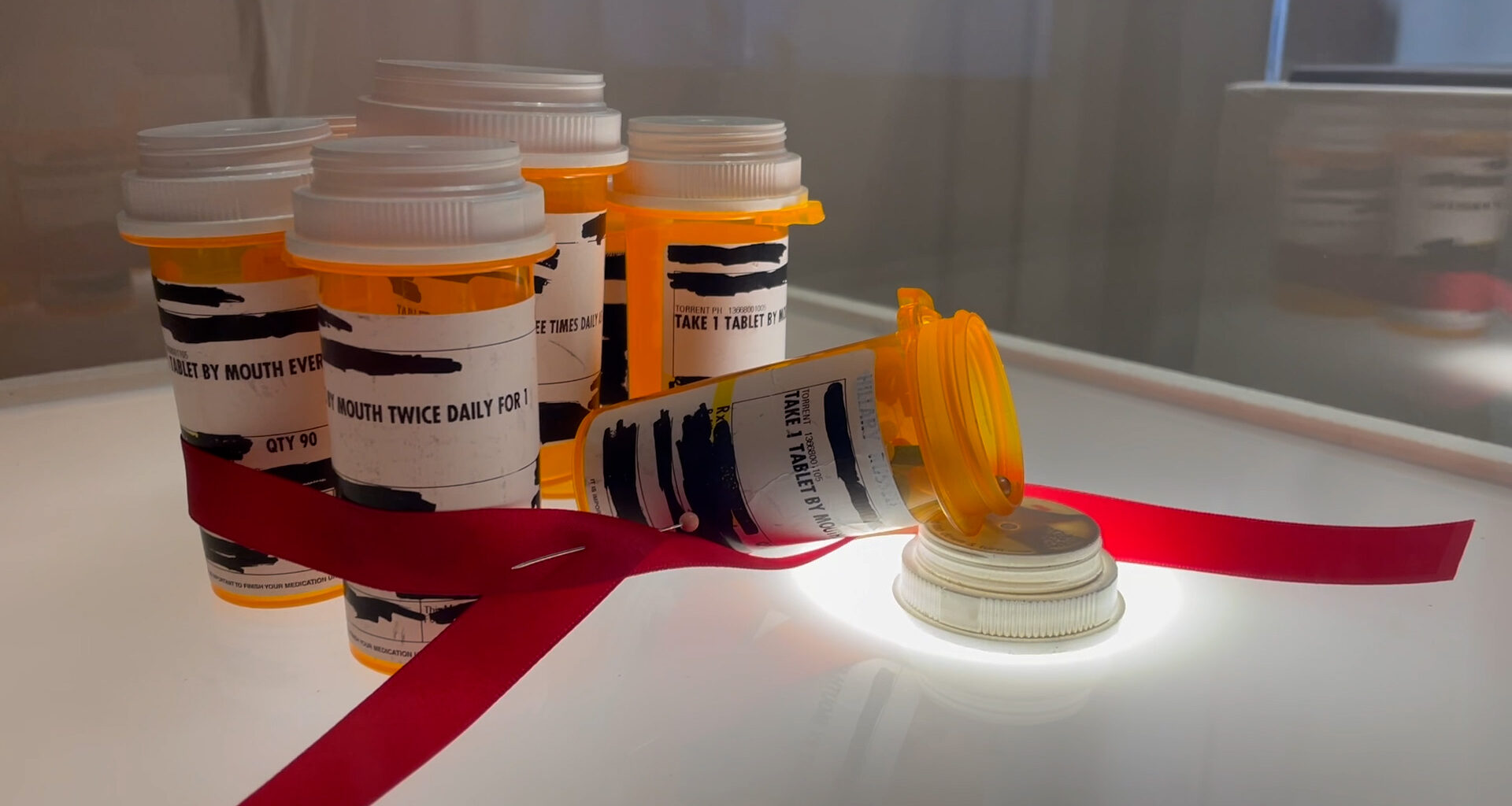
“What Cannot Be Erased is a mixed-media installation by artist Tricia Earl. This exhibition is a poignant exploration of memory, grief, and endurance, assembled in profound dialogue with the legacy of Day Without Art. Drawing on a richly layered aesthetic, the work employs found objects, archival photographs, fabric, and video to evoke the fragmented yet persistent nature of collective memory, particularly as it relates to the early years of the AIDS crisis and the cultural response that followed. The installation resists linear narratives, instead inviting viewers to navigate a terrain of loss — spaces where absence is both palpable and charged with meaning.
This collection does more than memorialize; it insists on remembering as an active, ongoing process. Echoing the spirit of Day Without Art, first observed in 1989 to mourn artists lost to AIDS, the work functions as both remembrance and reanimation. Through disrupted timelines and layered materials, this installation reclaims the ephemeral, honoring lives and stories. On December 1 selected artworks were shrouded in black cloth, transforming visible works into haunting absences, echoing the void left by the artists lost to AIDS. By obscuring specific works, with black cloth, the installation confronts viewers with the visceral absence of creativity, life, and voice inviting contemplation on the devastating toll of the epidemic and the societal neglect that accompanied it. The installation becomes a space of quiet struggle, a living archive that challenges viewers to witness the lasting impact of HIV/AIDS while recognizing the transformative power of art as witness and as action. The work reminds us that memory is not static, but a site of struggle and survival, continually reconstructed through community, ritual, and creative intervention.”