
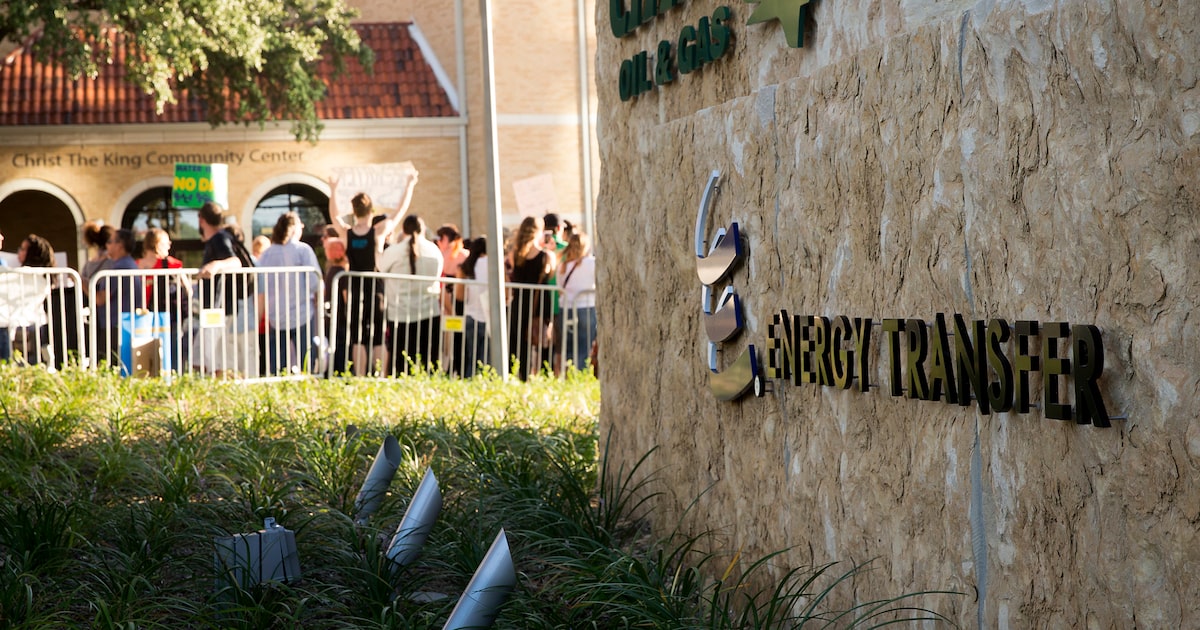
Dallas-based Energy Transfer was accused by Greenpeace USA of a “years-long pattern of pollution and corporate abuse.”
Greenpeace published a nearly 50-page report Wednesday tracking instances of spills, explosions and pollution, citing incidents across the country.
Energy Transfer, one of the largest midstream oil and gas companies in the U.S., won a $660 million verdict against Greenpeace earlier this year. A North Dakota jury found the environmental group liable for defamation and other claims.
Energy Transfer refuted Greenpeace’s report.
Breaking News
“We are aware of the report, which recycles and misconstrues publicly available information in an attempt by Greenpeace to manufacture headlines,” Energy Transfer said in an emailed statement. “Energy Transfer is a leading energy infrastructure company that places the safety of its employees, the environment, and the communities in which we live and work as its highest priority.”
Energy Transfer has self-reported its pipelines having nearly 800 separate incidents since 2010, according to the report, including spilling enough hazardous liquids to fill, by rough estimate, almost six Olympic-sized swimming pools. Greenpeace also said one year of air pollution from its operations in Texas is associated with an estimated 16 to 22 premature deaths, plus hundreds of millions in health-related costs.
“There’s something wrong with a system that too often lets polluters off the hook but penalizes those who call out harm,” said Tim Donaghy, Greenpeace USA Research Director and lead author of the report. “Energy Transfer continuously touts their safety record and commitments to environmental sustainability even as our research reveals the company’s projects leave a trail of explosions, water contamination, and toxic air pollution in their wake.”
Related

Two of the major incidents cited in the report occurred in Texas.
The first was in September 2024 when a pipeline carrying natural gas liquids exploded in a residential neighborhood near Houston after a vehicle hit a valve, reportedly causing a three-day fire that damaged homes and forced a shelter-in-place order.

Residents watch a pipeline fire burning in La Porte from South Meadow Drive and East Meadow Drive on Monday, Sept. 16, 2024, in Deer Park. (Yi-Chin Lee/Houston Chronicle via AP)
Yi-Chin Lee / AP
The Houston Landing reported that in the five years leading up to this explosion, Deer Park and other pipelines operated by Energy Transfer and its affiliates had been damaged by vehicle collisions.
The second incident was in May when a 16-inch crude oil transmission line in Arlington ruptured, dumping more than 2,600 barrels of oil. Nearby Village Creek Water Treatment Plant was contaminated and a popular bird-watching site, Village Creek Drying Beds in Fort Worth, closed.
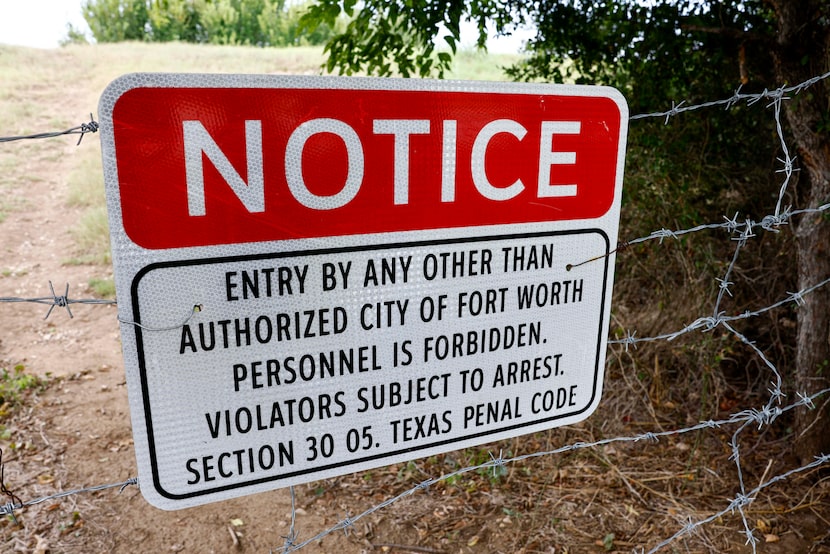
A sign and barbed wire fence blocks an entrance to the Village Creek Drying Beds near River Legacy Park, Tuesday, Aug. 26, 2025, in Fort Worth. The Village Creek Drying Beds is a popular spot for birdwatchers with more than 300 different species of birds seen in the area.
Elías Valverde II / Staff Photographer
According to the report, which cites public documents and other information available, Energy Transfer, on average, has a pipeline spill every nine days. It also said the company has been fined more than $100 million over the last three decades for multiple environmental violations.
This reporting is part of the Future of North Texas, a community-funded journalism initiative supported by the Commit Partnership, Communities Foundation of Texas, The Dallas Foundation, the Dallas Mavericks, the Dallas Regional Chamber, Deedie Rose, Lisa and Charles Siegel, the McCune-Losinger Family Fund, The Meadows Foundation, the Perot Foundation, the United Way of Metropolitan Dallas and the University of Texas at Dallas. The News retains full editorial control of this coverage.