
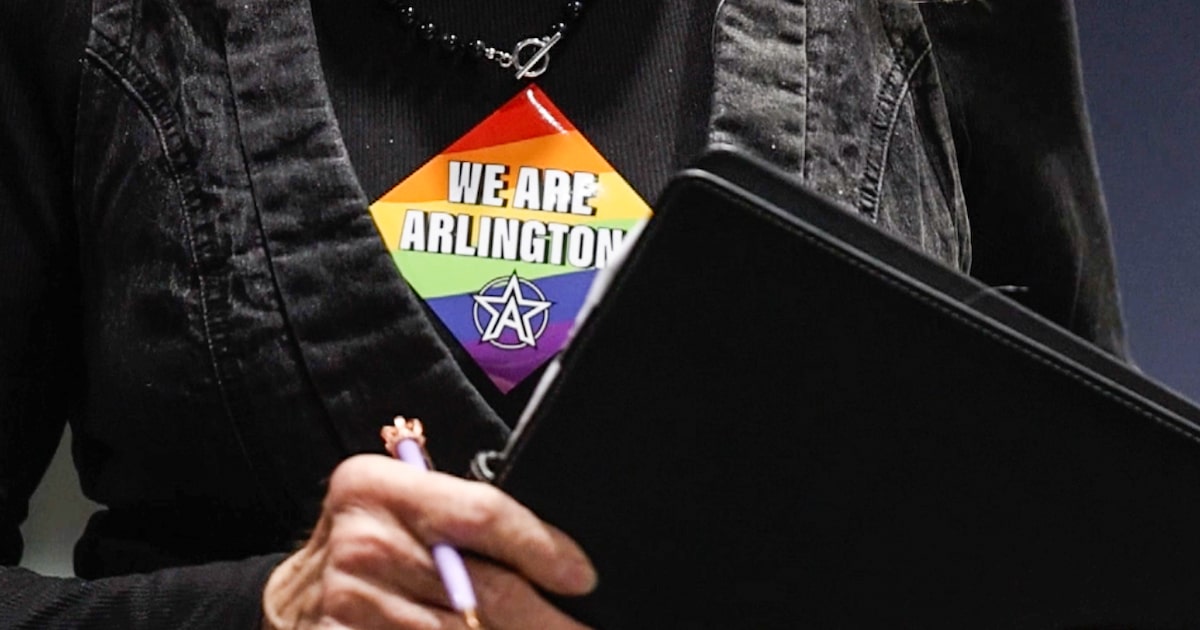
Arlington City Council narrowly rejected a plan this week to reinstate its anti-discrimination ordinance.
The 5-4 vote came after months of debate, two delayed votes and impassioned pleas from residents urging the city to retain protections for people who live and work in and visit the city.
Council members temporarily suspended the ordinance in September over fears that Arlington risked losing more than $60 million in federal funding if it did not amend the ordinance. President Donald Trump’s pledge to withhold federal funding from cities with diversity, equity and inclusion, or DEI, programs sowed widespread confusion among cities.
Mayor Jim Ross, who voted to reinstate the anti-discrimination ordinance, said the council will revisit the issue in coming weeks.
Breaking News
Here’s what to know about the issue.
What did the anti-discrimination ordinance do?
Council members in 2021 passed an ordinance prohibiting discrimination based on sexual orientation and gender identity for housing, employment and public services.
The provisions also extended employment and public service protection based on race, religion, national origin, sex and disability. Housing discrimination against those groups was already prohibited.
That meant an employer, public service business or housing entity could not discriminate against people for sexual orientation or gender identity.
Doing so could have resulted in a lawsuit filed in the name of the city. If the matter could not be resolved with a recommended conciliation process, the complaint would be turned over to a state or federal agency with jurisdiction.
What does this mean for Arlington?
For now, the city is not handling complaints from people who live, work or visit Arlington who say they faced discrimination in housing, employment or other public accommodations.
What about federal or Texas state law?
Federal law protects Americans from being discriminated against in public places based on disability, race, color, religion or national origin. It does not explicitly provide nondiscrimination protections based on sexual orientation or gender identity, though. The Supreme Court ruled in 2020 that LGBTQ individuals cannot be fired based on sexual orientation.
More than 20 states have policies banning discrimination based on sexual orientation and gender identity. Texas is not among them.