
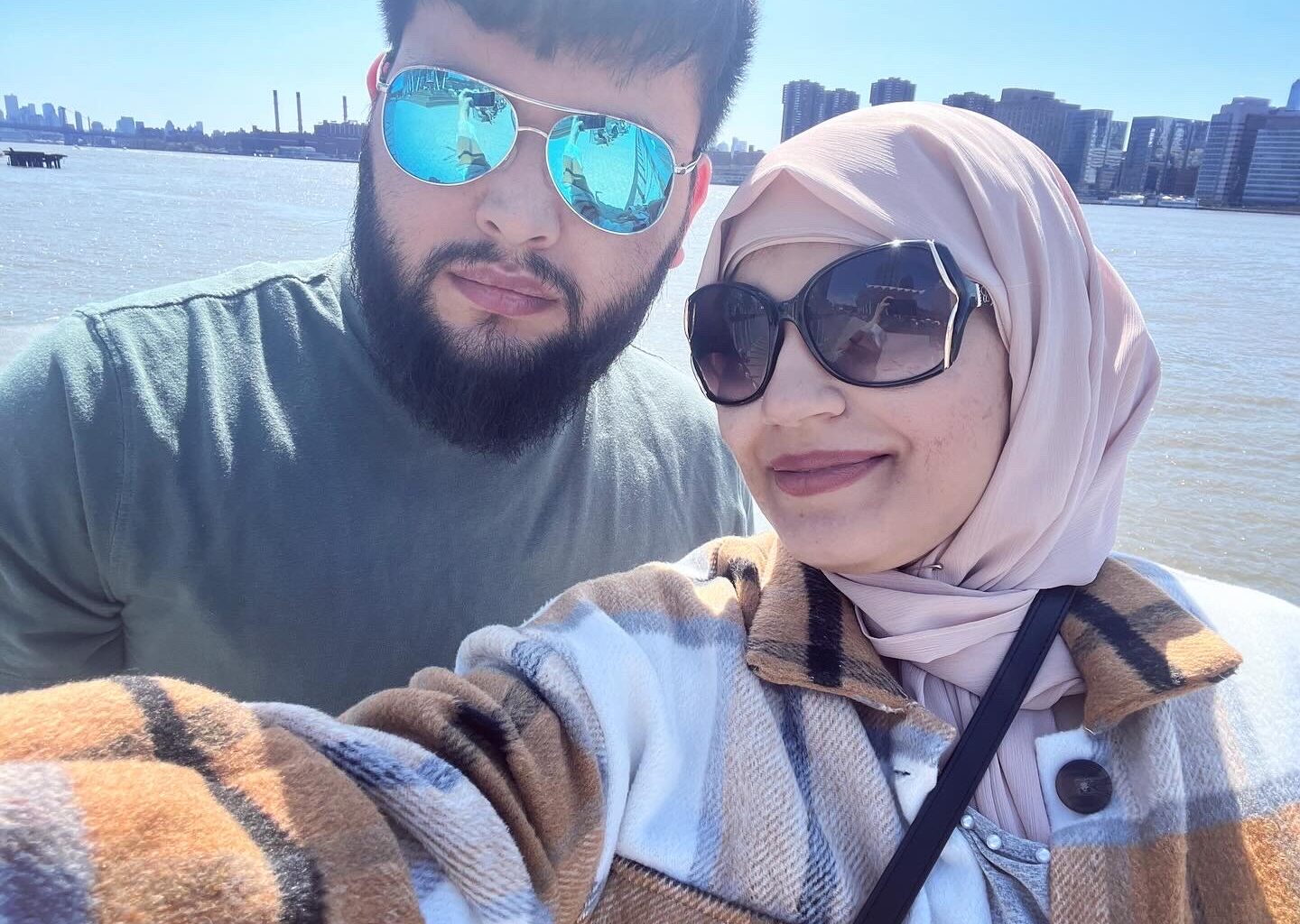
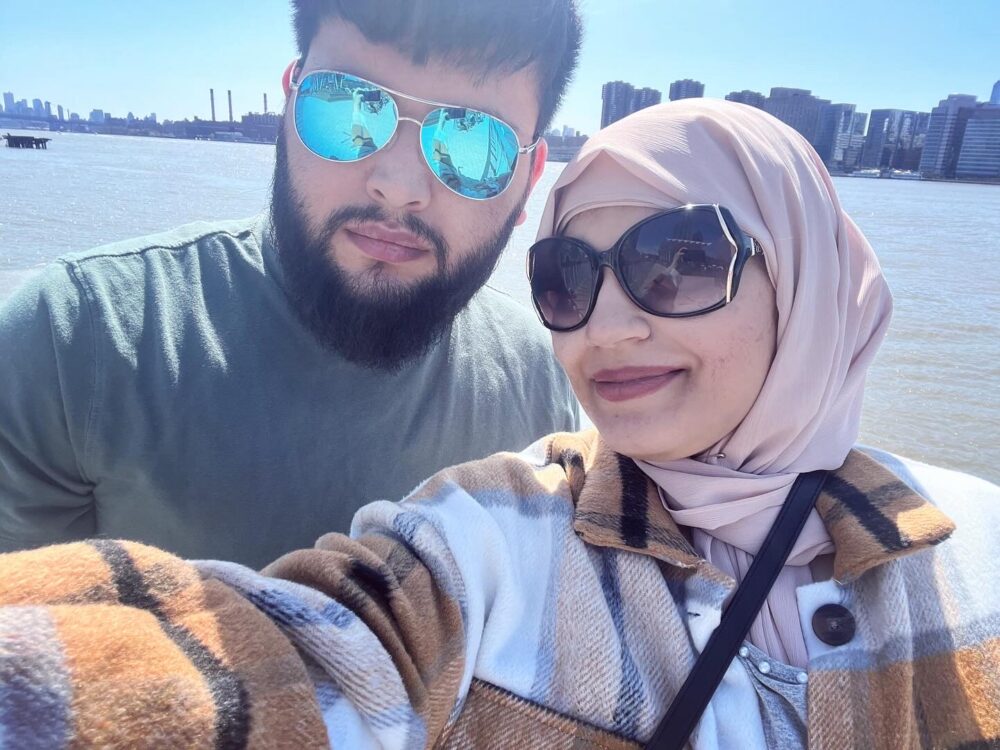
Sophia Nyazi
Sophia and Milad Nyazi
President Donald Trump has frozen the processing of immigration requests for all Afghans, pending a review of security and vetting procedures. Many Afghan immigrants who came to the United States through the appropriate legal channels are growing increasingly worried about their status.
The crackdown started the week of Thanksgiving, when an Afghan immigrant — Rahmanullah Lakanwal, who had worked with the CIA in his home country — allegedly shot two West Virginia National Guard members in Washington, D.C., Sarah Beckstrom and Andrew Wolfe. Beckstrom subsequently died from her injuries.
Sign up for the Hello, Houston! daily newsletter to get local reports like this delivered directly to your inbox.
There are roughly a quarter of a million Afghans in the United States, according to the Migration Policy Institute, including roughly 15,000 who have settled in the Houston area since 2021. It’s unclear how many are still waiting for permanent status.
Houston immigration attorney Ali Zakaria said many of them are scared.
Click here for more inDepth features.
“The Afghan community feels very concerned that they are being painted as shooters or terrorists or disloyal to the United States without any evidence. One shooter out of 250,000 people does not make the entire community murderers,” Zakaria said. “We’re getting calls. Afghan clients are asking what will happen to us, and at this stage, we just don’t have any answers, because we don’t know how far the government will go based on its announcements.”
“I said that, ‘That has nothing to do with him’”
At 8 a.m. on the morning of Dec. 2, at their home in Hicksville, New York, Milad Nyazi woke up his wife, Sophia, to tell her that U.S. Immigration and Customs Enforcement (ICE) had arrived. Sophia Nyazi thought he was joking. But there were three ICE agents there to arrest Milad. When asked, they declined to produce a warrant, she said.
“And then they said that, ‘Ma’am, we have to take him into custody. We have to detain him regarding the shooting of last week with the Afghan parolee that shot the two National Guards,’ ” Sophia Nyazi said. “And then I said that, ‘That has nothing to do with him.'”
Sophia is a native-born U.S. citizen, the daughter of immigrants who came to the U.S. during the Taliban’s first period in power. But she said Milad is an Afghan immigrant on humanitarian parole since 2021, in the process of applying for a green card, which offers permanent U.S. residency.
The ICE agents refused to look at Milad’s documentation, according to Sophia, who said they refused to let her go with them. They even balked at letting her and Milad’s 3-year-old daughter kiss Milad goodbye, though they finally allowed it, she said.
“She finally hugged him and kissed him,” Sophia Nyazi said, “and then my husband’s eyes were red. We were all emotional. And then they covered his head, and they arrested him, put his handcuffs in front, and they took him away.”
The U.S. Department of Homeland Security has not commented when asked about immigration policy changes by the Trump administration and the reasons behind them.
But in a statement to Houston Public Media specifically about Milad Nyazi’s case, Homeland Security Assistant Secretary Tricia McLaughlin said, “On December 2, 2025, ICE New York arrested Milad Nyazi, a 28-year-old criminal illegal alien from Afghanistan,” adding that he has two previous arrests for alleged domestic violence.
Sophia Nyazi said the arrests were the result of a misunderstanding and that all charges were dropped. An exhaustive search of multiple databases turned up no other criminal records. And Milad has not been charged in relation to the Washington shooting, nor is there any evidence he had any involvement in that case.
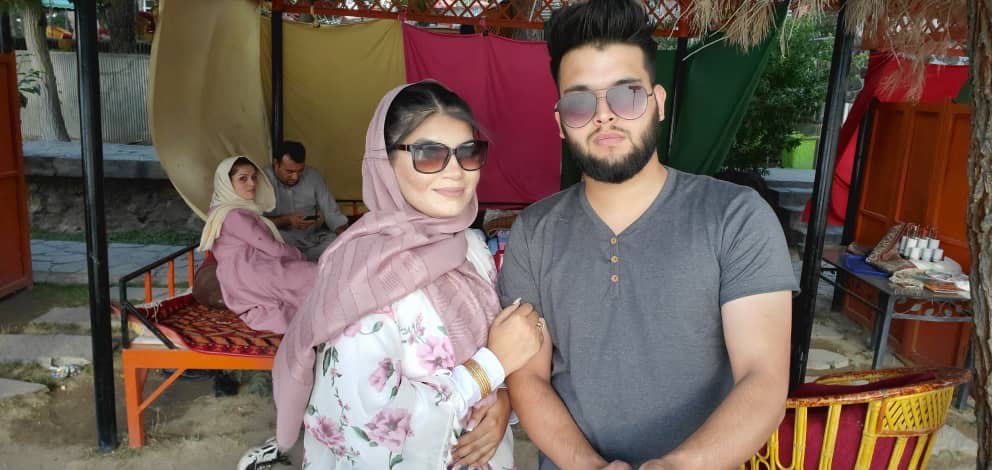
Sophia Nyazi
Milad and Sophia Nyazi
“Things are really bad for these folks”
Shawn VanDiver is president of AfghanEvac, an organization dedicated to helping Afghans who assisted the U.S. during the war to resettle in the United States. He said, since the shooting in Washington, the Trump administration has shuttered almost all legal options for Afghan nationals to come to the United States.
RELATED: Afghan nationals face setbacks to finding a permanent U.S. home in wake of D.C. shooting
“The only people that can get here right now are people who already had a visa in their passport. So, if you have a visa in your passport, you should get here as fast as you can,” VanDiver said. “Things are really bad for these folks.”
U.S. Sen. John Cornyn, a Texas Republican, had previously advocated strengthening and expanding the Special Immigrant Visa (SIV) program aimed at helping Afghans who had assisted the U.S. during the long war in their country to come to the U.S. and become citizens. But Cornyn, who is facing tough primary challenges from both Texas Attorney General Ken Paxton and Houston-area U.S. Rep. Wesley Hunt, recently defended the Trump administration’s crackdown.
“This is just one example of the abuse of something called parole, which is supposed to be done on a case-by-case basis,” Cornyn said, “but which [former President] Joe Biden claimed to have the authority to deal categorically with tens of thousands of immigrants from other countries around the world and bring them to the United States, basically unvetted.”
Julia Gelatt, associate director of the U.S. Program at the Migration Policy Institute, said the claim that Lakanwal was unvetted, which members of the Trump administration have stated repeatedly, is untrue. Lakanwal underwent multiple background checks, first when he went to work with the CIA, then before he came to the U.S., then when he applied for asylum, Gelatt said.
“I think the challenge with vetting is that the U.S. government can vet what’s in someone’s background — who they associated with, whether they were involved in a terrorist organization, whether they have a criminal history — but the vetting can’t predict who is likely to commit a crime in the future, at least not in any kind of reliable way,” Gelatt said.
Annie Pforzheimer, who previously served as deputy chief of mission at the U.S. Embassy in Kabul, supported Gelatt’s argument and said it’s a mistake to blame the screening process.
“This was something people took really seriously,” Pforzheimer said. “So, vetting itself can’t fix everything. What you really need are support services for people who are here. That is something that apparently was lacking in this case.”
“They’re going to kill him, and I don’t want that happening”
Pforzheimer said she was worried about what the Trump administration’s policy change would mean, not only for the Afghan community in the U.S., but for the future of U.S. diplomacy and security.
“I owe my life as a diplomat who served in Kabul on two separate tours, to Afghan allies,” Pforzheimer said. “When we were there — with the military, with our embassy — we repeatedly made promises of friendship and alliance and collaboration, and as a country, if our word is meaningless, if our honor is meaningless, I am concerned about how we’re going to go forward in a complex world of international relations where your word means something, or has to mean something.”
According to the ICE Detainee Locator website, Milad Nyazi has been moved to the Otero County Processing Center in Chaparral, New Mexico, more than 2,000 miles from his family’s home. His wife, Sophia, said she feels no one is helping them. She’s still seeking an attorney to take Milad’s case pro bono.
“I’m scared,” said. “If he gets shipped to Afghanistan, once the Taliban gets him, God knows what happens, because once they find out, they’re going to kill him, and I don’t want that happening.”