
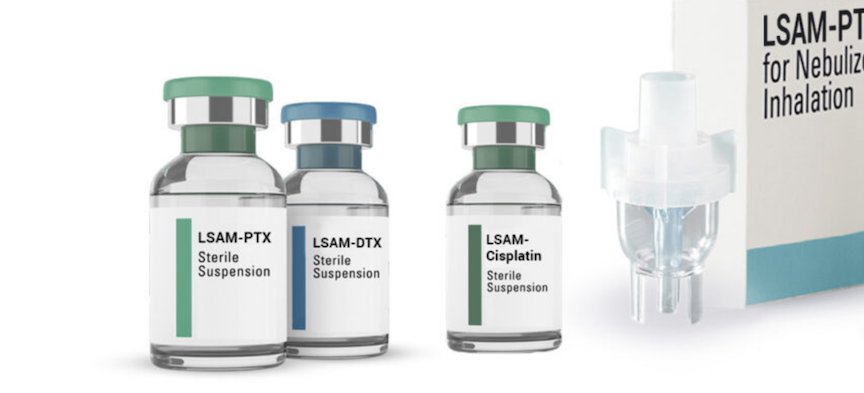
NanOlogy, a Fort Worth-based private clinical-stage oncology company, announced Thursday a major step forward in its effort to transform treatment for diffuse intrinsic pontine glioma (DIPG), an aggressive and highly lethal pediatric brainstem tumor.
The company is developing a new form of the cancer drug cisplatin — Large Surface Area Microparticle (LSAM) Cisplatin — that can be directly delivered into the tumor using a precise, minimally invasive procedure.
NanOlogy is completing the Investigational New Drug–enabling studies required by the U.S. Food and Drug Administration. Once those studies are finished, the company plans to submit an IND application for LSAM-Cisplatin to treat malignant neoplasms of the brain, including DIPG.
Pending FDA allowance, NanOlogy plans to start a clinical trial in late 2026 to see whether this direct-to-the-tumor version of cisplatin is safe and effective for children with DIPG.
“We believe NanOlogy’s innovative LSAM-Cisplatin investigational drug designed for intratumoral administration can overcome the limitations of current treatment options with highly targeted delivery of drug into the tumor, continuous drug release, and minimal systemic toxicity,” said H. Paul Dorman, founder and chairman of NanOlogy, in a statement.
According to DIPG.org, between 150 and 300 children in the United States are diagnosed with DIPG each year, and median survival is less than one year. Current treatments, including radiation therapy, may delay progression but rarely provide long-term survival. NanOlogy is also evaluating future opportunities to expand LSAM-Cisplatin to other brain and solid tumors.
“Advancements in minimally invasive surgical procedures and imaging now allow local delivery of LSAMs to solid tumors virtually anywhere in the body, including the brain. We are excited to advance IT LSAM-Cisplatin for DIPG and explore the promise it may hold for children and families facing this devastating disease,” Dorman said.
Cisplatin has been shown in laboratory studies to kill DIPG tumors by binding to DNA and disrupting replication, but when the drug is given through the bloodstream, it causes serious side effects and doesn’t reach the brain tumor well. Because of that, the standard form of cisplatin isn’t a good treatment for DIPG.
NanOlogy develops treatments for solid tumors using drugs optimized for direct intratumoral delivery, enabled by CritiTech Particle Engineering Solutions’ Purcision technology platform. The company’s LSAM investigational drugs have advanced into clinical programs across multiple solid tumor types and are protected by more than 100 issued patents worldwide.