
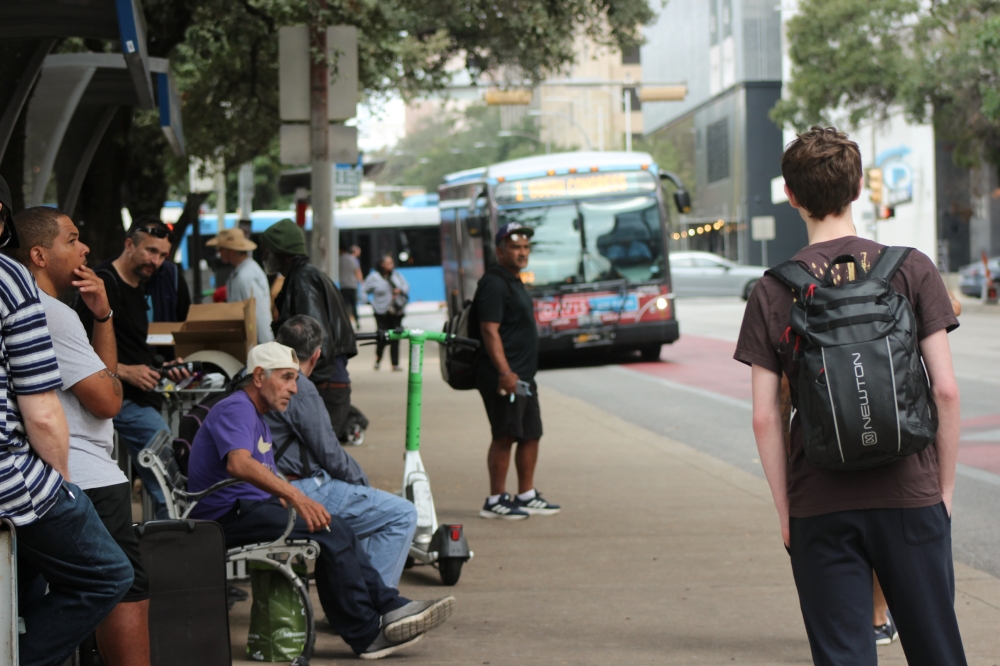
Click the links to view this story as it appeared in the Northwest Austin, North Central and South Central Austin and Southwest Austin/Dripping Springs print editions.
As CapMetro celebrates its 40th anniversary, the agency isn’t just looking back—it’s looking ahead. Four decades after Austin voters created the transit authority, CapMetro finds itself at a crossroads, navigating a region whose commuting patterns look different than they once did.
What’s happening?
CapMetro’s Transit Plan 2035, adopted Oct. 20, marks what CEO Dottie Watkins calls a sweeping “recalibration” to create a more equitable and widely used transit system. The plan coincides with the agency’s partner initiative Project Connect—the multibillion dollar build-out of Austin’s voter-approved light rail, which is set to begin construction within the next few years.
The rise of hybrid work and the decline of the traditional nine-to-five commuters have forced Austin’s public transit agency to confront the problem of how to adapt a system built for a past era to meet the needs of today’s Central Texans.
Rethinking the ride
Providing public transit across such a large and economically varied region has always been a challenge, according to industry experts. A recent survey conducted by Movability, a Central Texas commute-planning nonprofit, found that lower-income households across the region travel an average 10–15 miles farther each day than higher-income commuters.
CapMetro’s long-term strategy aims to close mobility gaps by bringing access closer to where people live and work. However, providing frequent, fixed-route service remains difficult—especially amid flat sales tax revenue that limits resources, Watkins said.
In parts of the metro like Northwest and Southwest Austin, there are many instances where bus stops are more than a 10-minute walk from residents’ homes and commercial hubs, while several routes in the area are also underutilized, according to Austin City Council member Krista Laine.
In Central Austin, reliability and frequency remain large concerns from public transit advocates and users. City Council member Paige Ellis, who also serves on the CapMetro board, said the agency must “get creative” as it works to increase frequency while managing the costs of operation personnel.
Going forward, the agency is leaning on new flexible solutions, such as CapMetro Pickup, an on-demand microtransit service that operates like a shared ride-hail within defined zones.
“>
Using smaller vehicles, Pickup helps riders reach bus routes, grocery stores and medical centers, the “last-mile” solution for those that do not live directly near transit stops, agency documents state. Two new zones and one expanded zone have been outlined in future plans for Northwest Austin, extending access to an area where traditional bus service has historically been limited.
In addition, under Transit Plan 2035, CapMetro plans to increase transit frequency primarily to core high-ridership corridors, specifically focusing on its MetroRapid lines and converting several existing bus routes to run more often.
Watkins said frequency is the single most effective way to attract riders and keep them using transit. The agency aims to achieve a consistent 10-minute frequency on its two newest MetroRapid routes—Route 800 and Route 837, primarily serving downtown and East Austin—by next summer.
Further ahead, the plan outlines additional frequency improvements for other corridors, including the Red Line commuter rail in Northwest Austin, which is expected to move from its current varying schedule to a consistent 30-minute all-day service, with extended weekday and Saturday hours in the agency’s five-plus-year outlook.
Items worth mentioning
Steve Crossland, an Austin resident and regular CapMetro rider, said the cast of characters that riders can encounter can range from interesting to scary.
“[Public transit] does have a little bit more of a perceived safety issue,” Crossland said.
Watkins emphasized that public transit must not only be safe but also feel safe for it to become a regular option for all residents.
In 2021, CapMetro launched a three-pronged public safety program that remains rooted in a community-centered approach, said Gardner Tabon, executive vice president of systemwide accessibility and chief safety officer at CapMetro.
Public Safety Ambassadors actively engage with riders and operators, offering assistance.Community Intervention Specialists provide an alternative to criminalization for individuals facing challenges like homelessness or addiction by connecting people with a network of partner agencies offering needed services.The new in-house Transit Police Department, launched this summer, currently consists of 14 active officers and the recently-hired Transit Police Chief RenEarl Bowie.“We are less inclined, when there’s not a crime taking place, to criminalize individuals that are in our system. We’d rather try to find them a positive path,” Tabon said.
Safety personnel split time roughly 50/50 between proactive “directed patrols” in identified areas with recurring issues and reactive responses to calls for service, he explained.
Since launching the public safety initiative, the agency has seen a “leveling off” effect in the number of public safety incidents, Tabon said.
Did you know?
CapMetro offers specific services to enhance rider security after dark, providing an essential safety net for those traveling late at night.
Courtesy Stops: After 9 p.m., riders on any bus can request to be dropped off at a safe, well-lit location between official stops.Guaranteed Ride Home program provides registered Express, Flyer, Rail and Vanpool customers with a taxi ride home in the event of an unexpected emergencyManaging the impact
Beyond filling immediate service gaps, CapMetro is making long-term investments in infrastructure that would create a more integrated network. In early November, the agency broke ground on its $49.3 million North Burnet Uptown Station along the MetroRail Red Line, which will function as transit-oriented development, or TOD.
TODs are designed to create compact, mixed-use, pedestrian-friendly neighborhoods centered around multimodal transit hubs. By linking rail with high-frequency bus routes, it cuts transfers and shortens travel times—directly benefiting lower-income commuters who often face long, complicated commuter trips, CapMetro officials said.
Project Connect corridors are already attracting developers that build housing, offices and entertainment destinations, resulting in neighborhoods designed for transit riders, agency officials said.
Other locations for TODs are being developed, such as the North Lamar Transit Center and South Congress Transit Center.
Additionally, city-level policy changes—like the removal of parking minimums in 2023 and the introduction of new TOD zoning overlays in 2024—are helping expand this approach citywide.
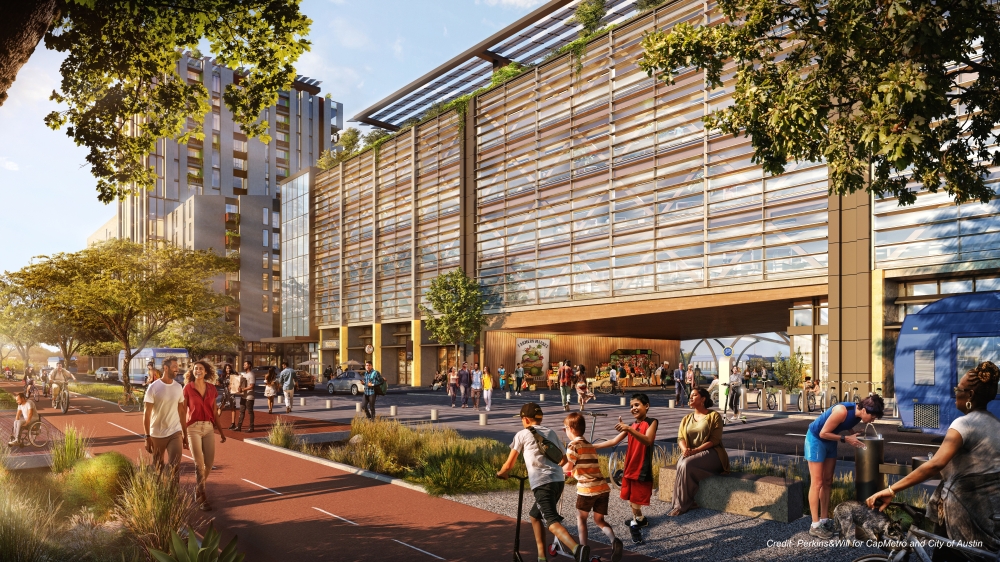 In recent years, CapMetro has identified areas across the metro that could see benefits from mixed-use development near transit stations. (Courtesy CapMetro)The outlook
As the area continues to grow, transportation advocates say public transportation will be necessary to address mounting congestion across the city.
Transportation expert Joshua Schank, a Senior Fellow at UCLA Institute for Transportation Studies, noted—during a local transportation forum earlier this year—that if public transit is seen only as a social service, traffic congestion will continue getting worse. He said that making transit accessible, frequent and convenient for everyone, across all income levels, is crucial for creating and maintaining a successful transit system.
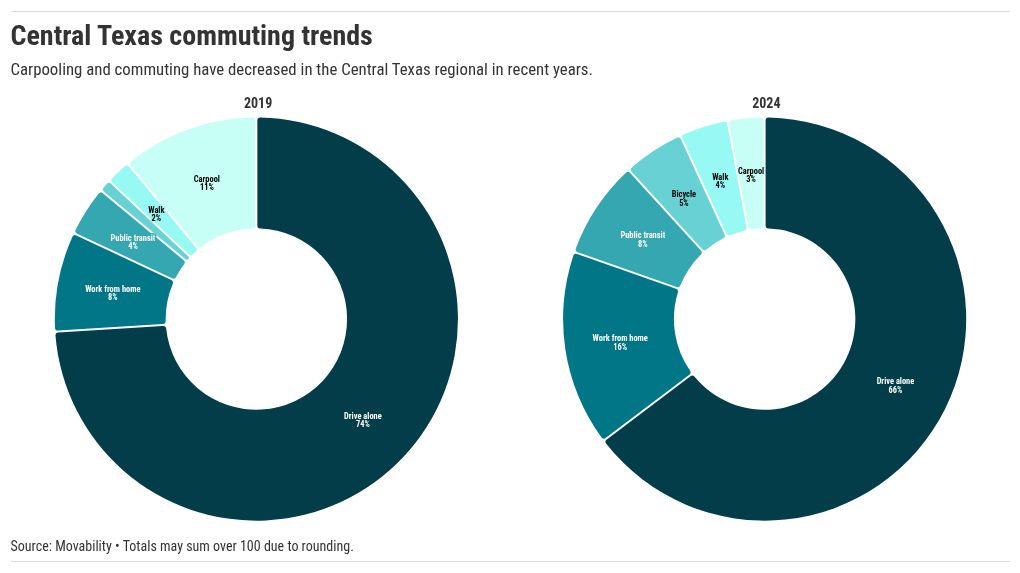
As the culture shifts away from being car-centric, the demand for high-density development around infrastructure will become more prevalent, Movability executive director Lonny Stern said.
Historically, Central Texas development has followed roads, producing sprawling single-family neighborhoods and big-box stores, Stern said. He explained that TODs flips that pattern, encouraging multi-family, office and entertainment projects tied directly to transit hubs.
“We need to allow a little bit more commercial in our neighborhoods. We need to make sure that when we build multifamily, it’s walkable,” Stern said. “… We need to make sure that there’s shade structures and trees … so that if you’re 8 or 80, you enjoy walking around the neighborhood.”