

It’s not often that Texas voluntarily adds to a federal spending program. But that’s exactly what Dan Patrick is proposing to do. It’s not without merits. Or downsides.
The groundwork was laid this summer. The congressional reconciliation package included a provision to create “Trump Accounts” awarded to families with new babies. These would be invested in the stock market, with funds locked up until the child turns 18.
The federal government will seed Trump Accounts with $1,000 for every American child born between Jan. 1, 2025, and Dec. 31, 2028, the limited time frame capping costs and aligning with the time President Donald Trump is in office. Family, friends and employers can contribute up to $5,000 a year per child as well.
Already, Texans are jumping in to supersize the idea. First, the Dell family (from Austin) committed $6.25 billion in additional seed funding to provide $250 per child to children under age 10 who live in ZIP codes where the median income is less than $150,000.
Then, Texas Sen. Ted Cruz, alongside Sen. Cory Booker, sent a letter out to other Fortune 500 companies admonishing them to follow suit. Importantly, these contributions largely would be private dollars, aside from the tax advantages for those who contribute.
Opinion
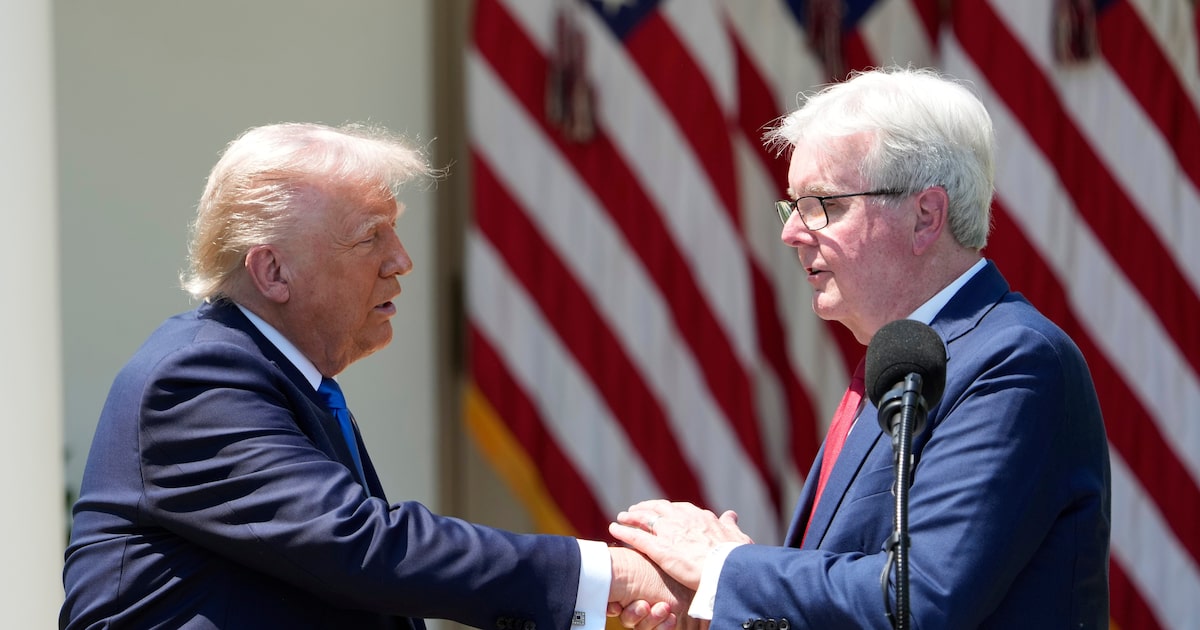
Now, we have Texas Lt. Gov. Dan Patrick proposing that Texas taxpayers contribute an additional $1,000 per child to a similar program. We almost can’t help ourselves. We like things bigger. Even federal accounts, apparently.
Those $1,000 investments with nothing added over 18 years could easily yield more than $2,000 each by the time of withdrawal. Double that initial investment and returns could be closer to $6,000 by the time the recipient graduates high school. This doesn’t make college free or cover a mortgage down payment, some of the specified uses of the funds. But it’s more than the status quo and that’s something.
Notably, it would take maxing out annual contributions of $5,000 and a consistently roaring stock market to get to the $300,000 number that the president has cited.
In the past, conservatives have been quite cautious about new government programs and spending. But arguably there’s more flexibility at the state level. Unlike our chronically indebted federal government, Texas has an outsized rainy day fund and surplus. Perhaps there’s a way to pull from there instead of raising taxes on our families now to pay for their children’s benefits later.
Super-seeding Texas kids’ accounts also could serve as an incentive, albeit a relatively minor one, for more families with kids to move to our state. We need something to help counter the outside messaging that we didn’t do much for families after the Supreme Court decision that overturned Roe vs. Wade. There was a groundswell a few years ago to help women and kids, but then it fell silent.
As I’ve written about many times, American kids have been getting a raw deal for some time now. Academic performance is down; screens have been largely uncensored; kid’s health outcomes are worsening. Meanwhile, the overall share of money going to kids at the federal level is being squeezed to make room for debt payments and old-age entitlements. We would benefit from paying more attention, providing more support to the next generation.
But it’s perhaps because of the scale of the issues facing our kids — the private and public infrastructure, from family structure to public schools, that has faltered around them — that I’m a bit bearish on the funds being locked up for so long. It feels like the need for reform is in the here and now, and I’d hate to see this crowd that out.
And while I like the idea of everyone quite literally invested in the future of our country by increasing representation in the stock market, are there better ways to do this than funneling cash through the federal government and Wall Street financiers?
The biggest talking points around the Trump Accounts are the political payoffs. Wall Street wants it because they want the management fees and liquidity. CEOs and politicians want it because they want to be on Trump’s good side. It feels more obvious, icky — this kind of buying favor — than it used to. But there could be worse recipients than young kids.
At this point, perhaps you’ve heard enough. But give a policy wonk a policy issue, and like a surgeon given a scalpel, she’ll find something to cut open. Other things I think about: We already have a labyrinth of savings accounts that don’t speak to each other, 529s, HSAs, 401(k) plans. It all gets so cumbersome. Not to mention that most people don’t have the savings to voluntarily spend more than they already are now, meaning that our most vulnerable kids still need an extra something.
Trump Accounts are a mixed bag in my opinion. I’m all for voluntary contributions from billionaires; Texas has more than its fair share who could target support to kids in our state. I’m a bit more cautious about supersizing the accounts from our tax base, with the relevant financial relief for families two decades away or more.