
Pili Saravia/Houston Public Media
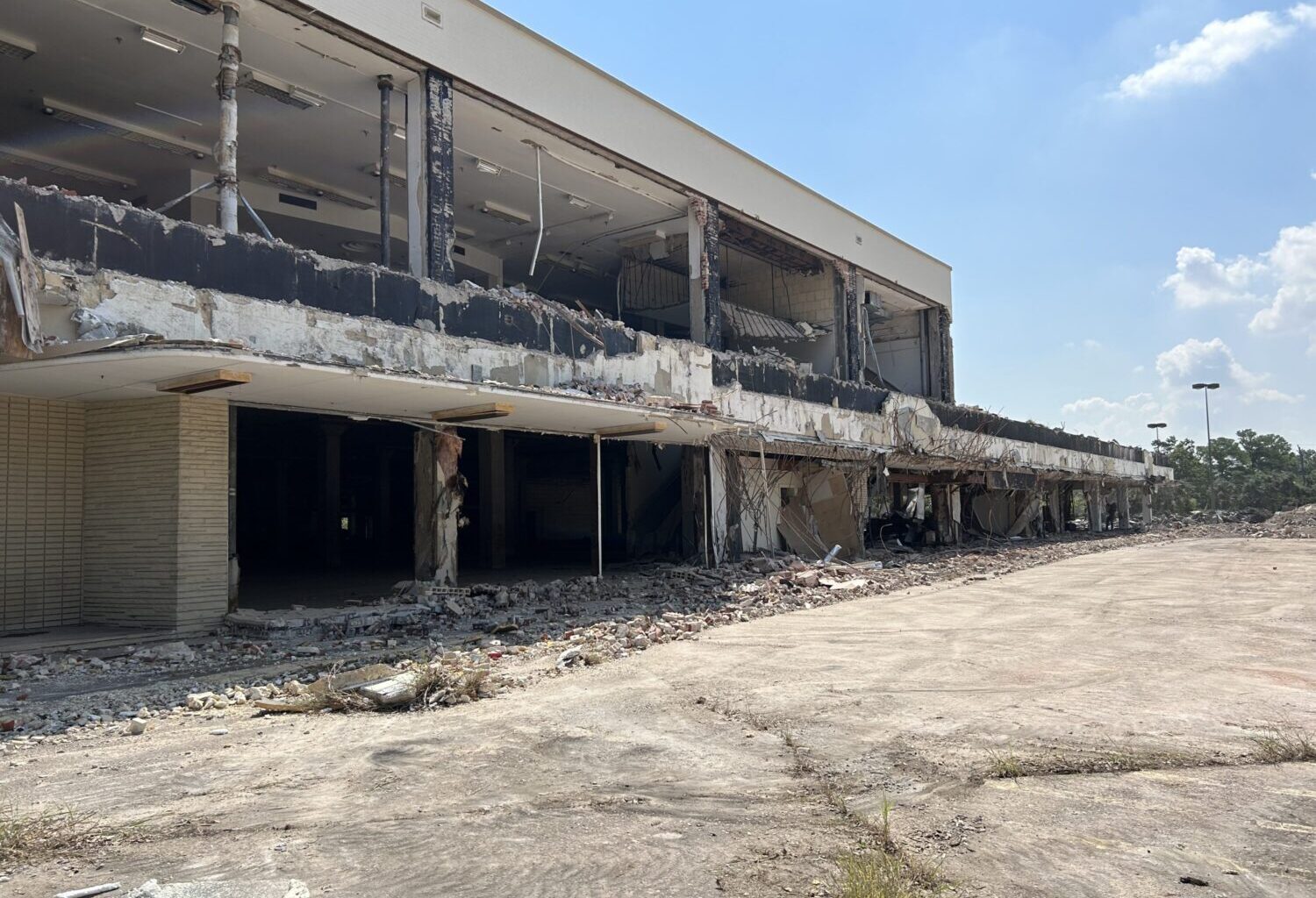
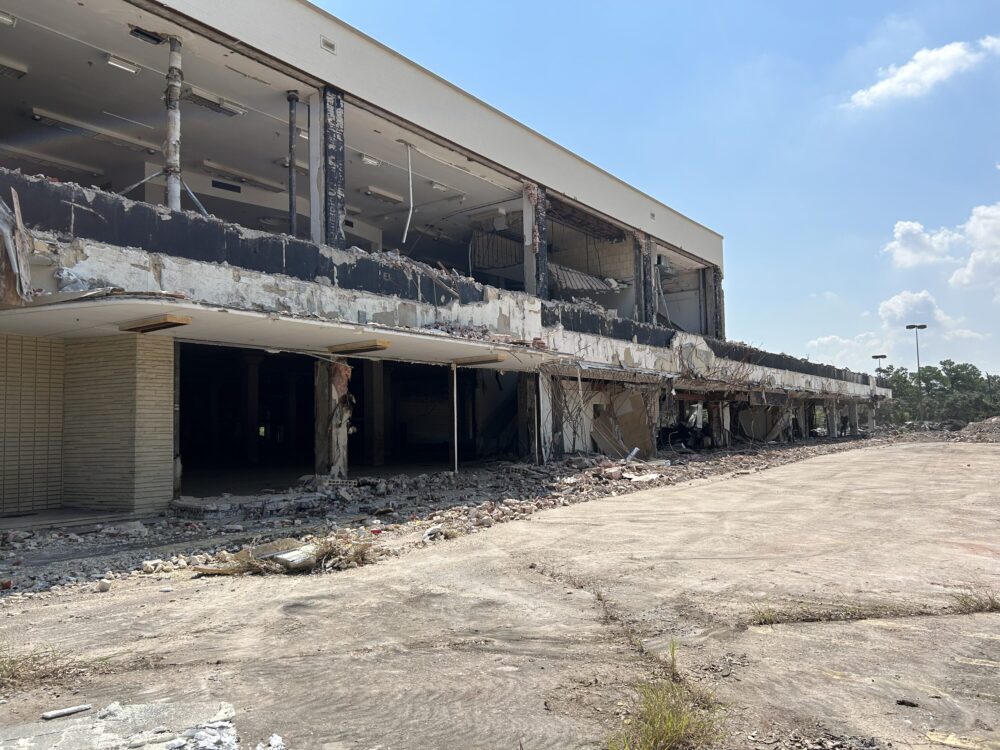
Demolition was underway at the former Sears in Garden Oaks as seen on Aug. 8, 2024.
Houston Mayor John Whitmire’s proposal to allocate tens of millions of dollars from the city’s stormwater fund for building demolitions was delayed on Wednesday as city officials sparred over whether the spending would be legal and appropriate.
In a memo to city council members Tuesday, City Controller Chris Hollins argued the demolition program “is not a lawful use of these restricted funds.”
“The purpose of (the stormwater fund) is super clear — it’s to address stormwater issues,” Hollins told Houston Public Media after the meeting on Wednesday. “It’s about making sure that when rain comes, that Houstonians don’t find themselves underwater. And you know, this project of demoing buildings around the city is not related to stormwater — period.”
Sign up for the Hello, Houston! daily newsletter to get local reports like this delivered directly to your inbox.
The fund — which has a $100 million budget this year with revenue coming from water and sewer fees — is intended to support Houston’s “network of storm water management facilities,” including construction and maintenance of infrastructure like ditches and detention basins, according to city code. Whitmire’s administration proposed allocating $30 million from the fund toward building demolitions over the next three years.
According to the administration, more than 2,300 buildings have been identified for possible demolition across the city. A total of 343 demolitions have already been approved. Conditions at some of those buildings, Houston Public Works director Randy Macchi told the city council, represent “a direct nexus into our stormwater system.”
“The reality is this — dangerous buildings that are blights on our community are ground zero for illegal dumping,” Macchi said. “When you go throughout the districts, you find that most of that trash somehow ends up in our open ditches and then later on in the storm systems themselves.”
Multiple council members questioned the strength of that connection, including Edward Pollard.
“Director, you’re a trained lawyer, and you’re a really good lawyer,” Pollard told Macchi — who previously ran a law firm before becoming CEO and general counsel for the U.S. LawShield company, which primarily provides prepaid legal services to individuals who might shoot someone with a gun. “I know you’re trying to make your case for what the nexus is between demolishing buildings and maintaining the drainage system. … The question is, is it a strong argument? I don’t think the intended purpose of that stormwater drainage fund was for these particular instances.”
RELATED: Houston Public Works has a new director, he’s not an engineer
Whitmire told Macchi, “You’re a good lawyer, but you’re even a better public works director,” adding, “The public’s not going to question (using stormwater funds for building demolition). They just want to get it done.”
Throughout the discussion, officials raised the specter of litigation for misuse of city funds.
In May, the city reached a settlement in a long-running lawsuit over a separate fund for streets and drainage. The plaintiffs argued the city shortchanged the voter-approved fund for years, primarily under the previous mayoral administration. After a defeat at the state supreme court, Whitmire’s administration ultimately settled with the plaintiffs, agreeing to gradually ramp up the city’s contribution to the fund in the coming years.
City attorney Arturo Michel said that legal dispute and the proposed spending on demolition are “apples and oranges,” arguing the concerns over legality are “a red herring.”
“I’m fully confident that this is legal,” Michel said.
During the budgeting process earlier this year, advocacy group West Street Recovery opposed the settlement because it didn’t immediately provide the full, voter-mandated funding for streets and drainage. In a statement to Houston Public Media, West Street Recovery co-director Alice Liu said the group is likewise “unequivocally opposed to the siphoning of restricted stormwater funding towards building demolition.”
AP Photo/David J. Phillip, File
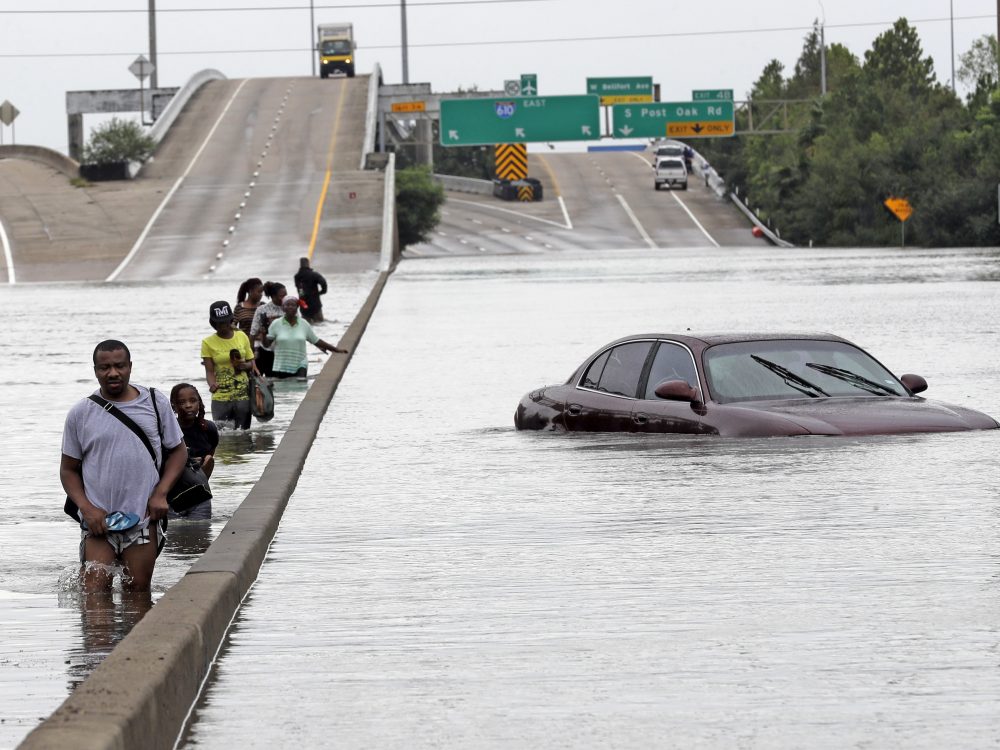
FILE: A flooded section of Interstate 610 in Houston after Tropical Storm Harvey in August 2017.
“This is part of a decade-long pattern from the city of Houston that has diverted hundreds of millions of taxpayer dollars meant for flood infrastructure,” Liu wrote. “Eight years after Hurricane Harvey, this is why Houston has yet to make significant progress in protecting its residents from flooding.”
The mayor’s office placed the item on the agenda without the approval of the controller’s office. Hollins, the city’s chief financial officer, said he refused to certify an earlier version of the program due to his concerns about legality. Whitmire’s office ultimately presented a version of the program connected to an existing agreement, bypassing the need for Hollins’ approval.
“Instead of going about things the right way, in the legal way, in the proper way, they sought to circumvent our office’s oversight,” Hollins said. “The city council should hold up its obligation to operate legally, to use the stormwater fund for what it is intended for, and not to use it as a slush fund for any project that the mayor deems as urgent or important.”
In addition to legal concerns, some council members — including budget and fiscal affairs committee chair Sallie Alcorn — pointed out the city’s funding for stormwater drainage projects is already constrained.
If more money is spent from water and sewer revenue, Alcorn said, “what goes up eventually is water rates.”
Council members Abbie Kamin and Amy Peck tagged the item, delaying it until the next meeting in January. Both expressed concerns about demolition costs constraining spending on other stormwater mitigation projects, but Peck indicated she would support the measure because the city ultimately recoups the cost of each demolition from the owner of the blighted property.
A handful of council members spoke in favor of Whitmire’s proposal, including Fred Flickinger.
“Obviously what you have done is creative,” Flickinger said. “I think it will be more efficient and actually allow us to do more of what needs to be done in the city. I do think also it is a bit of a stretch, but I don’t think it’s stretched beyond unreasonable.”