
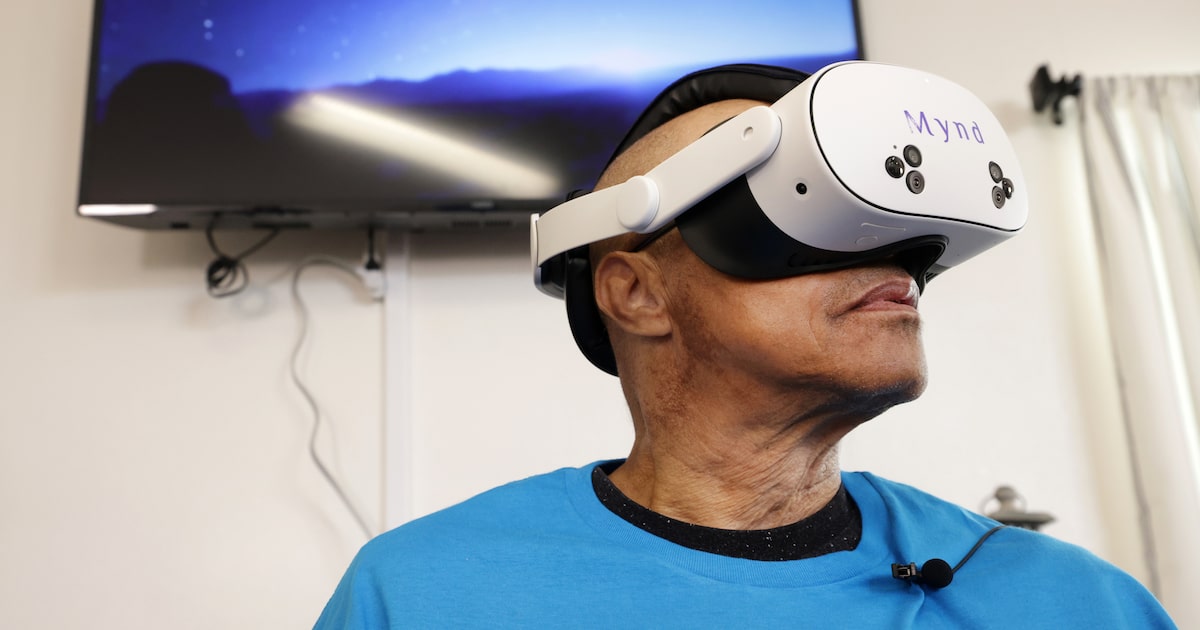
In a Dallas retirement home, Theresa Steward is skydiving. She squeals and yelps as the ground rushes up and snow-capped mountains slide past. Her body lurches forward, and she grabs at the air to steady herself. After landing safely, she appears relieved but exhilarated.
It may seem impossible to do what she has just done. But that whole time, she was wearing a headset that brought her to a virtual reality.
“I’m glad that I experienced that because I never would do skydiving,” says Steward, 74.
This isn’t thrill-seeking for its own sake. Steward is one of several residents gathered at the retirement home Umphress Terrace to try out the virtual reality headset and handheld controllers. They’re taking turns on the Great American Elderverse, a platform built by Dallas tech company Mynd Immersive for underserved seniors that blends entertainment with physical, occupational and speech therapy.
Business Briefing
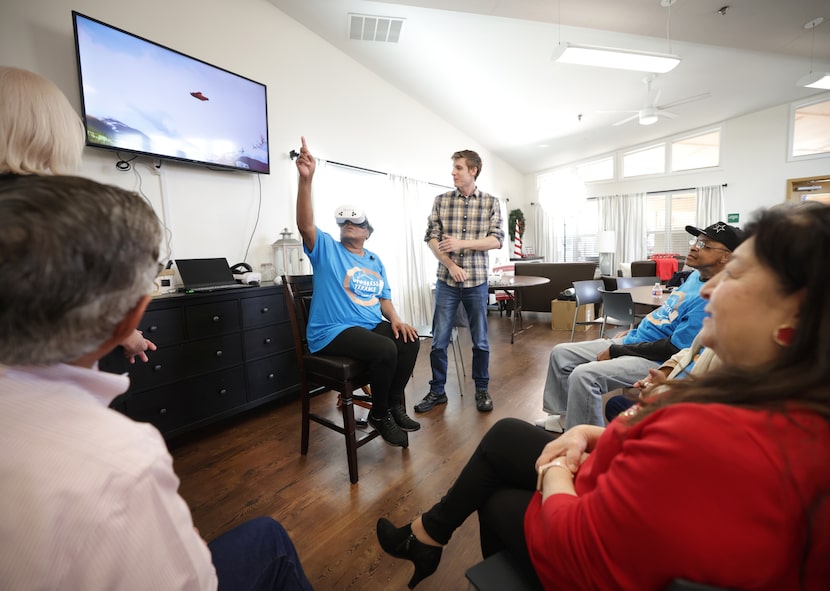
Theresa Steward, center, experiences virtual skydiving as Mynd Immersive and Lyda Hill Philanthropies demonstrate a virtual reality therapy tool to seniors at Umphress Terrace in Dallas, Texas, on Dec. 16, 2025.
Jason Janik / Special Contributor
What’s happening at Umphress Terrace reflects a broader shift. Once mostly associated with gaming, virtual reality is showing up in senior living communities as companies and scientists study whether immersive experiences can ease loneliness, support cognition and mental health and improve quality of life.
“This is not just turning a gaming system into an entertainment system,” said Chris Brickler, co-founder and chief executive officer of Mynd Immersive. “There’s a real science behind this.”
A loneliness epidemic
The United States is aging quickly. From 2020 to 2024, the number of adults 65 and older grew 13%, according to a recent report by the U.S. Census. That population is projected to climb to roughly 82 million by 2050.
With that growth comes urgent questions about health and quality of life. Loneliness and social isolation are problems in the U.S. among older adults. A 2023 national poll found 37% of adults ages 50 to 80 reported feeling lonely, and 34% said they felt socially isolated.
Research finds that persistent loneliness can raise the risk of poor health outcomes. In a 2022 study that followed older adults for nine years, socially isolated people 65 and older had a 27% higher risk of developing dementia than their peers who weren’t socially isolated.
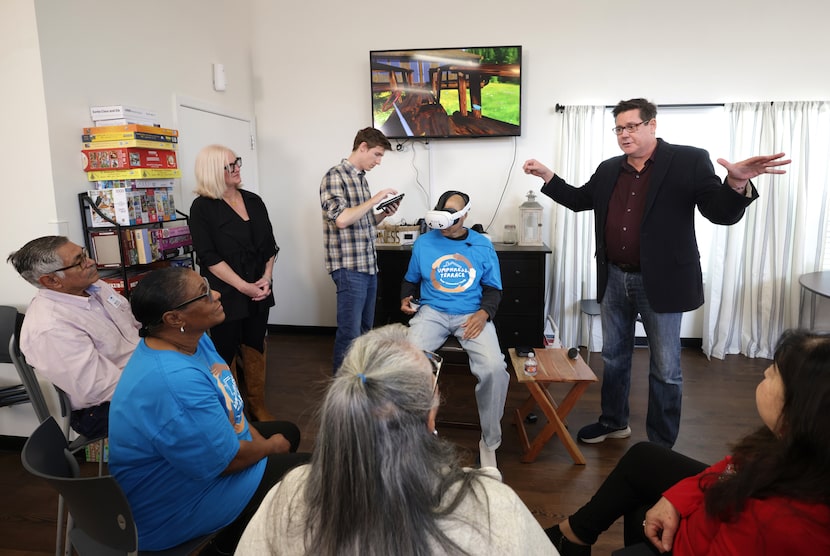
Chris Brickler, right, speaks as Mynd Immersive and Lyda Hill Philanthropies demonstrate a virtual reality therapy tool to seniors at Umphress Terrace in Dallas, Texas, on Dec. 16, 2025.
Jason Janik / Special Contributor
Social isolation also comes with a significant health care cost: roughly $6.7 billion in additional Medicare spending each year, according to a 2017 report from the AARP Public Policy Institute.
Virtual reality is one way to ease social isolation, Brickler said. He started Mynd Immersive with Shawn Wiora nearly a decade ago after Wiora saw what a music program could do for residents with memory issues in Dallas nursing homes. He brought Brickler an idea: Could that kind of engagement be delivered in a more immersive way?
Strengthening the brain
Research suggests virtual reality offers great benefits for older adults. A 2018 study from the Massachusetts Institute of Technology found that seniors who used a virtual reality system for two weeks reported feeling less isolated and depressed, with more frequent positive moods. Other studies have found virtual reality-based games and reminiscence therapy, or therapy meant to jog a person’s memory, may support cognition. A 2022 study reported that interactive gardening and nature videos in virtual reality improved mood and cognitive engagement in older adults.
Mynd Immersive delivers the Great American Elderverse through Meta’s Quest headsets. Brickler said his company has built a library of over 300 videos that include travel and adventure experiences. Some are made in-house, while others are from producers such as National Geographic.
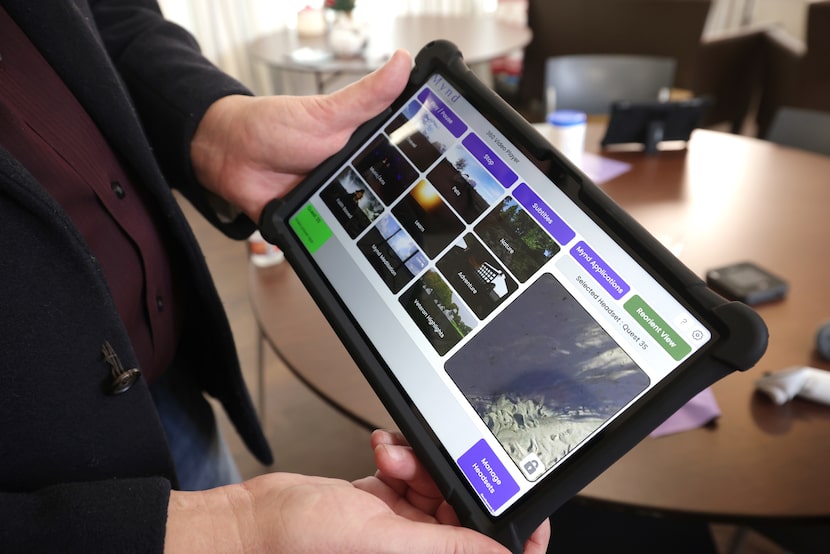
Mynd Immersive and Lyda Hill Philanthropies demonstrate a virtual reality therapy tool to seniors at Umphress Terrace in Dallas, Texas, on Dec. 16, 2025.
Jason Janik / Special Contributor
Interactive games, like archery or catching butterflies, are designed to build hand-eye coordination, which can be especially helpful for seniors in physical therapy, said Jacob Giboney, an operations manager at Mynd Immersive. The Great American Elderverse also includes guided experiences such as Breathe, a meditative program intended to help ease anxiety.
In a multiyear study conducted by Stanford University, Mynd Immersive’s virtual reality system was provided to 245 residents ages 65 to 103 in nursing homes and assisted living facilities across 10 states. The results found most participants enjoyed the experiences, reporting improved moods and more positive interactions with staff and caregivers.
Bringing virtual reality to Texans
Mynd Immersive is bringing the Great American Elderverse to nursing homes and assisted living facilities across Texas with the support of organizations including Dallas’ Lyda Hill Philanthropies. Brickler said his company’s goal is to reach as many older adults as possible. The virtual reality program is also available to senior communities in New York’s tri-state area.
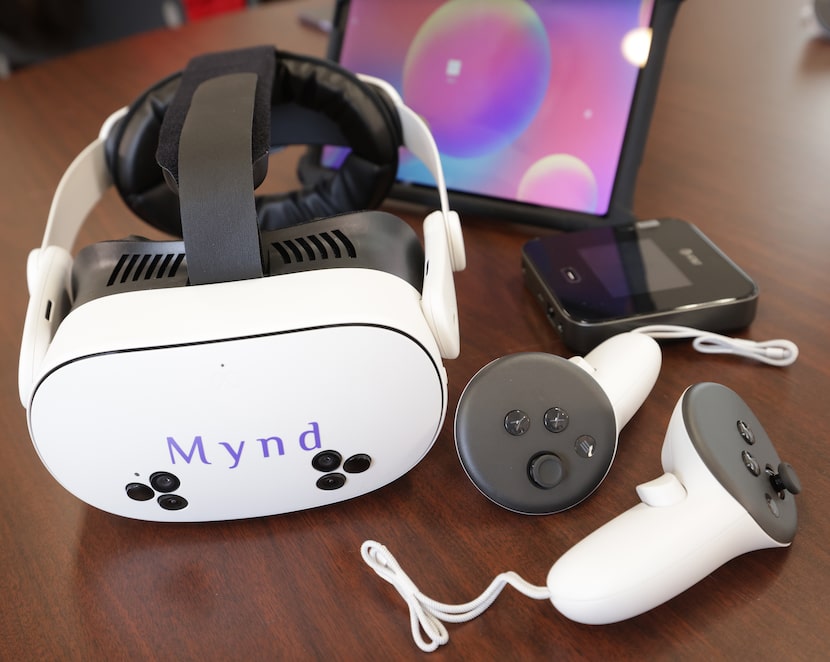
Mynd Immersive and Lyda Hill Philanthropies demonstrate a virtual reality therapy tool to seniors at Umphress Terrace in Dallas, Texas, on Dec. 16, 2025.
Jason Janik / Special Contributor
The company is planning additional research to better understand how immersive experiences change the brain. To that end, it’s launching its first research space in Pegasus Park, Wiora said.
Meanwhile, Steward is ready for another adventure. She may not be skydiving again soon but is considering a virtual visit to Africa.
Miriam Fauzia is a science reporting fellow at The Dallas Morning News. Her fellowship is supported by the University of Texas at Dallas. The News makes all editorial decisions.
 Nonprofit arm of de-extinction gurus Colossal Biosciences hits $100 million in funding
The Colossal Foundation released its 2025 Impact Report on Wednesday.
 Pharmaceutical giant eyeing Denton for $280 million manufacturing plant
Denton City Council is weighing millions in incentives for the plant.
 Dallas-Fort Worth ‘Cowboy Capitalism’ carves its own niche in venture capital
How North Texas is evolving into an alternative to San Francisco’s storied scene.
 At Fort Worth Zoo, scientists gather to fight deadly elephant herpesvirus
With the virus driving deaths among young elephants, zoos and researchers eye vaccine as a potential solution.