
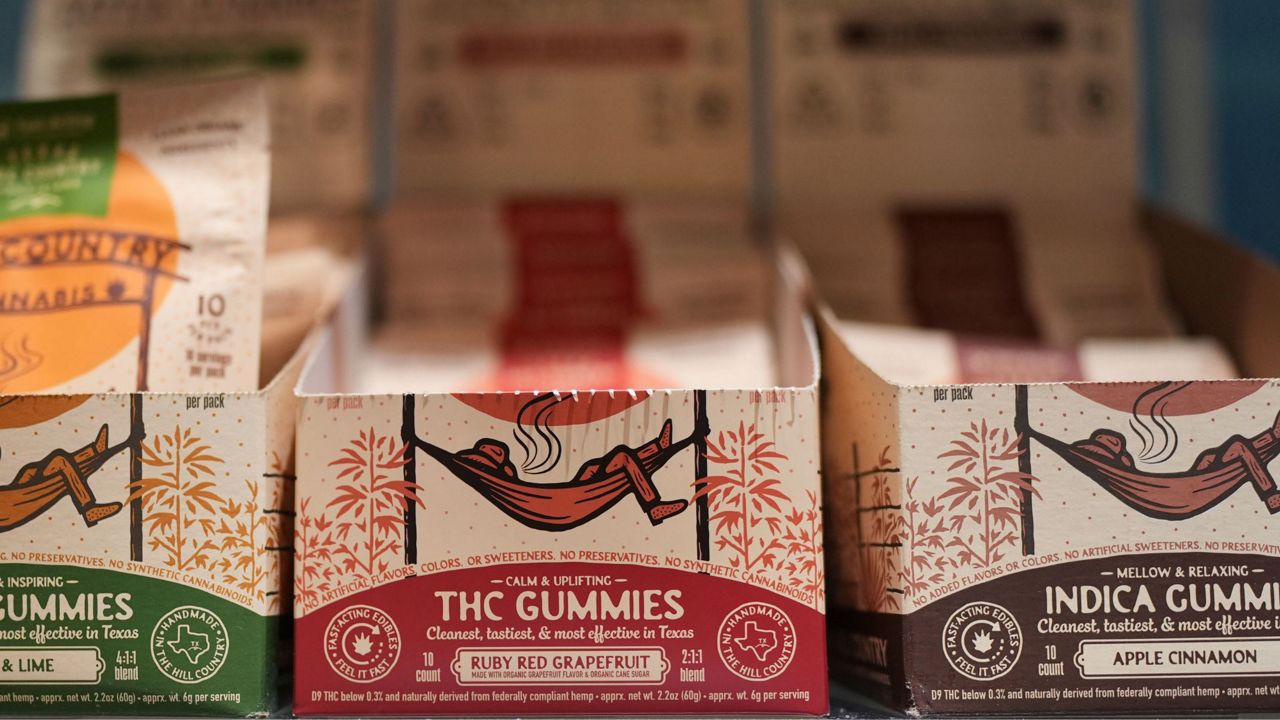
TEXAS — As hemp businesses in Texas anticipate a federal ban next year, the Texas Alcoholic Beverage Commission (TABC) is moving forward with regulatory rules.
Through the spending bill Congress passed to open the government after the longest shutdown in history, lawmakers included a provision that redefined hemp, essentially banning consumable hemp products with intoxicating effects starting next year.
TABC, on the other hand, is moving forward with its rule-making process on hemp, banning minors (people under 21) from purchasing hemp products and requiring a valid identification to purchase those products.
The agency implemented emergency rules shortly after Gov. Greg Abbott signed an executive order calling for more regulations back in September. TABC held a public meeting last week to hear from stakeholders about their thoughts on making the rules official.
One organization, Texans for Safe and Drug Free Youth, was one of the few participants who sided with an outright ban, similar to what federal lawmakers passed last month.
“Research shows that the most protective policy for our youth is one that keeps these products out of the marketplace,” said Nicole Holt, the CEO of Texans for Safe and Drug Free Youth. “Our governmental entities, including TABC, DSHS, DPS and TDA, [should] work together to align product definitions and rules to align with these federal rules.”
Holt’s comments received pushback in the meeting, with one person saying that the ban takes effect in more than 300 days and a policy update could arise until then.
One representative has already begun the process of repealing the language in the spending bill.
U.S. Rep. Nancy Mace, R-S.C., introduced the American Hemp Protection Act of 2025, which would return hemp to its original definition, allowing manufacturers to produce THC hemp products. So far, the bill has been submitted to the House Committee on Agriculture for further review.
If that bill does not get passed and signed into law, the ban remains.
TABC says they are continuing with their processes as a means of complying with Abbott’s executive order on hemp.
“When the current federal guidelines become enforceable next year, the agency will work with stakeholders, including the Governor’s Office, the Department of State Health Services, and others to adjust our operations to ensure compliance with all applicable laws and directives,” said Chris Porter, the director of communications for TABC.
Holt and her organization say that even if the ban does not pass, there are other rules they would like to see implemented, such as raising the age from 21 to 25, and requiring ID scanning at the door.
“The younger a young person uses, the greater their risk,” Holt said.