
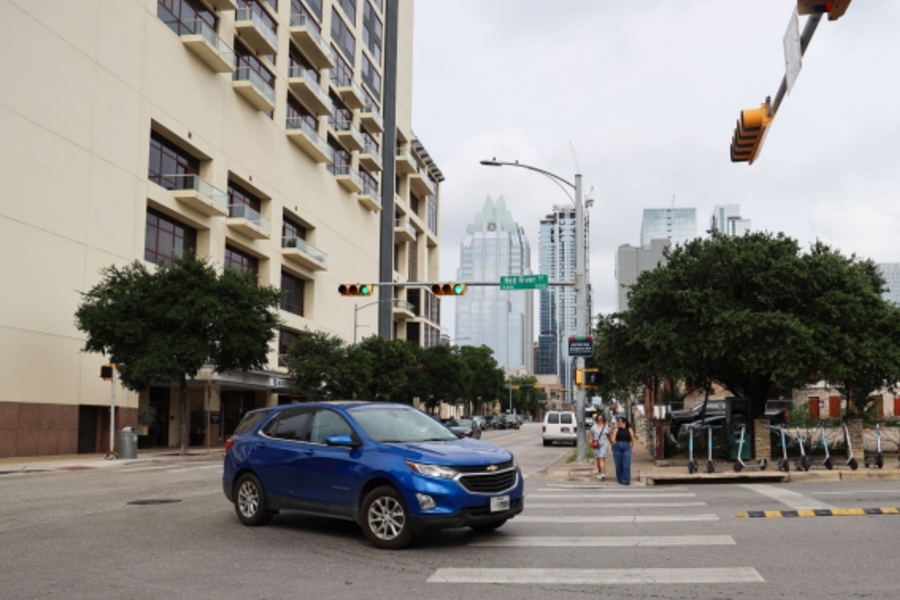
A city of Austin pilot program aimed at making left turns safer is showing positive results, according to an update from the city. A report from the city’s Vision Zero program found a 46% drop in left-turn crashes involving pedestrians and an 82% reduction in related crash costs.
Explained
The Vision Zero initiative—which has been adopted by cities throughout the nation—aims to eliminate traffic-related serious injuries and fatalities.
Between 2020 and 2024, there were 204 crashes involving left-turning vehicles and pedestrians at signaled intersections—representing about 13% of all pedestrian crashes.
The study shows that “turn calming” can be a low-cost, effective way to make risky turns safer. The pilot tested “quick-build” safety changes at 16 signalized intersections, which were implemented in 2024, designed to slow turning vehicles and guide drivers along safer paths.
Staff tracked turning speeds, angles and crash outcomes. Key results from the pilot included safer turning angles and more predictable driver behavior:
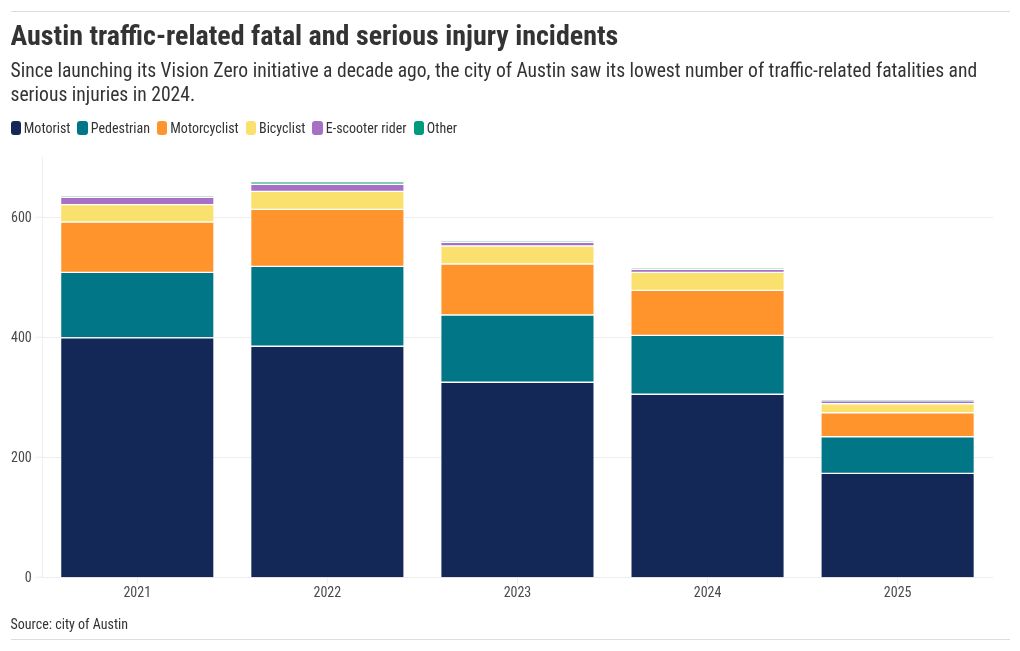
46% fewer left-turn crashes involving pedestrians, including a 56% drop in injury crashes compared with the previous five-year average32% fewer left-turn crashes involving other vulnerable road users like cyclists and scooter riders, with a 34% reduction in injury crashes82% decline in annual crash costs for these types of crashesThe community is estimated to save roughly $3 million each year related to emergency response, medical bills and other damages; crashes average $3.7 million per year before the pilot to $0.7 million in costs after, the report states.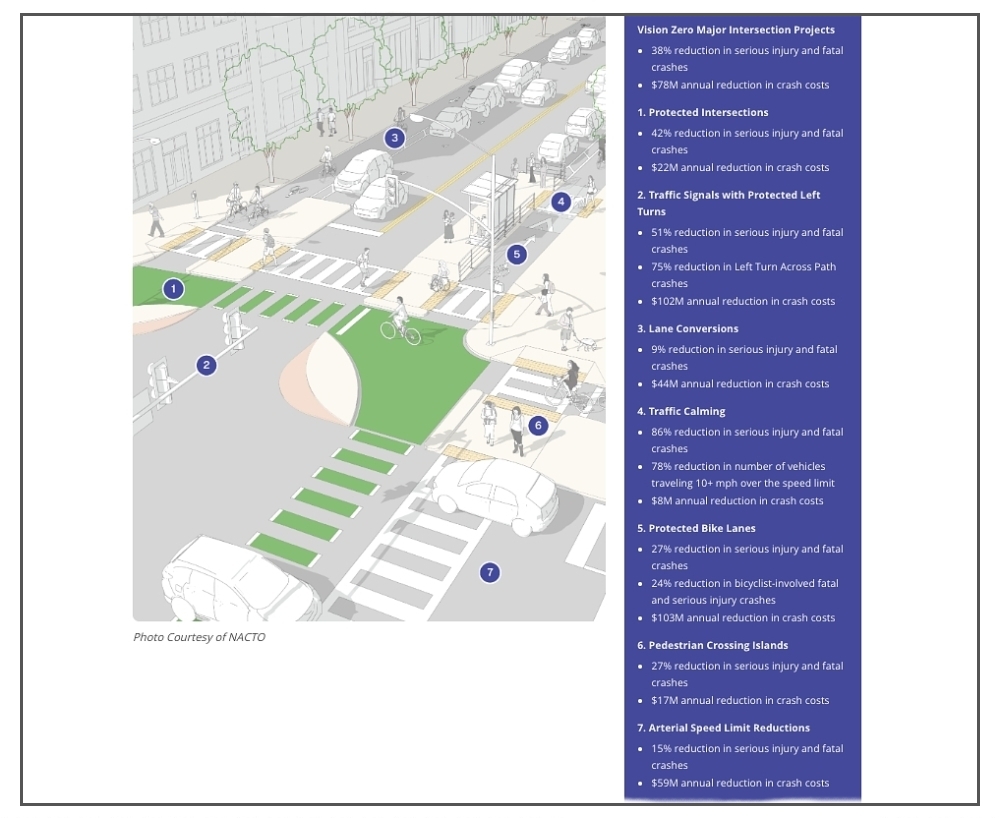 The city of Austin’s Vision Zero mobility improvements have resulted in reduced serious traffic accidents. (Courtesy city of Austin)Of note
This is the first study of its kind in Texas and aligns with research from cities such as New York, Portland and San Francisco, which have used similar low-cost safety improvements, according to the report.
The city will continue monitoring the pilot intersections to track long-term safety and durability. If successful, the program may expand these treatments to more intersections across Austin.
Put in perspective
These safety countermeasures also support other Vision Zero initiatives focused on intersection safety.
Fatal and serious injury crashes have seen a 22% decrease at major intersections in Austin, where safety improvements have been made, according to a separate report released by the city in June 2024.
According to previous reporting by Community Impact, major intersections have a higher likelihood of severe injury or death because of the many conflict points, such as high speeds and high volume, city staff said.
The program’s 10-year report, released earlier this year, reviewed safety projects across Austin. Key findings include a 38% drop in fatalities and serious injuries at 29 major intersection upgrades.
Austin’s Transportation and Public Works Department has added protected left turns at more than 130 intersections. Additionally, pedestrian crossing islands were linked to a 27% decrease in serious crashes.
Since the adoption of Vision Zero in 2015, Austin has invested more than $1.3 billion in safety and mobility improvements through three voter-approved mobility bonds. Those funds have supported hundreds of projects, per the report, including:
29 major intersection improvement projectsOver 500 pedestrian crossings110 miles of All-Ages-and-Abilities bicycle facilitiesMore than 320 miles of new or upgraded sidewalksOver 600 Safe Routes to School treatmentsLooking ahead, Vision Zero plans to install protected daylighting at intersections where it can improve pedestrian visibility and safety. The program has secured several federal Safe Streets for All grants.
View completed and ongoing Vision Zero projects here.