The dark blue van featured a curved light blue arrow and the word “prime” painted in white letters. The driver wore an Amazon jacket.
But Brandon Ye wasn’t an Amazon driver and this wasn’t an Amazon van. And Ye wasn’t dropping off clothing or cookware. He was delivering marijuana.
For three months in early 2023, officers followed the van as it drove around Oklahoma City and its suburbs to load and unload large trash bags, court records show. His deliveries caught the attention of law enforcement because the deliveries — and there were a lot of them — were made to houses and warehouses that were under investigation for drug trafficking.
The surveillance paid off. Ultimately, Ye was arrested and convicted in his role as part of a large back-market marijuana ring “with ties to China,” court records show. Ties to China, and also ties to Dallas.
Crime in The News
The network’s alleged ringleader was a Denton County man, and the group operated between Dallas and Oklahoma City from 2020-2023.
The network illustrates what authorities say is the new reality: Illegal marijuana is coming to Texas not so much over the Rio Grande but across the Red River.
Unlike Texas, which has one of the nation’s most restrictive medical marijuana laws, marijuana has been legal in Oklahoma to grow and cultivate for medical purposes following voter approval in 2018. Since then, the state has become Texas’ top supplier of black-market marijuana, federal prosecutors said.
The problem goes well beyond Texas. Oklahoma federal prosecutors called their state “one of the largest, if not the largest” suppliers of black-market marijuana in the U.S. The Drug Enforcement Administration’s 2025 National Drug Threat Assessment said two-thirds of all seized marijuana in the U.S. in 2024 came from Oklahoma.
“The impact of our black-market marijuana industry has spilled over state lines,” said Assistant U.S. Attorney Wilson McGarry of Oklahoma in a 2024 court filing in one of the related criminal cases.
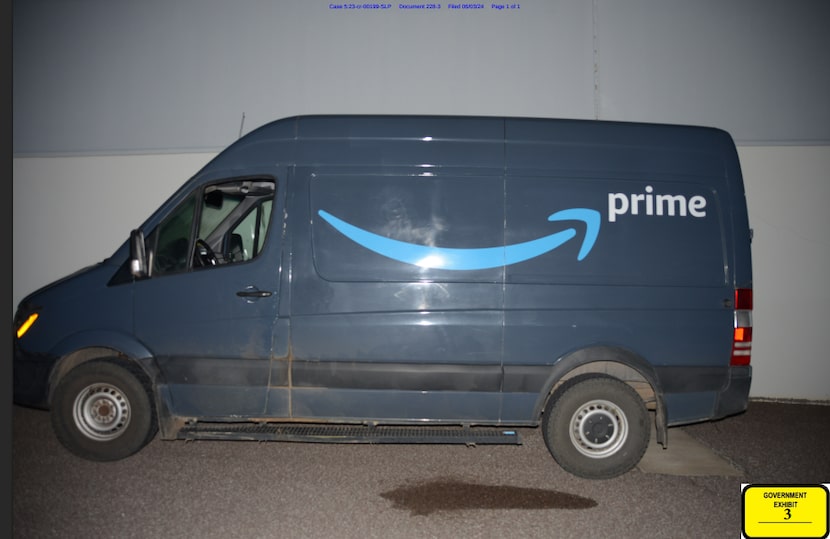
Prosecutors said Brandon Ye used this “fake Amazon van” to make marijuana deliveries.
Justice Department
He called the output of the state’s illicit marijuana trade “staggering.” Oklahoma authorities in 2024 calculated that the black market produced over 61,000 tons of marijuana annually, worth more than $30 billion, McGarry wrote.
To put that into perspective, a 2023 report by the Oklahoma Bureau of Narcotics noted that the demand for medical marijuana that fiscal year was 800,000 pounds of marijuana. The report noted that over the same time period Oklahoma harvested more than 13 million marijuana plants.
Numbers vary depending on a number of factors, but on average each marijuana plant grown indoors produces around one pound of finished marijuana every 45 to 60 days, or about 6-8 pounds per plant annually. That means Oklahoma likely harvested more than 100 times more marijuana than needed to meet its medicinal demand that fiscal year.
The investigation of the DFW-OKC network that snared Ye began in late 2021 and was a joint effort between the FBI, the Oklahoma Bureau of Narcotics and Oklahoma police, court records show.
Law enforcement officers between November 2022 and August 2023 seized over 30 firearms and more than 206,500 pounds of marijuana — roughly the size of an adult blue whale, court records show.
That included more than 138,800 marijuana plants with a street value of over $272 million.
Many defendants have already pleaded guilty, and some have been sentenced to federal prison, according to court records. The federal government has obtained millions of dollars in forfeitures during its investigation, seizing cash, jewelry, real estate and vehicles from multiple defendants, court records show.
The alleged ringleader — Dian Huang Jiang from The Colony — has recently agreed to plead guilty in the case and to forfeit four Denton County properties worth a total of about $2 million as well as $4.2 million in cash, according to court records.
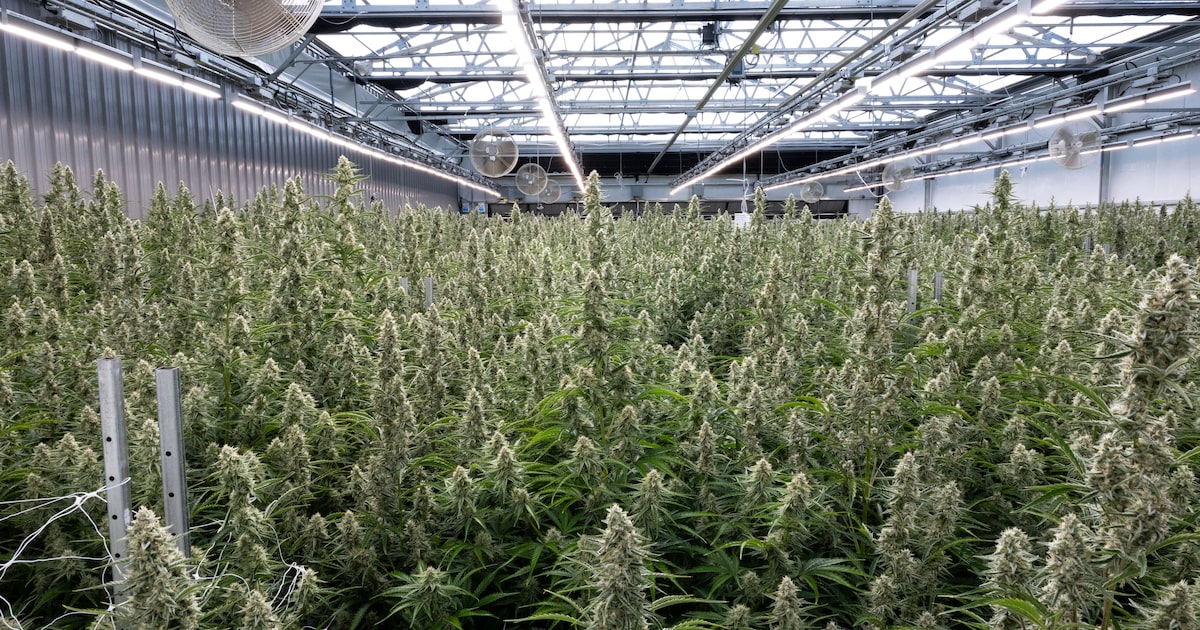
Marijuana plants grow at the new Texas Original production facility in Bastrop, Texas, on Monday, Dec. 8, 2025. Texas Original is the largest medical marijuana provider in the state.
Angela Wang / Special Contributor
Jiang, known as Danny, as of Dec. 19 had not yet gone before a judge to formally enter his plea. When he does, a sentencing date will be scheduled. His attorney did not respond to phone or email requests for comment.
Jiang, 55, was arrested in 2023 and charged with drug trafficking, weapons and racketeering counts. At least 15 other defendants, including his wife, son and nephew, are charged in the case, which was filed in July 2023 in federal court in Dallas.
Jiang is accused of using two North Texas Chinese restaurants in which he and his wife held an ownership interest to help launder millions of dollars in drug proceeds. While diners enjoyed their meals at Wasabi & Wok in The Colony and Jumbo Super Buffet in Dallas, marijuana customers paid for their drug orders there in cash, court records say.
Prosecutors said the drug proceeds were collected there by Jiang’s family members.
After paying, marijuana customers drove north to Oklahoma to pick up the product from one of several “stash houses” Jiang operated, court records say. The bulk purchasers then sold the marijuana to their own customers across North Texas and elsewhere, prosecutors said.
Jiang acted as a broker between illegal growers in Oklahoma and out-of-state buyers, who were mostly from Texas, according to court records. His trafficking operation employed smugglers, stash houses as well as indoor growing operations in Oklahoma City and its outskirts from 2020 to 2023, prosecutors said.
Jiang bought marijuana by the ton from both licensed and unlicensed Oklahoma growers who cultivated the plant inside residential houses and warehouses, court records say. And he sold bulk quantities to customers in Texas, Georgia, Alabama, Florida, Illinois and New York, the indictment said. Many traveled to Oklahoma to pick up their orders.
The indictment said Jiang sold up to 1,500 pounds of marijuana per day and often required his customers to buy between 30 and 500 pounds at a time. He moved about 70 tons of the plant — or 140,000 pounds — during one 10-day period, court records show.
The strains of marijuana produced were sold under such names as Animal Cookies, Obama, Gorilla Glue and Jet Fuel. Jiang assured his customers his marijuana was top quality, telling them “100% no seeds,” records show.
Related
Oklahoma residents with marijuana transporter licenses were used as smugglers so they would have a “cover” if pulled over by police during deliveries, prosecutors said.
Buyers often traveled north to Oklahoma in two vehicles at a time — one of them serving as a decoy to draw police away from the vehicle with bulk cash, if necessary, court records show.
Jiang came to the U.S. from China in 1992 and worked in the restaurant business in New York and other states, according to a deposition he gave in an unrelated foreclosure action. He said he worked and lived in “various restaurants” while he awaited the outcome of his political asylum petition. In 1996, he opened his first Chinese restaurant, according to the deposition.
Jiang moved to Dallas in 2003 and purchased a house in The Colony in 2009, according to court and property records.
His business associate, Jing Jiang, 56, owned a licensed marijuana growing operation in Oklahoma during which he developed trusted relationships with other growers in the state, court records show. He is serving seven and a half years in prison for possession of marijuana with intent to distribute and possession of a firearm in furtherance of a drug-trafficking crime, records show.
His attorney did not respond to an email seeking comment.
Billion-dollar industry
The FBI also teamed up with police in North Texas, using surveillance, wiretaps and informants to unravel the scheme, prosecutors said.
Marijuana is the most commonly used illegal drug in the U.S., according to the DEA. The agency’s 2025 National Drug Threat Assessment said Chinese criminal organizations have “taken control” of the marijuana market and now dominate the cultivation and sale of the plant in the U.S.
Donnie Anderson, director of the Oklahoma Bureau of Narcotics, could not be reached for comment. But he said in testimony before Congress in September that his state’s marijuana law has attracted Chinese criminal networks whose members use WeChat, an encrypted app based in China that U.S. authorities cannot access through court-ordered wiretaps.
Anderson said his state’s marijuana laws imposed no limits on the number of growing operations or the number of plants each could cultivate, which led to a “staggering oversupply” of plants. As a result, over 85 million plants are unaccounted for, he said, worth an estimated $153 billion.
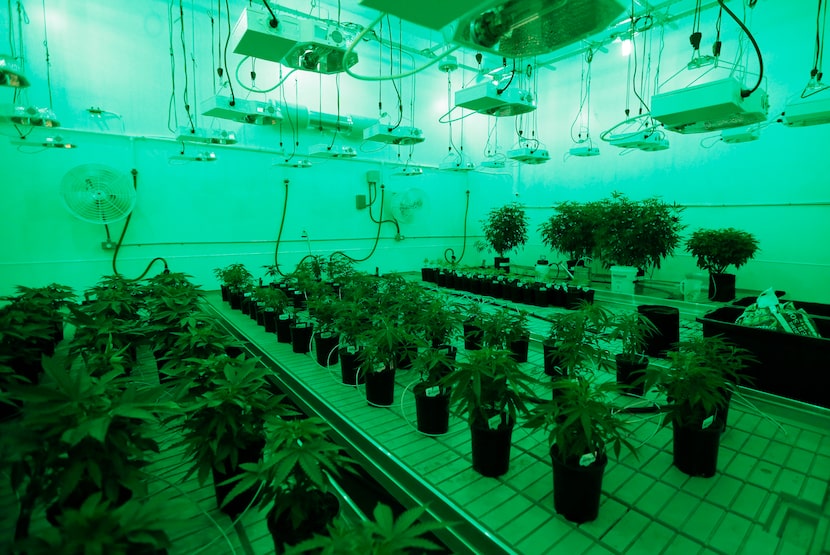
Young cannabis plants in the vegetation room under green grow lights in 2018 at a state-licensed medical cannabis cultivator and dispensary.
Vernon Bryant / Staff Photographer
Though marijuana is legal in Oklahoma for medical purposes, the state has strict regulations for producing and selling it. Businesses need a license to grow and sell. A residency rule requires owners with at least a 75% stake to have lived in Oklahoma for two years to obtain a license.
Anderson told the Congressional committee that nearly all Chinese growers circumvent the residency requirement by using straw owners and shell companies. One Oklahoman was listed as the owner of about 300 farms in the state, he said.
Licensed growers in Oklahoma are required to document the precise amount of marijuana they grow, harvest and sell. And they cannot sell it out of state. They can only sell to licensed processors, dispensaries and other licensed growers.
McGarry, the Oklahoma federal prosecutor, said in a court filing that not all of those in the state’s medical marijuana industry have tried to comply with Oklahoma law.
“Criminal enterprises,” he said, “saw the change as an opportunity to hide in plain sight by claiming to be compliant or having the appearance of partial state compliance.”
Texas has one of the nation’s most restrictive medical marijuana laws, allowing those with a limited number of conditions to use the drug in very small amounts.
‘Delivery boy?’
Many defendants in the criminal cases were Chinese immigrants who gained U.S. citizenship or permanent residency and did not have a criminal history, according to court records.
Some described themselves as low-level workers who took the jobs for extra money, believing they were working for legal and licensed medical marijuana businesses in Oklahoma, court records said.
Ye, who drove the “fake Amazon van,” immigrated to the U.S. with his sister when he was 20 years old and became a citizen nine years later, his court filings said. He initially worked as a waiter and then started his own business in 2016 making and installing stone countertops, kitchen cabinets and tile flooring, court records said.
“He was essentially a glorified delivery boy for higher ups in the drug organization,” his lawyer said in a 2024 court filing.
Prosecutors, however, said the 44-year-old coordinated “the cross-country transportation of tons of marijuana via semi-truck” since 2022. Ye controlled two different warehouses that were used in the black-market marijuana ring, prosecutors said.
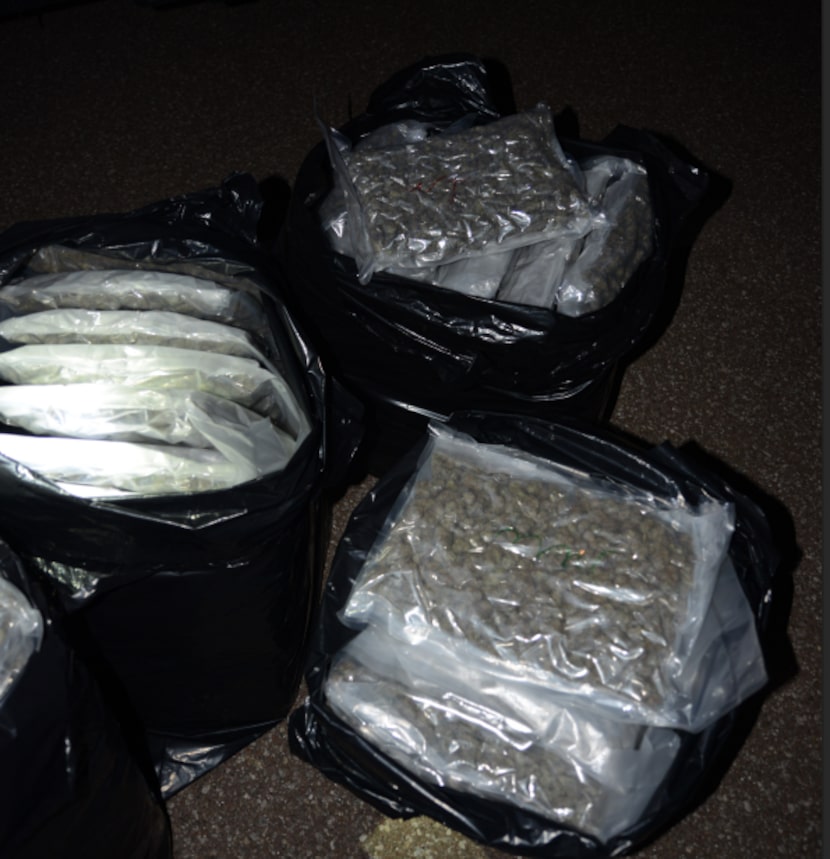
The black-market marijuana being grown in Oklahoma, seen here, was transported in vacuum-sealed bags inside large garbage bags.
Justice Department
For three months in early 2023, officers followed his van as it drove around Oklahoma City and its suburbs to pick up marijuana from about 10 different growers, court records show.
Almost every Friday, Ye and his associates loaded marijuana from the two warehouses onto a semi-trailer for transportation to other states, including New York, according to court records.
“His emboldened efforts to disguise a van as an Amazon delivery van, then use it to transport upwards of 28 tons of marijuana over seven months to the East Coast is staggering and egregious,” said McGarry, the Oklahoma prosecutor.
Ye was arrested in 2023 after police executed a search warrant at one of his warehouses and seized more than 2,700 pounds of illegal marijuana, court records show. The plants were at the time being placed into boxes and loaded onto a semi-trailer parked at the warehouse, according to court records.
Ye had no criminal record, records show. Ye is serving nine years in federal prison after pleading guilty to possession with intent to distribute marijuana and possession of a firearm in furtherance of a drug-trafficking crime, records show.
Immigrant workers
Workers often lived in the stash houses and distribution warehouses where they grew the plants, processed the marijuana and helped package it, court records show.
Investigators followed Ye’s van to one warehouse in Watonga, an agricultural area 70 miles west of Oklahoma City with about 3,000 residents, court records said. The 250,000-square-foot building had two tenants. One was a business that repaired Marine Corps military equipment, court records said.
The other was leased by a licensed indoor marijuana-growing business — the biggest one investigators found, according to court records. Agents seized more than 42,400 marijuana plants and 439 pounds of processed marijuana, worth over $105 million, in the warehouse, court records show. They also confiscated over $100,000 in cash and two vehicles, according to court records.
When agents arrived in 2023 with a search warrant, they discovered more than 20 workers who tended to thousands of marijuana plants lived in the warehouse.
The workers “lived in shambles” and in “slightly unhealthy conditions,” a criminal complaint said. And the operation likely used “harmful chemicals” that poisoned or tainted the marijuana, prosecutors said.
The DEA said in its 2025 report that illegal marijuana farms use pesticides and fertilizers from China with chemicals that are banned in the U.S.
“Many people with criminal intent recruited…immigrants and non-English speakers to work as an underpaid and undocumented workforce in their illicit marijuana businesses,” wrote Kimberly Miller, an attorney for a Chinese immigrant and defendant who operated a dry-cleaning business in New York before moving to Oklahoma to work in the marijuana industry.
Aaron Halegua, a New York lawyer who represents Chinese workers who were mistreated and exploited in the marijuana industry, said he’s seen cases in which immigrants brought to the U.S. became victims of forced labor and human trafficking.
“In some cases, the workers were literally locked onto the farm and could only leave the premises with permission,” he said. “In other instances, the workers may feel that if they do not stay and continue working, they will forfeit whatever wages they have already earned.” he said.
Big profits
The black-market marijuana enterprise made its leaders wealthy, prosecutors said.
In a March 2023 phone call intercepted by police, Jiang revealed the extent of his marijuana profits, saying he had accumulated at least $30 million in his first year of business and had purchased “50 to 60 houses in China,” court records show.
Jiang told the caller he sent most of the $100 million he made in his second and third year of operation to China, according to court records.
“The caller cautioned Jiang to not be greedy and to stop taking risks,” the indictment said.
Jiang told the person he would retire at the end of the year and return to China when construction on his $10 million home there was completed, the indictment said.
He kept over $1 million in drug earnings in a bank safe deposit box in The Colony, the indictment said. In August 2023, authorities seized $2.8 million in cash from Jiang, the indictment said. They also seized jewelry, four sport utility vehicles and two cars in the Dallas case.
Jiang was unafraid to use violence to protect his business, prosecutors said. Upon learning in 2022 that a vehicle was following one of his marijuana suppliers, Jiang suggested the driver be shot in a “drive-by,” the indictment said.
Violence was used by one defendant in the case.
When officers arrived with a search warrant at a Cedar Hill home in March 2023, Eric Martinez fired on them with an AR-style pistol, prosecutors said. Inside the home, officers found about 63 pounds of marijuana, almost $90,000 in drug proceeds and guns, according to court records.
Martinez pleaded guilty in November to a drug conspiracy charge and to discharging a firearm during a drug trafficking crime, court records show. He is scheduled to be sentenced next year. His attorney declined to comment.
Related

Related