
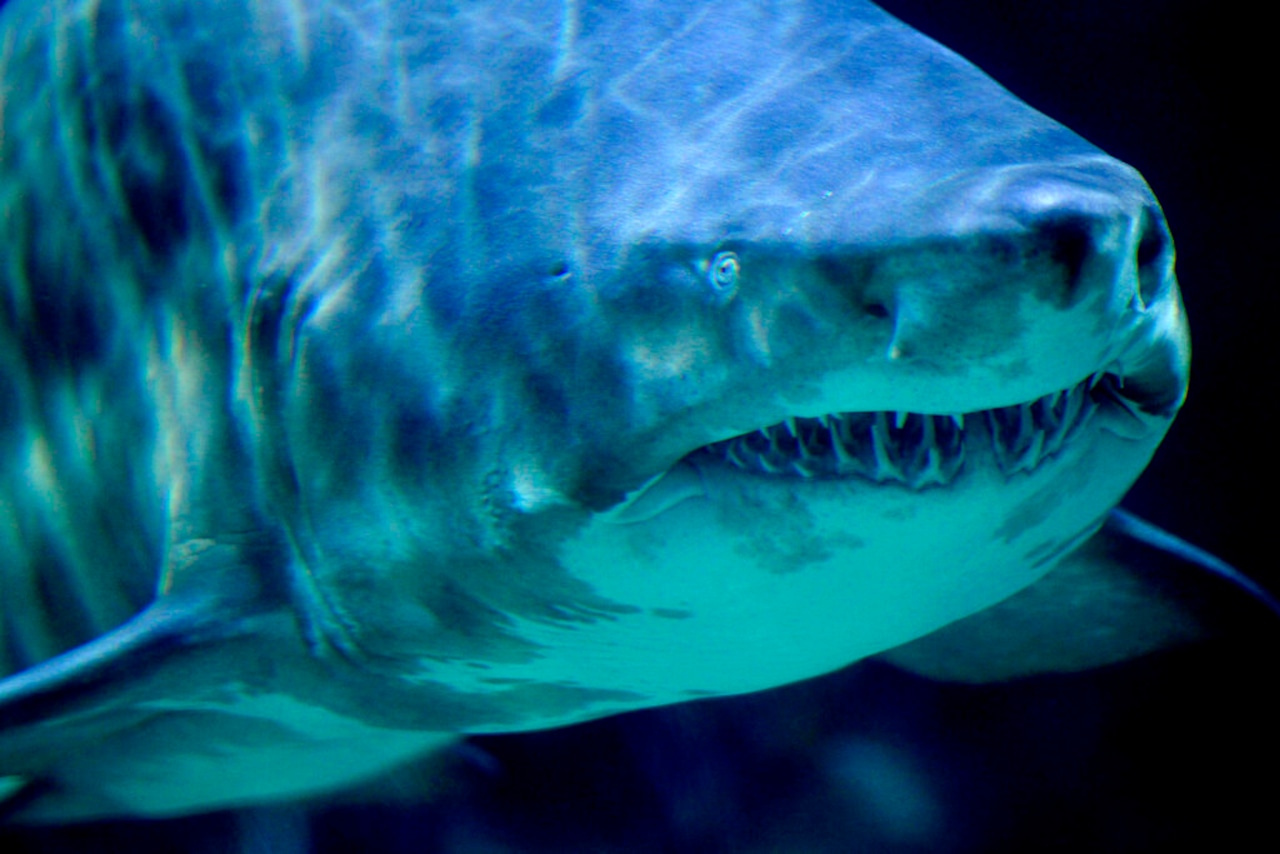
The iconic movie “Jaws” just celebrated its 50th anniversary, and then some folks down in Florida went out and landed a real-life jaws of their own.
And they did it fishing right off a popular public beach.
Anglers Trey Linder and Steve Callaway captured a massive tiger shark from the treacherous waters of the Gulf of Mexico. Sure, it wasn’t a great white, but it was still a big shark, measuring at a whopping 11-feet, 8-inches and weighing in at an estimated 1,000 pounds.
Linder and Calloway, who work with Shark and Shore, made sure to pose for a picture with the huge shark before they tagged it and released it back into the wild waters close to Pensacola, Florida.
According to the professionals, it takes about three minutes total to tag, take pictures and release the sharks back into the water.
Sharks are tagged for the National Oceanic and Atmospheric Administration and according to the administration, the summer is the most ideal time capture sharks.
Ever wonder why more sharks are seen in the summer months?
Well, according to shark biologist John Carlson, the coastal sharks come closer inland in search of warmer water for the sole purpose of giving birth. This leads to more shark sightings during the warmer months.
The anglers were taken out on a boat from Coast Guard Yakers LBSF Charters.
Per the Florida Museum, tiger sharks are the most commonly caught shark in the United States, as they can grow up to 2,000 pounds, and to over 18 feet.
Compared to great whites, tiger sharks aren’t as dangerous, but that doesn’t mean the sharks don’t pose as a threat to those who are in the water.
In fact, the second-most bites on humans around the world are from tiger sharks due to the fact that the sharks can sometimes mistake humans for their natural prey, such as sea turtles.
Multiple shark species have been listed on NOAA’s website, due to its continued focus on conservation efforts following the nearly extinct populations.
“We are committed to sustainable shark management,” the organizations says about its policies regarding shark conservation.
“We manage commercial and recreational shark fisheries in the Atlantic Ocean and work with three regional fishery management councils to conserve and sustainably manage sharks in the Pacific Ocean.”
The NOAA also conducts research, assesses stocks, works with U.S. fishermen and implements restrictions on shark harvests.
“We have made significant progress toward ending overfishing and rebuilding overfished stocks for long-term sustainability,” they said.
If you purchase a product or register for an account through a link on our site, we may receive compensation. By using this site, you consent to our User Agreement and agree that your clicks, interactions, and personal information may be collected, recorded, and/or stored by us and social media and other third-party partners in accordance with our Privacy Policy.