
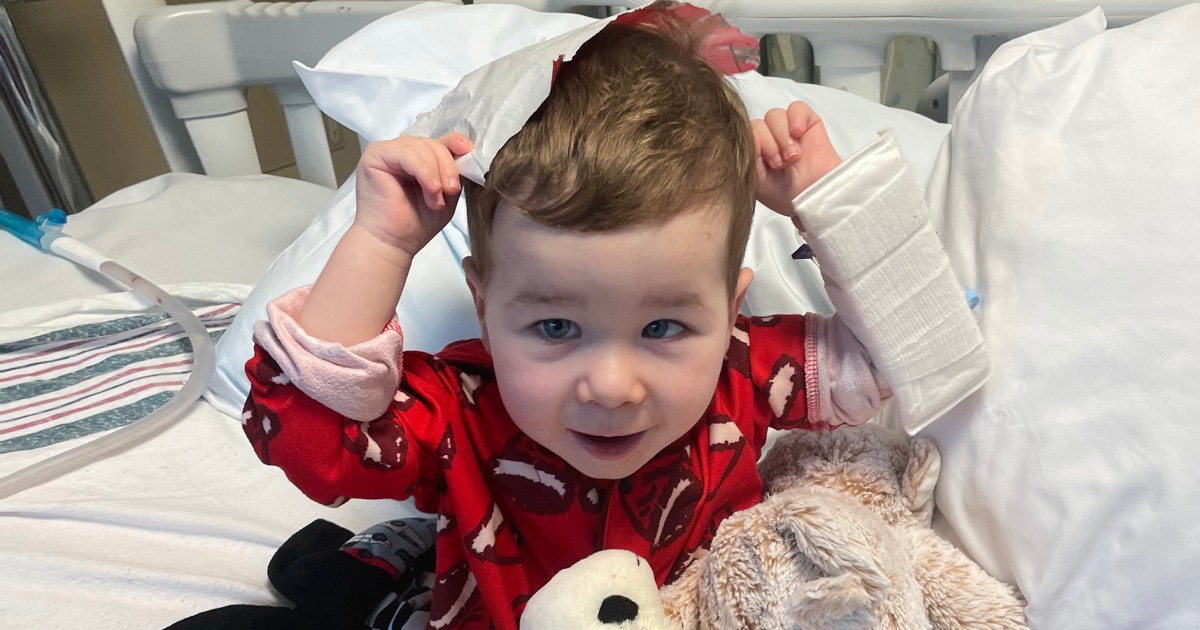
After Jack Drury was born prematurely, he participated in therapies to help him meet his developmental milestones. Jack thrived at first, but after he turned 2 in June, his development slowed.
“One of the occupational therapists suggested that we actually go see a neurologist,” Jack’s father, Tim Drury, 37, of South Amboy, New Jersey, tells TODAY.com. “The neurologist conducted a variety of tests one of which was a genetic test.”
The genetic test revealed Jack had infantile neuroaxonal dystrophy (INAD), a rare genetic disorder that causes children to slowly lose skills they once had. It is progressive and life-limiting with no treatment or cure. The Drury family felt devastated.
“It was horrific,” mom Kelsey Drury, 34, tells TODAY.com. “We thought it was a death sentence.”
The family connected with a nonprofit, the INADcure Foundation, which promotes research into treatments like gene therapy for INAD. Knowing that was the only hope to treat Jack, they started fundraising. In weeks, they’ve raised more than $650,000.
“We figured let’s try to give ourselves some hope and see how we can help and channel all this energy into something positive,” Kelsey Drury says. “It’s really a story of our community coming together.”
‘Utterly Confused’
While Kelsey Drury’s pregnancy was healthy for the most part, at 32 weeks pregnant, she became ill.
“I started developing pain in my right side and then overall body aches,” she says. “I remember taking a COVID test because I felt sick, chills and body aches.”
She visited her OB to make sure she was OK. While Kelsey Drury’s blood pressure looked normal, the doctor also ran blood tests.
“The next day, he got (the results) back, and he called me and said, ‘Get to the emergency room right now. You have HELLP syndrome,’ which means my liver enzymes were extremely high and my platelets were very low,” she says.
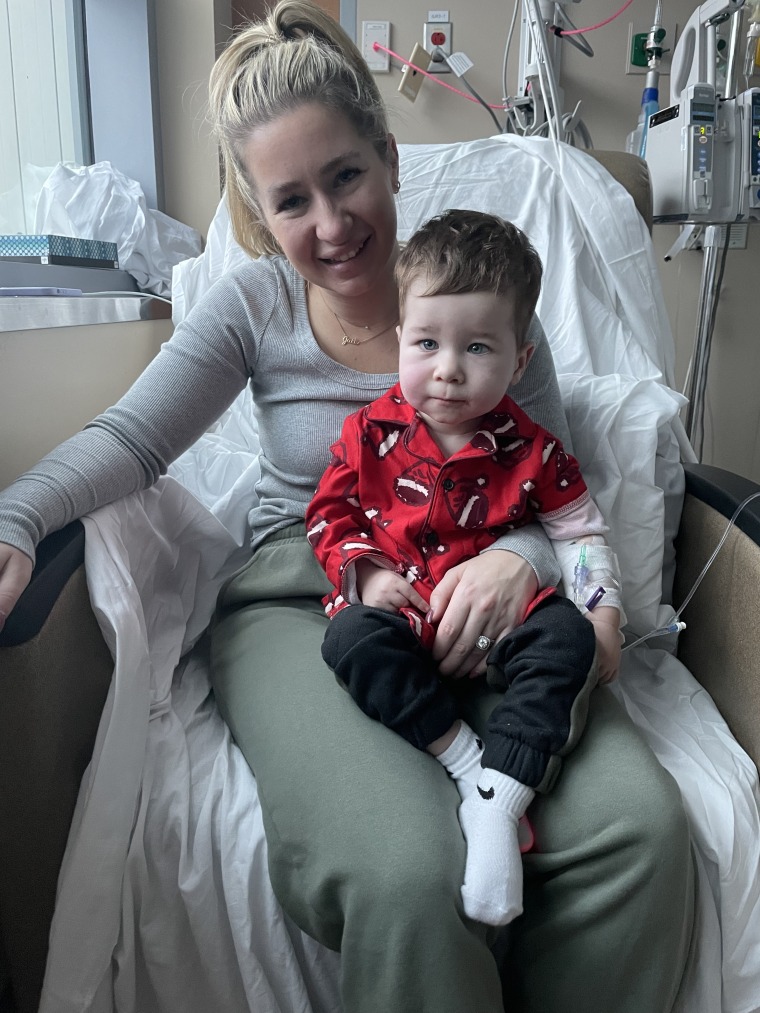 While Kelsey Drury felt helpless after Jack’s diagnosis of infantile neuroaxonal dystrophy, she soon found hope in fundraising for a gene therapy treatment for INAD.Courtesy Drury Family
HELLP, which stands for hemolysis, elevated liver enzymes and low platelets, is a dangerous form of preeclampsia, causing death in a quarter of patients, the Preeclampsia Foundation says. Delivering the baby generally helps stabilize the mom, and then doctors can offer other treatments.
At 33 weeks, Kelsey Drury gave birth to Jack, who was 3 pounds, 15 ounces. For 17 days, he stayed in the neonatal intensive care unit for oxygen support and to gain weight.
“He came out breathing on his own,” Kelsey Drury says. “He was able to drink a bottle on his own.”
When Jack neared his first birthday, the couple realized he was “very behind,” Kelsey Drury notes, and he started various therapies. For about a year, he improved, before “he actually started to regress,” she says.
Jack had been scooting around on his bum to get around, but stopped doing it, for example. That’s when the family decided to take him to a neurologist. They didn’t anticipate that Jack was living with a serious condition.
“He didn’t have any physical features that would indicate anything severe,” Kelsey Drury says. “We were thinking of more of a minor disorder or something with his muscles … or an autoimmune disorder.”
Doctors also seemed unsure as to what was happening to Jack. While he had hypotonia, low muscle tone, doctors didn’t seem worried about it.
“The medical professionals were utterly confused at what was causing his delays,” Tim Drury says. “There (were) some physical symptoms associated with like a muscular dystrophy. There (were) other symptoms associated with other things.”
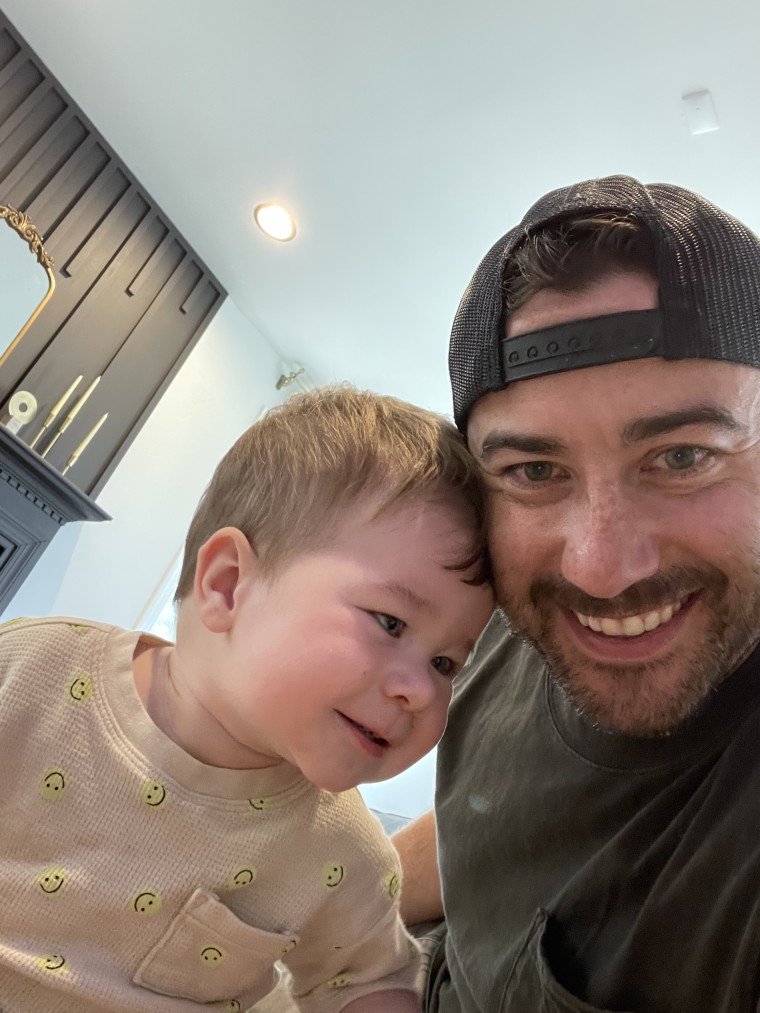 Even though children with infantile neuroaxonal dystrophy often lose their ability to do many things, Jack still eats by mouth and loves pasta, meatballs and peanut butter puffs.child / Courtesy Drury Family
When the doctor revealed Jack had INAD, the family felt stunned.
“It was probably the worst news that we could have ever received,” Kelsey Drury says. “It was, ‘Your child’s only going to live until about 10 years old and there’s no cure.’ To hear those words, it was heartbreaking.”
Tim Drury agrees.
“We were absolutely blindsided to the fact that Jack had an incredibly rare disease that the neurologist that gave us the diagnosis said she had to Google information about it because she’s never heard of it,” he says.
For the next week, the two spent their time “cherishing every moment with him,” snapping photos as much as they could. Their grief persisted.
“I was having dreams of planning his funeral because we thought it was over,” Kelsey Drury says. “We thought it was a death sentence.”
After about two weeks, they reached out to the founder of the INADcure Foundation, Leena Panwala, and started learning more about INAD.
After Panwala’s daughter received an INAD diagnosis in 2017, she started the foundation focused on finding treatments and cures. Doctors associated with the organization have been researching a potential gene therapy for the disease, which “will help the quality of life and potentially slow or stop the progression,” Tim Drury says.
“She mentioned the possibility of this gene therapy,” Kelsey Drury says. “We started to come around to the idea that maybe there is some hope.”
Gene Therapy for INAD
Often, the first sign something is wrong with babies with INAD is low muscle tone.
“It starts with muscle tone not being where we expect it to be, and they typically start to have difficulties with motor milestones, like walking,” Dr. Darius J. Adams, medical director for the Jacobs Levy Genomic Medicine and Research Program at Atlantic Health, tells TODAY.com. “After that, this condition can progress to where additional systems are impacted — for example, the ability to swallow.”
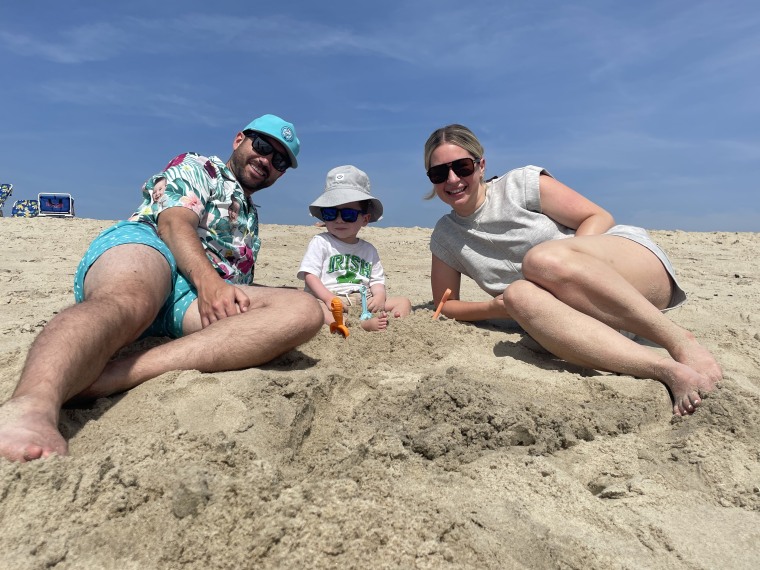 The Drury family tries to make life happy for Jack, who enjoys dogs, being outside and Ms Rachel,child / Courtesy Drury Family
Over time, children with INAD can no longer sit up or eat on their own. Often they require gastric tubes for feeding and eventually need support breathing. It is fatal.
“Most children, on average, will die by 10 years of age,” Adams says. “Some children, depending on their circumstances and what infections they’ve encountered, can live longer.”
Estimates of how many children live with INAD are about one child in a million. Yet Adams says that “far fewer” than 300 children in the United States have been diagnosed with INAD, which would make it rarer than estimated.
“It does require relatively sophisticated genetic testing to diagnose this, and so it is possible that we’re not diagnosing some of these kids,” Adams explains.
It also can present like other disorders, such as Rett syndrome, complicating diagnosis.
In kids with INAD, both parents have to carry a mutation to the PLA2G6 gene, which creates a 25% chance of developing the condition. Carrier don’t have symptoms of the condition.
While there’s no treatment, interventions such as physical therapy, occupation therapy and feeding therapy can help children live better lives. But, “those therapies don’t really stabilize the condition or prevent progression,” Adams says.
Adams and his colleagues are investigating whether giving children with INAD a “functioning copy of PLA2G6 will hopefully halt the disease progression,” he explains. He’s designing a Phase 1 and 2 clinical trial to make sure the treatment is safe and works.
“We’re going to be looking at both those things with this study,” Adams says.
They’re recruiting about 10 children to receive the intervention, and their progress will be tracked against a natural history study of INAD, which “will essentially act as our control group.”
The U.S. Food and Drug Administration allows such designs in the case of rare disease, Adams notes, because it is difficult to find enough patients for an experimental and control group. Adams will soon submit the study to the FDA for approval.
The INADcure Foundation has been raising money to support the gene therapy research, including animal trials and toxicity studies. If the FDA approves the clinical trial, more funding will be needed, which is why the Drury family’s efforts are so important.
Typically, for clinical trials for new treatments, a biotech company will fund them, but those for ultra-rare diseases like Jack’s are less profitable, so there’s less interest from the industry, Adams explains. That’s where INADcure Foundation has come in.
“This is a challenging journey,” Adams adds.
Jack’s Miracle Mission
Jack loves to laugh, finding “the littlest things” hilarious. Sometimes he gets frustrated because he used to be more mobile, and now he can’t get around as well. Yet, he remains calm in most situations. And Jack intently follows conversations. He can’t speak, but he tries to mimic sounds and signs to communicate.
“If you make like the slightest funny noise or funny face, he has this belly laugh that is so loud,” Kelsey Drury says. “Sometimes he laughs so hard he gives himself hiccups. It’s the cutest thing.”
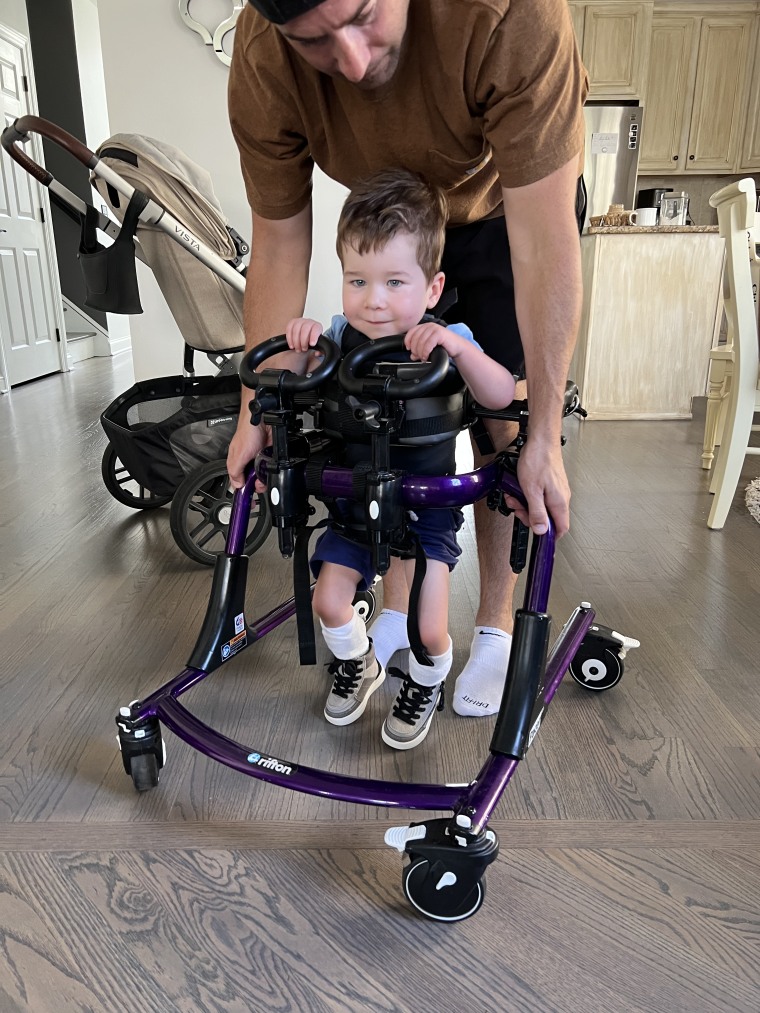 Doctors say it’s important for Jack to build muscle, so his parents encourage him to use various walkers and activity chairs to keep him engaged.Courtesy Drury Family
Jack also loves his grandparents’ dog and being outside.
“We have made it our mission to do anything we can to make him laugh,” Kelsey Drury says. “We’re just trying to make him happy and comfortable.”
He hasn’t lost any cognitive abilities yet, and the doctors encourage the family to push him in therapies to help him develop any muscle that he can.
It’s unclear if Jack will be one of the children selected for the gene therapy trial. Generally, gene therapy halts the progression of a disease. This creates a sense of urgency.
“We’re just in a major push to get this gene therapy approved so that, if he can get it and we can slow the symptoms, we could potentially change the course of his life,” Kelsey Drury says. “It’s really giving us hope.”
While they still worry, the family has decided to focus on how they can help Jack.
“I don’t think either of us could ever articulate the emotions and the weight that this carries,” Tim Drury says. “We have to do whatever we possibly can for Jack, and sitting around and getting into some of the more negative feelings of heartbreak and despair isn’t going to help our child.”
That’s why the family started Jack’s Miracle Mission, a fundraiser to support the gene therapy research. Tim and Kelsey Drury shared about it online, and they felt surprised by how many people have donated so far.
“It was the power of social media,” Kelsey Drury says. “People must have been coming across the page, reading the story and donating without any context from us.”
 Jack is happy and attentive and tries speaking and making sounds. child / Courtesy Drury Family
The two work full time and care for Jack, so it can be tough to continue promoting the fundraiser. Its success keeps them motivated.
“We haven’t had a win in a really long time,” Kelsey Drury says. “For the first time in a really long time, this feels like a win.”