
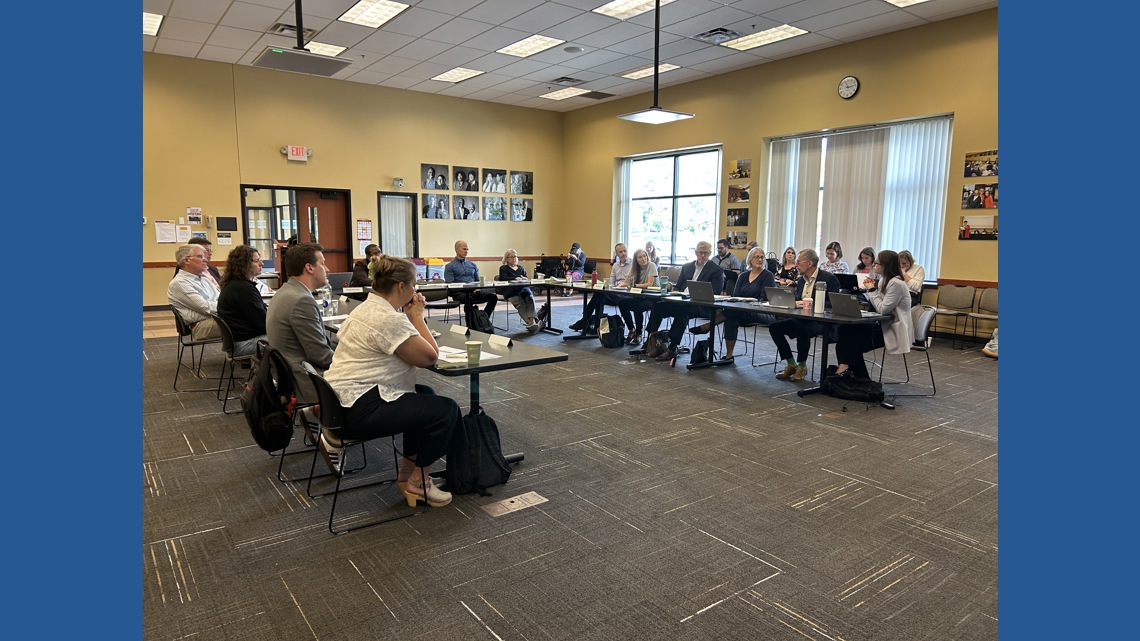
The task for held it’s first meeting Friday morning, and it was open to the public.
MINNEAPOLIS — Minnesota’s first-ever task force to address health care affordability met for the first time Friday morning.
The 15-member task force was created by the Center for Health Care Affordability. The center was created by lawmakers in 2023.
The task force heard from the state’s health department and state health economist about the current state of health care.
“Health care spending at an individual level is the single largest expense for Minnesota households,” Stefan Gildemeister, the state health economist.
Gildemeister said health care spending is a substantial amount of the state’s economy.
The Minnesota Department of Health reported that 76% of Minnesota adults are concerned about affording health care, and 45% struggled to get health care over the past year because of cost barriers.
The department also found 1 in 4 Minnesotans with chronic conditions didn’t get needed medical care due to cost in the past year.
“We are proud in Minnesota [to] have high coverage rates, we have high quality care, we have world-class innovation, but none of that matters if people can’t afford to use the system,” said Carol Backstrom, the state health department’s assistant commissioner.
Backstrom said the state has needed a dedicated focus on affordability for a long time.
“We are facing federal funding cuts and have already experienced some of those and that will likely result in thousands of Minnesotans losing their insurance coverage, and of course with more people going without insurance, care will be less affordable for all, hospitals will see sicker patients that will result in uncompensated care, and health insurance premiums for insured people are likely to go up,’ Backstrom said.
Director of the Center for Health Care Affordability Alex Caldwell said this is the first time the state has invested in health care affordability.
“The United States pays far more for our health care than the rest of the world, and we don’t get better and better outcomes for that, and part of it is the way our health care system is designed,” she said.
Caldwell said the task force will have to tackle big questions like the drivers behind growing year-over-year costs, policy solutions, and what are the tradeoffs. She said their goal is to keep more money in Minnesotans’ pockets.
“A second group will come together later this year called the Payer and Provider Health Care Advisory Task Force, so that group will be providing input as well to the center, sort of as a compliment to this Health Care Advisory Task Force,” she said.
Caldwell said the task force will be together for two years and will likely form another once their time is up. She said they’ll meet every other month or quarterly.