
Advances in DNA technology have found that a man buried 1,500 years ago in Worth Matravers in Dorset was of West African descent, challenging assumptions that villages in Britain after the fall of the Roman Empire were insular.
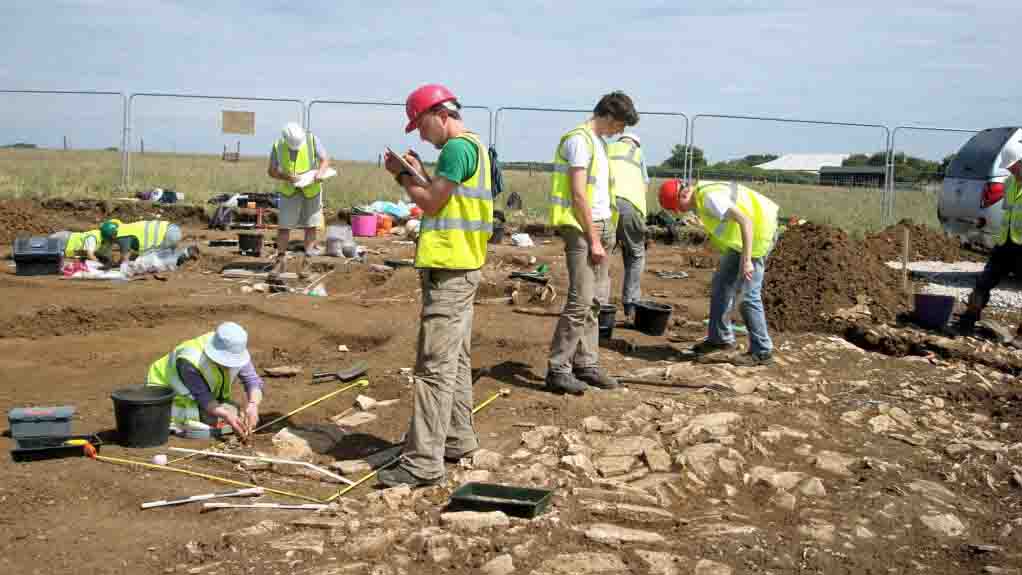
The unexpected discovery came after cutting edge genetic analysis was carried out on bones first excavated in 2011, when archaeologists investigated the Roman Barns site before it was developed for affordable housing.

Advertisement
 CAMBRIDGE UNIVERSITY PRESS
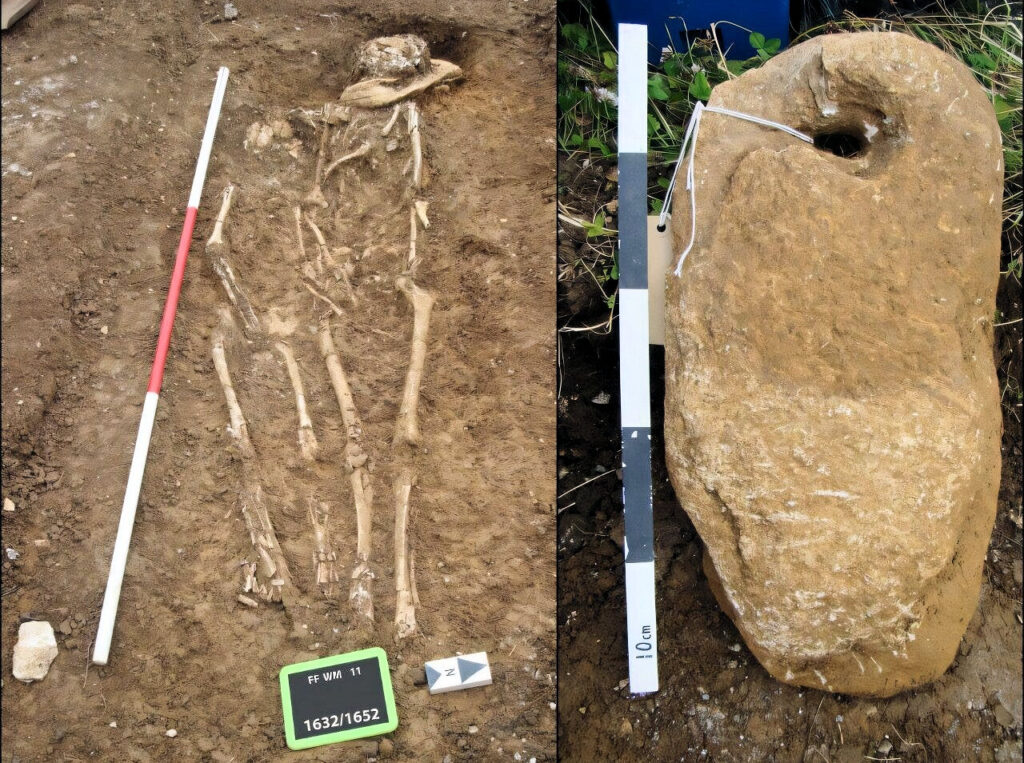
The man of African descent and another older man were buried together in the same grave, along with a Purbeck stone anchor
Double grave with an anchor
For the first time, researchers were able to map detailed family relationships among the 26 burials from around 550 AD and discovered that while almost all were linked by blood, one young man stood apart.
DNA from his teeth and bone fragments revealed that his grandfather came from sub Saharan West Africa, yet isotope analysis showed he grew up by the Dorset coastline, sharing the same seafood rich diet as his neighbours.
Buried in a double grave alongside an older man, whose head rested on an anchor of Purbeck limestone, he was laid to rest with the same rites and respect as the rest of the community.
 East Dorset Antiquarian Society
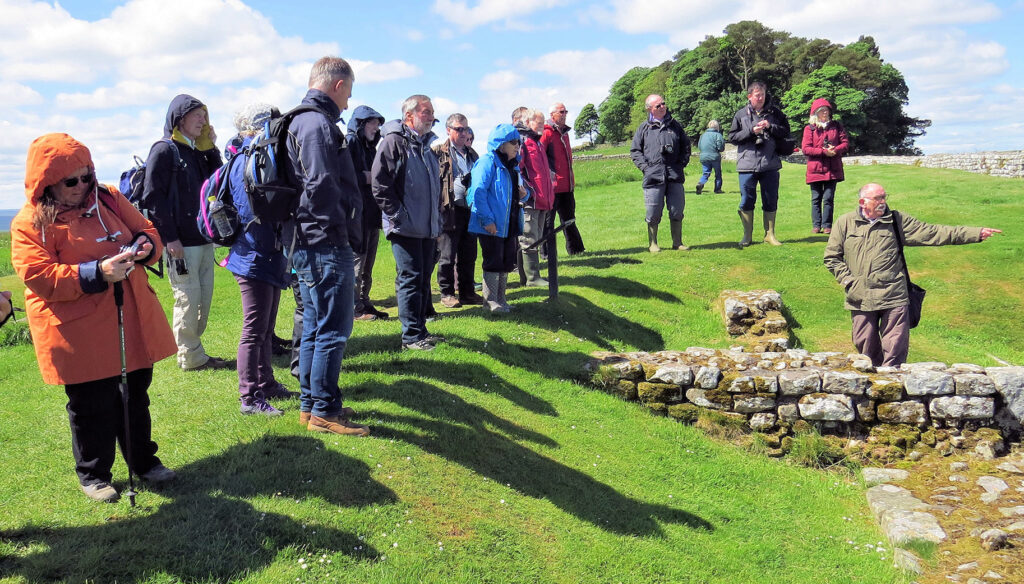
The East Dorset Antiquarian Society volunteers were responsible for an ‘incredibly important’ find
Worth Matravers kept maritime links
Archaeologists believe the discovery challenges assumptions about life in Britain after the fall of the Roman Empire.
Rather than retreating into isolation, the people of Worth Matravers appear to have maintained maritime links across the Mediterranean and North Africa, importing pottery and even wine.
The cemetery dated to about 100 years after the Roman Empire had fallen in Britain, leaving a broken economy without the financial and trading boost from its conquerors – and it had been assumed that as a consequence, the native tribes became insular and cut off from other countries.
However the findings at Worth Matravers show the diverse heritage of early medieval Britain and suggest trading routes in Dorset were still very active with the Mediterranean and North Africa.
The analysis also indicated that living standards were still comfortable for locals.
 LILIAN LADLE
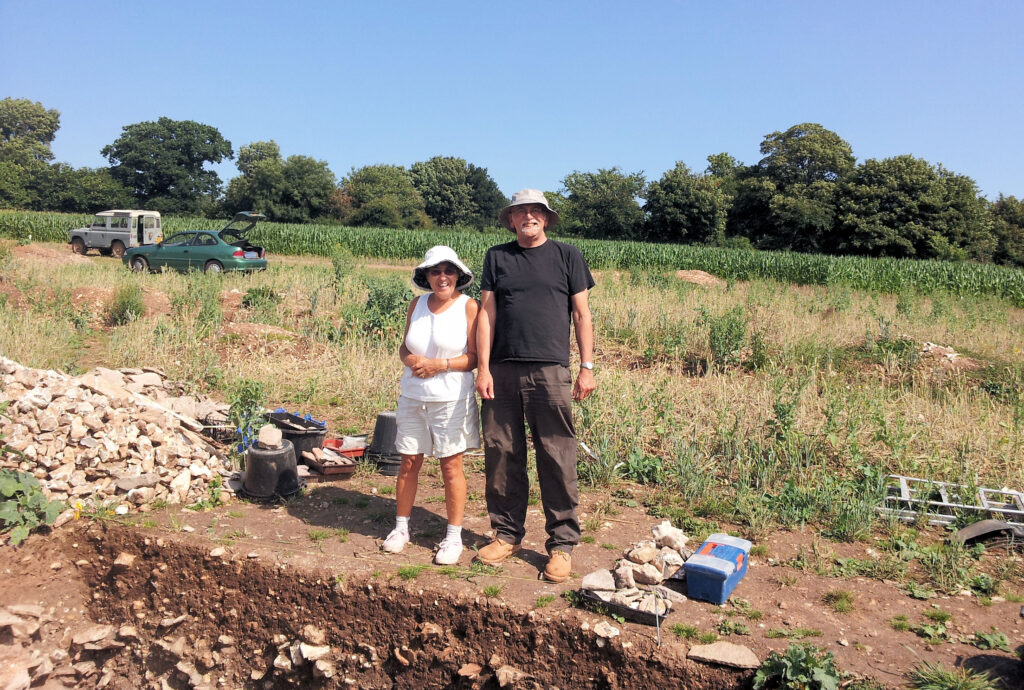
Purbeck archaeologist Lilian Ladle and the late Mark Corney on the dig site in Worth Matravers
“An incredibly important site”
Purbeck archaeologist Lilian Ladle, a research fellow at the University of Bournemouth said:
“The post Roman site was at the very end of the excavation, the last gasp of the work, yet it was an incredibly important site.
“It was a tiny site at Roman Barns, but there was a planning application to build five ecohouses for the local community there, and our local archaeology society, the East Dorset Antiquarian Society, led a voluntary excavation there.
“We found a little cemetery with 26 burials in 21 graves, but what remained of the skeletons was in incredibly poor condition. There were other burials on the site, including some 20 to 30 Roman infants buried in a nearby barn and the remains of those were much better preserved compared with the skeletons from 400 years later.
“The post Roman bones and teeth were in incredibly poor condition, but Bob Kenyon, who owned the site, was very interested in genetics and made contact with Huddersfield University who were just setting up their new genetics lab at the time.”
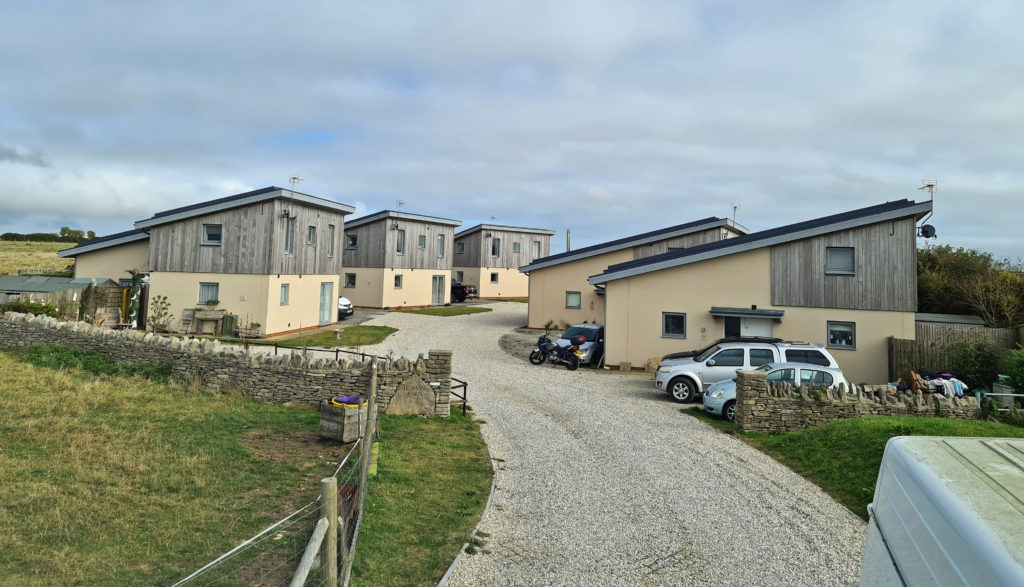 Worth Matravers CLT
The site at Roman Barns in Worth Matravers was developed into ecohomes by the village’s community land trust
“Even what their ancestry was”
Lilian added:
“They took away some of our teeth and bones and completed genetics work a couple of years ago, with amazing results.
“When we did the work there was radiocarbon dating, which could tell us when the bodies were buried, and an osteozoologist who could tell us roughly how old the individuals were.
“But today the geneticists can tell you what sex they were, what their diet was like, how they were related to everyone else there and even what their ancestry was.
“Back in 2012, we thought the cemetery had been active from about 550 to 750 AD, but the latest tests have refined that and we know that most of the bodies came from a 50 year period ending in 550 AD. New techniques are absolutely revolutionising archaeology.”
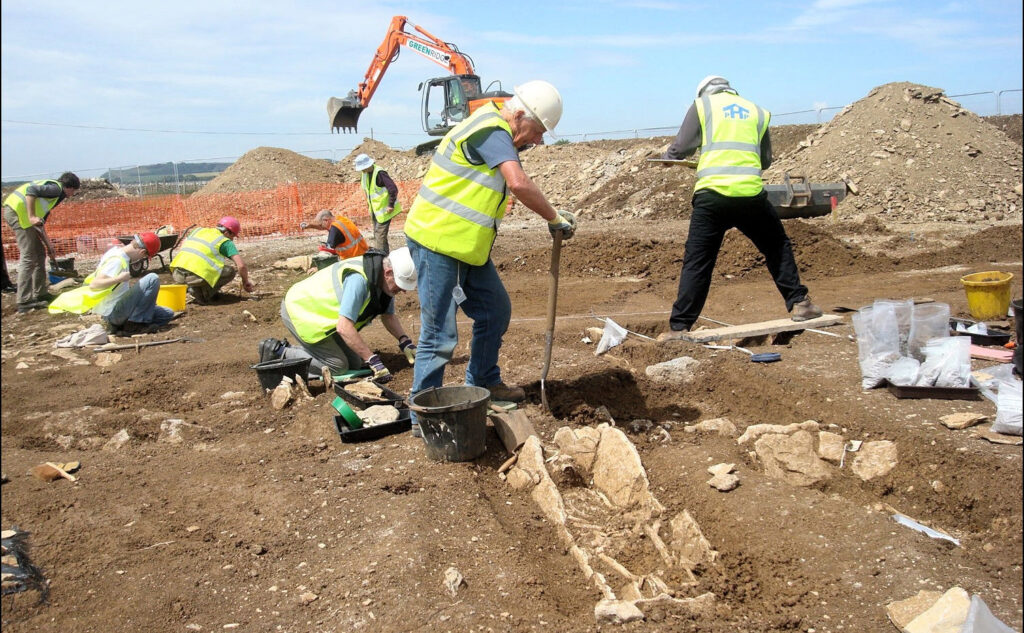 LILIAN LADLE
Artefacts spanning 6,000 years of history were found during six years of excavations at Worth
A seafood rich diet
Of particular interest in the village cemetery was one double grave for two men, one of them quite a lot older than the other, who had his head resting on a Purbeck limestone anchor and who was related to other people in the village.
But the younger man shared no DNA links with anyone else at Worth Matravers and had relatives – probably a grandfather – who came from West Africa.
Although he was not biologically related to anyone else in the cemetery, the younger man was buried with full honours in keeping with local custom, and stable isotope analysis suggests he grew up on the Dorset coastline, eating the same seafood rich diet as his neighbours, including shellfish.
The research underscores how genetics is transforming archaeology, revealing not only family ties within a cemetery but also unexpected links stretching thousands of miles.
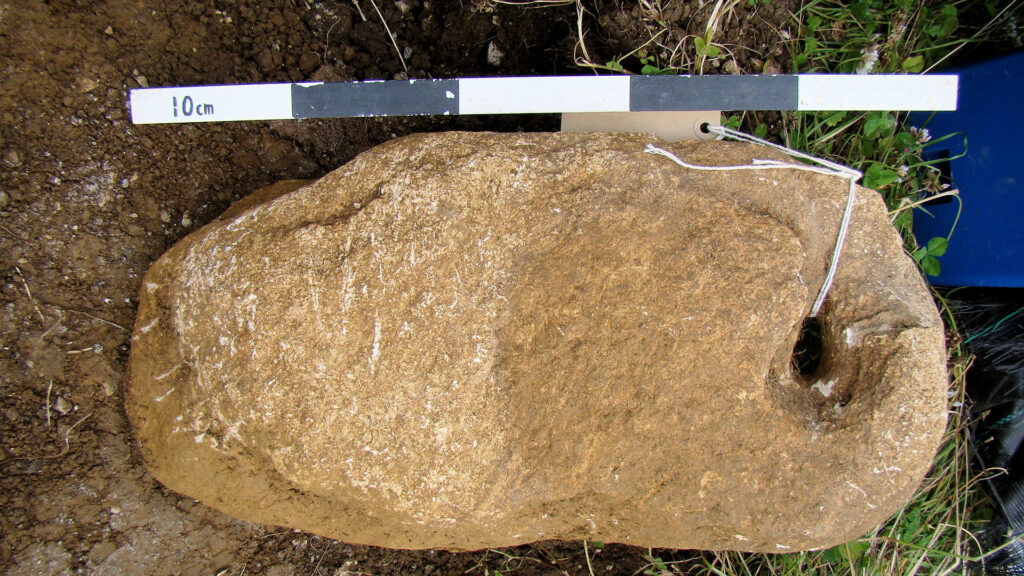 LILIAN LADLE
The Purbeck limestone anchor was a rare find in a village set back from the coastline
“This is a period we know little about”
Lilian Ladle said:
“They were buried together and possibly died together. I think, and it is just an opinion, is that we are looking at a series of epidemics a bit like Covid, where people are dying two or three at a time and are buried together.
“The older man’s head was lying on a stone anchor, which is really unusual in a landlocked village and hints that they may have been seafarers. Was he a companion to the older man, or an apprentice? We may never know.
“But the anchor, the coastal diet, and the double burial hint at a connection with the sea. What’s extraordinary is that despite his different ancestry, he was clearly integrated into the community.
“This is a period we know little about, but it now looks as though there were good seafaring links between the South Coast and the Mediterranean, and they are bringing in pottery which is produced in North Africa and wine in amphora.
“Some people in post Roman Britain are still enjoying quite a nice lifestyle. Dorset society still continued after the Romans left in about 410 AD despite the economic crash because there is no more money coming in and no one is being paid any longer.
“Rarely does a local society project end up associated with cutting edge ancient DNA research. What we began as a small rescue excavation has turned into a finding of international importance, and for a small site in Worth Matravers to be part of that story is remarkable.”
Further information