
The downward trend has led Reserve Bank governor Michele Bullock to suggest banknotes and coins could disappear in a decade. “Cash is not making a rebound,” Bullock said this year. “We’ve got to think that cash is going to be around probably for another 10 years.”
The federal government plans to ban surcharges on credit card payments next year, making cash less appealing for consumers. Treasury is also considering requiring businesses to accept cash when selling essential items, with exemptions for small businesses.
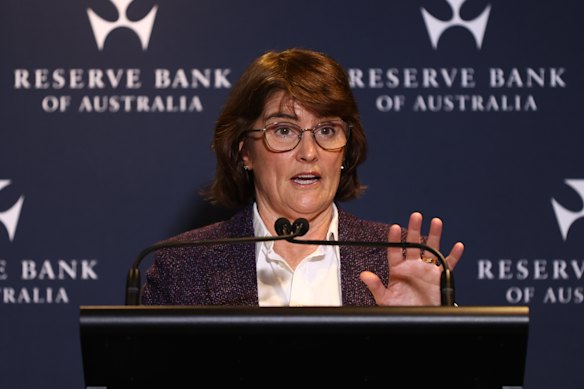
RBA governor Michele Bullock has said cash isn’t making a comeback.Credit: Dominic Lorrimer
The Consumer Action Law Centre said many people had valid reasons for wanting to use cash, and should be allowed to keep doing so.
The centre’s director of policy and campaigns, Jean Skeat, said cash was crucial for people who don’t have access to a mobile phone or online services.
“And it’s not just older people I am referring to, it’s people in vulnerable situations like the homeless, people in prisons, or those fleeing homes because of family violence,” she said.
Cash usage is most common among older generations, those on low incomes and people in regional and rural areas, Australian Banking Association data shows.

Cash usage is most common among older generations, low-income people and in regional and rural areas.Credit: John Woudstra
Skeat said not everyone was comfortable using online forms of payment. “And who can blame them with the meteoric rise in scams, and the potential for unwanted scrutiny and surveillance that online payment methods invite?” she said.
“The banks and government must take this issue seriously, and ensure cash stays viable long into the future.”
CHOICE head of policy Tom Abourizk said cash must be “accessible, accepted by businesses selling essentials, and consumers should be able to pay with cash without any surcharges”.
CHOICE is pushing for the government to ensure people retain reasonable, free access to cash; to require businesses to accept cash; and ensure cash is free by banning any surcharges on paying with it.
People who rely on cash say they value its convenience, privacy and security, an RBA survey shows. They also use it for budgeting purposes, for payments to family and friends, and report they don’t trust banks.
But banknotes are not just used for legitimate day-to-day transactions. The Reserve Bank suggests just 9 to 26 per cent of all Australian banknotes are used for transactional purposes.
The most common use of banknotes is hoarding. Australians are withdrawing large amounts of cash to put it aside — a trend that gathered pace in the COVID pandemic, when the value of banknotes in circulation increased by 22 per cent, the Reserve Bank said.
It said 55 to 80 per cent of all Australian banknotes currently in circulation are hoarded domestically or internationally. In value terms, this accounts for between $56 billion and $81 billion in cash set aside for a rainy day.
The remaining cash is either lost or used in the “shadow economy” — concealing legal activities to avoid taxation, and covering illegal production such as the production or sale of drugs.
The Australian Banking Association said shadow economy spending accounted for an increasingly large part of overall cash spending.
“Cash usage for legitimate purposes is expected to continue declining to 4 per cent of payments by 2030,” it said. By that time, it said cash use in the shadow economy could outstrip the use of cash for legitimate purposes.
The decline of cash has put pressure on cash-handling businesses Armaguard, which is owned by billionaire Lindsay Fox and being propped up by the major banks and supermarkets.

An Armaguard coin processing facility.Credit: Justin McManus
But Armaguard’s much smaller rival, Authentic Security, said the cash-based economy “remained substantial, notwithstanding the decline in cash usage exacerbated by the pandemic”.
“There is reason to believe that this decline has now stabilised, such that cash transactions will continue to account for around 14 per cent,” it previously told the competition watchdog, the Australian Competition and Consumer Commission, during an inquiry.
“In any event, the need for cash – particularly in regional and remote areas and among under-privileged communities – is accepted by all parties and regulators as a major priority.”
Start the day with a summary of the day’s most important and interesting stories, analysis and insights. Sign up for our Morning Edition newsletter.