
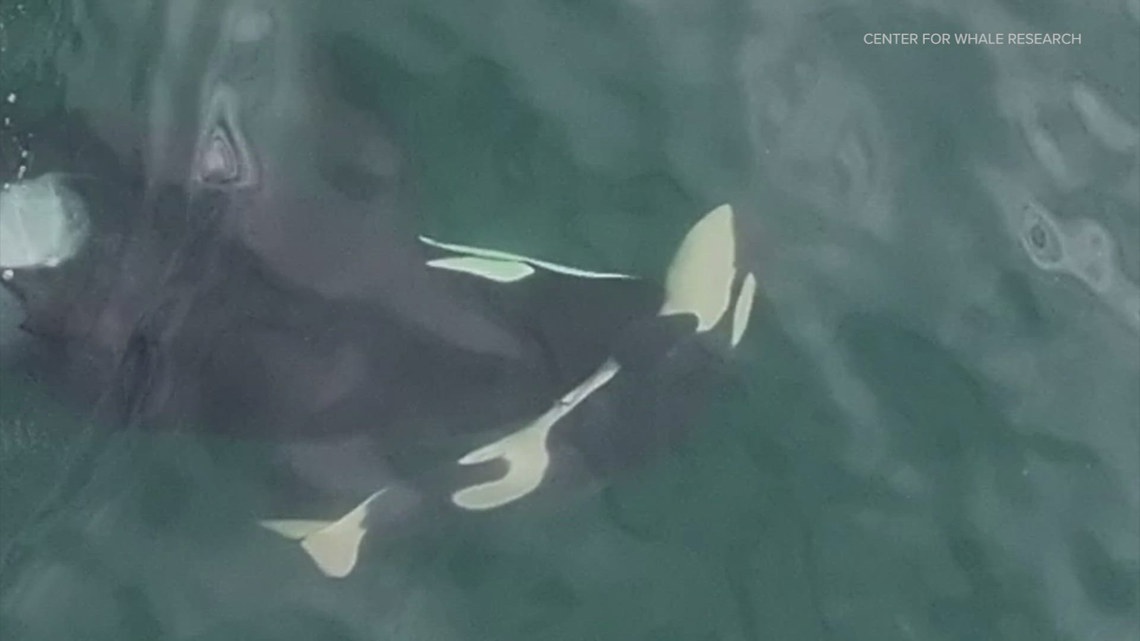
Whale J36 was separated from other orcas, pushing a deceased female calf that was full-term or near full-term.
SEATTLE — A southern resident killer whale from J pod was spotted Friday pushing a dead calf through the waters of Rosario Strait, a heartbreaking scene that researchers say underscores the fragile future of the endangered population.
The Center for Whale Research (CWR) confirmed the sighting after receiving reports late Friday morning. They identified the whale as J36, a female long known to the team. She was separated from other whales and pushing a deceased female calf that was full-term or near full-term, the center said. The calf still had its umbilical cord attached.
RELATED: Grieving orca who captured nation in 2018 is carrying dead calf for second time
“It’s not easy, it’s never easy, and I suspect it never will be easy,” said Michael Weiss, research director for the Center for Whale Research. “We were really hoping to see a healthy calf from her soon.”
It remains unclear whether the calf was stillborn or died shortly after birth. Based on CWR’s observations, researchers estimate the calf had been born within the past three days.
The scene is familiar to scientists and whale watchers in the Pacific Northwest. In 2018, a whale known as J35, or “Tahlequah,” carried her dead calf for 17 days in what became known worldwide as a “tour of grief.” Earlier this year, the same whale was again seen with another deceased calf.
“So that intense bond, when you really think about what that must mean for the minds of these animals, the brains of these animals,” Weiss said. “I think it’s not all that surprising that when they lose their calves, so young and so unexpectedly, that it takes them a long time to be ready to let go.”
The southern resident killer whales, which number in the 70s, are listed as endangered under the federal Endangered Species Act. Unlike other orca populations, they rely heavily on Chinook salmon. Many Chinook runs in the Pacific Northwest have been greatly reduced, with some near collapse.
“For most of the year, they’re very reliant on Chinook salmon, and a lot of these populations that they’ve historically relied on are now greatly reduced, or in some cases, almost completely collapsed,” Weiss said.
Weiss noted that the southern residents have “much lower reproductive output than other killer whales, even in the Pacific Northwest.” The loss of another calf is another setback for a population that, at best, he described as “plateauing.” There are currently two living calves in J pod.
“These are animals with big, complex brains that live in a really intricate, social world that are very aware of each other,” Weiss said.
Local residents, who often spot the whales from shore, say their presence is part of what makes the region unique.
“I think they’re amazing,” said Jill Blanco, a West Seattle resident. “I think it’s one of the coolest parts about living here — having that kind of nature so nearby.”
Weiss said the loss of J36’s calf should serve as another reminder of the importance of protecting the species.
“We need to be enacting policies on a broad scale that take the environment seriously, that take the threat of climate change seriously, that take our ecosystem seriously, and look at them as a priority to preserve,” he said.