
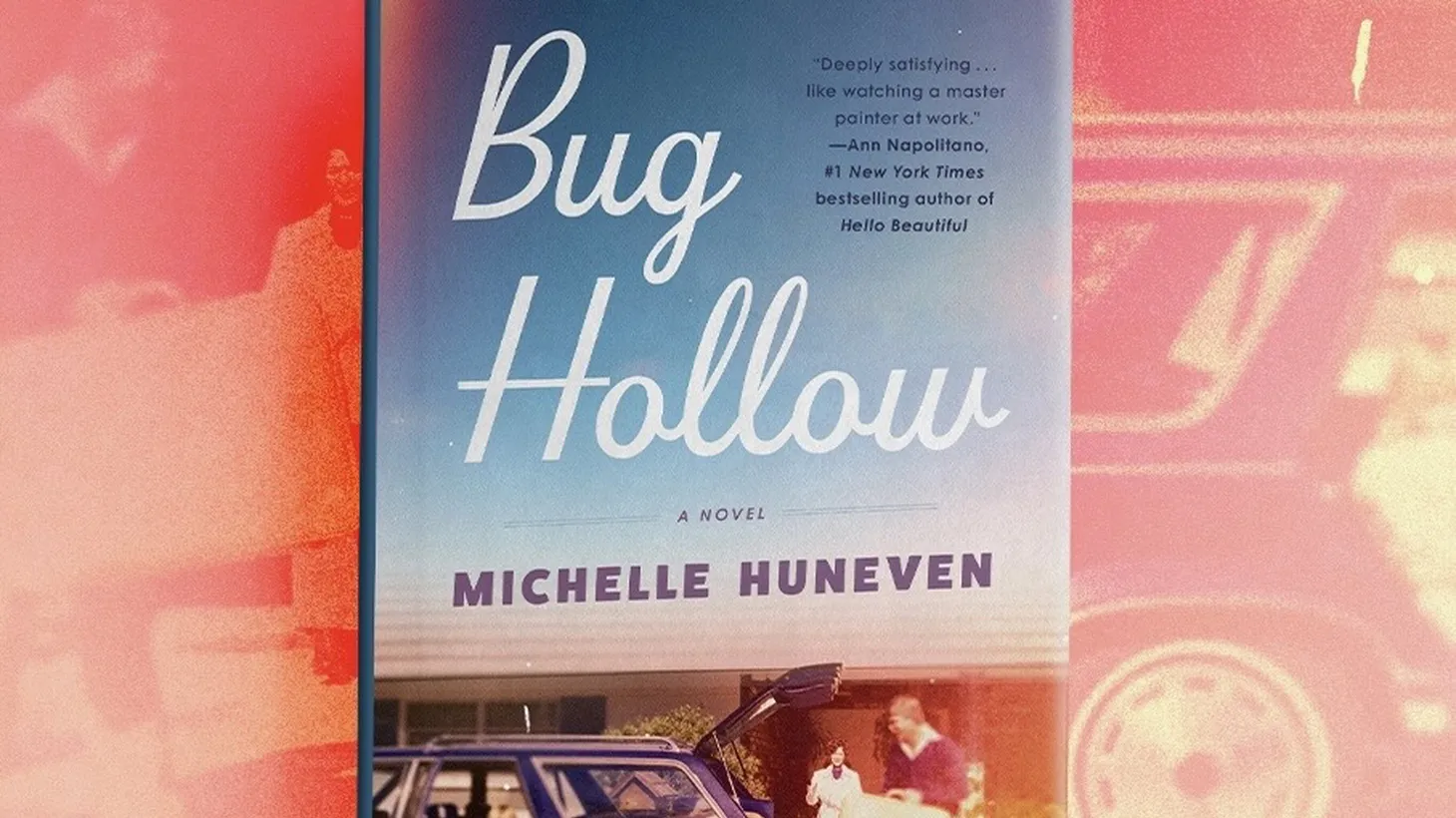
Six months after wildfires tore through Altadena and Pacific Palisades, we’re still wrestling with what’s been lost. Novelist Michelle Huneven is rebuilding her home after the Eaton Fire. Her latest book, Bug Hollow, opens in 1970s Altadena, as the Samuelson family copes with their son’s death. He died in an accident during his first few college days. Readers follow his parents, sisters, and family friends across multiple decades and locations as they struggle with grief, dislocation, and addiction. Ultimately, they manage to find love and meaning.
Huneven, who teaches creative writing at UCLA, has collected multiple honors for her writing, including a Guggenheim Fellowship. Bug Hollow has been deemed a great summer read by The New York Times, Oprah Daily, and The Boston Globe.
Huneven tells KCRW that while her family is doing relatively well post-fire — they “had a soft landing and good insurance” — she’s sad. That sorrow didn’t hit immediately because of all the shock and tasks to do, like buying clothes, she explains.
Three times a week, she also visits her property to water the surviving roses, and negotiate to get rid of trees and stumps that the Army Corps of Engineers didn’t remove. The process is long and involved, she describes.
The rebuilding process has already broken ground. Her family owns two properties, she clarifies. They’re building a little house where their rental used to be, so they can live there while their larger house gets rebuilt too.
She initially waffled on rebuilding, wondering what the point was if the house(s) would burn down again. “But then you realize it’s your home, and you miss it, and you love it, and you love your neighbors, and you want that again,” she says.
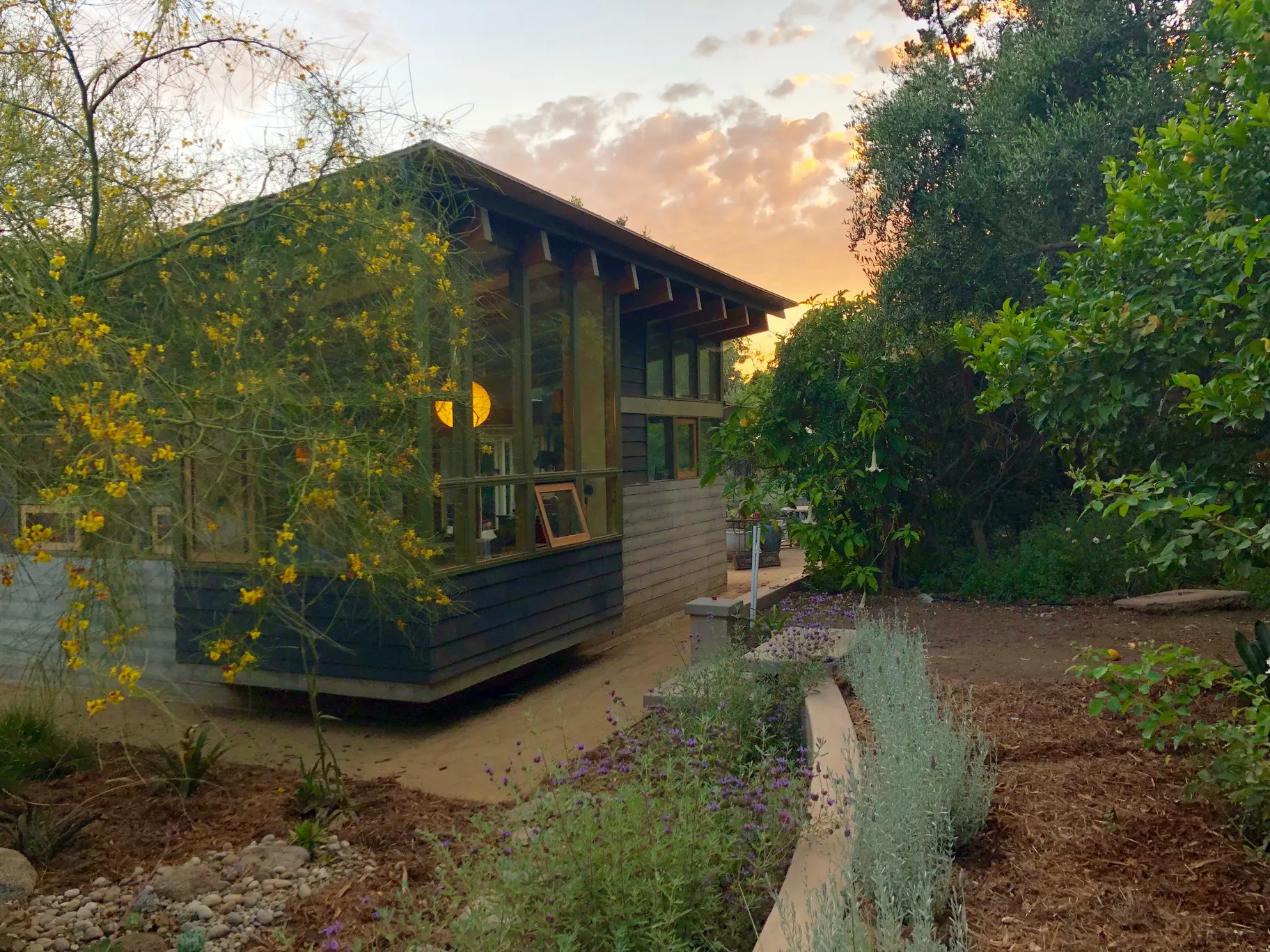
An exterior view shows the kitchen corner of Michelle Huneven’s house. Courtesy of Michelle Huneven.
Altadena is a magical place full of nature, art, and culture — as Huneven writes in the book — because she was born and raised there, she explains. After leaving for college and living in various places, she returned and in 2011 bought a house on a flag lot one mile east of her childhood home.
“It just was so wonderful to return to the smells and the sounds of Altadena, the morning doves, and the morning cooing, and the quality of the sunlight, and having the mountains close. It just was in my blood. I’ve always described Altadena as populated by artists and sore heads.”
She clarifies, “A sore head is somebody with their own agenda. I mean, it’s like every now and then, somebody says, ‘Let’s incorporate Altadena.’ And everybody says, ‘Yes, yes, what a good idea.’ And then they say, ‘Well, we’d need a revenue stream, so let’s put in parking meters.’ And then it’s like, ‘Forget it.’”
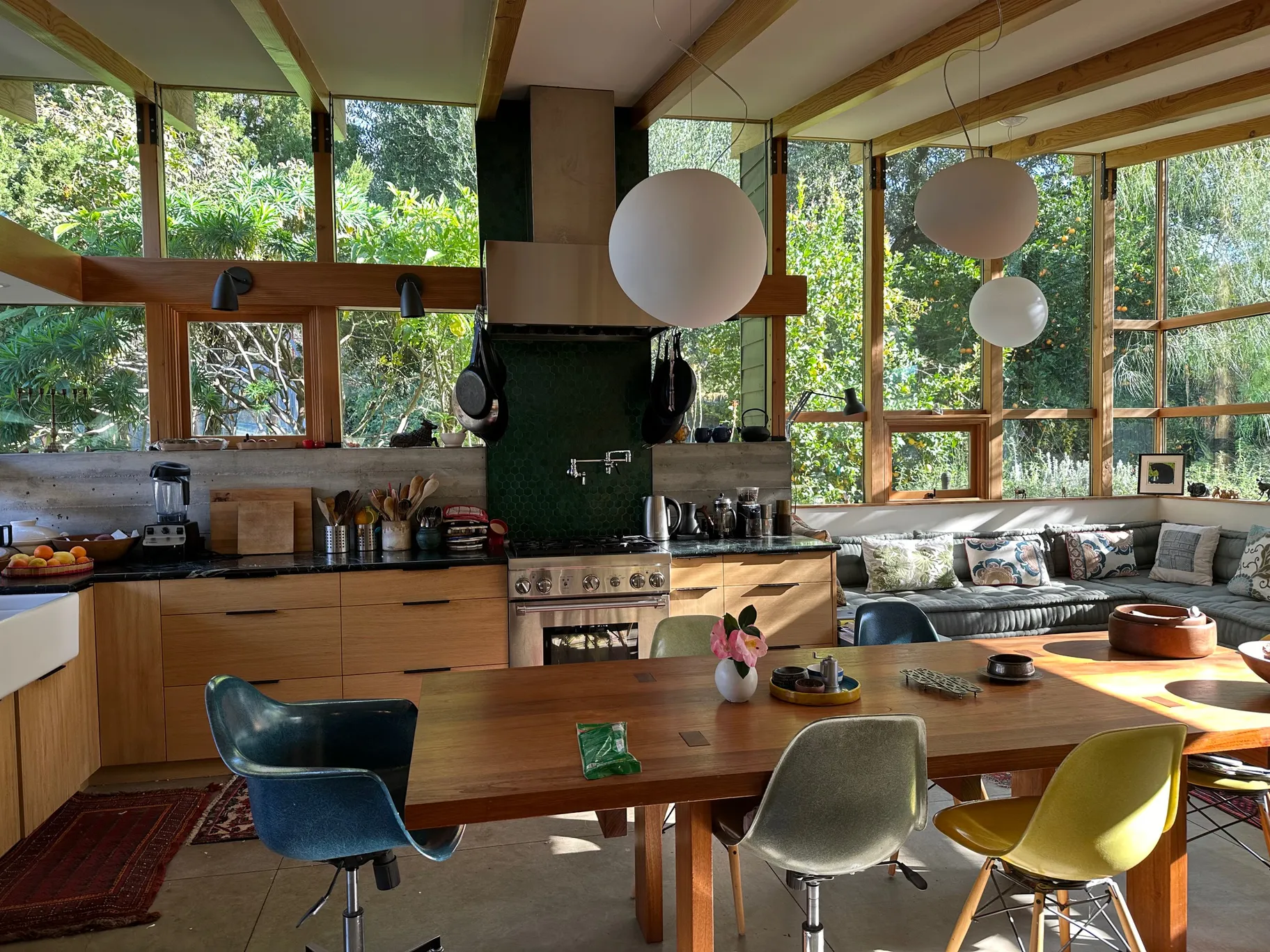
Michelle Huneven is the author of “Bug Hollow,” “Round Rock,” “Off Course,” and other books. Courtesy of Michelle Huneven.
In Bug Hollow, the daughter, Sally, has her own personality and is the character whom Huneven identifies with most, she explains.
“She’s the youngest, artistic in a family that maybe doesn’t quite know what to do with that impulse. And I find her to be the heart of the book. The mother [Sib] is very much like my mother. And Sally … and I share the same relationship, which is a mother who’s not particularly interested in us, and yet to feel this very strong bond, like my mom was a school teacher, like Sib is in the book, and yet she took no interest in my schoolwork. And she took deep interest in her students’ schoolwork. And yet, at the same time, I had this deep love for her.”
Why was Huneven’s mom more interested in other students’ academic work? Because they had emotional distance, so she was able to be more objective with them, Huneven explains.
In the book, Sib is a complicated, seemingly brilliant character who curtailed her ambitions to have a family. However, she’s not particularly maternal, seems frustrated, and has a drinking problem.
Huneven says her own mom poured herself a drink right when she got home from teaching, though she didn’t have a drinking problem as strong as Sib’s.
Addiction and alcoholism come up in Huneven’s other novels. She says she’s interested in the subject because of her personal involvement with it. She’s now been sober for 37 years.
“I’ve never liked the plot: ‘Are they going to drink next? Oh no, they’re trying to be sober. They’re going to drink next.’ … But I am interested in how people recover from alcoholism. In this novel, it’s not really a subject, and it’s not identified as alcoholism. I was treating it differently. I was treating it more as a way that families live with alcoholism without ever saying the word or without even recognizing it themselves. It’s just the fact that mom drinks a lot of Hawaiian Punch with dunks of vodka in it.”
Huneven acknowledges that maybe the book is autobiographical in the sense that her mom drank daily, “sometimes she got pretty woozy,” but her family never said the word “alcoholism,” and never suggested she needed to stop imbibing.
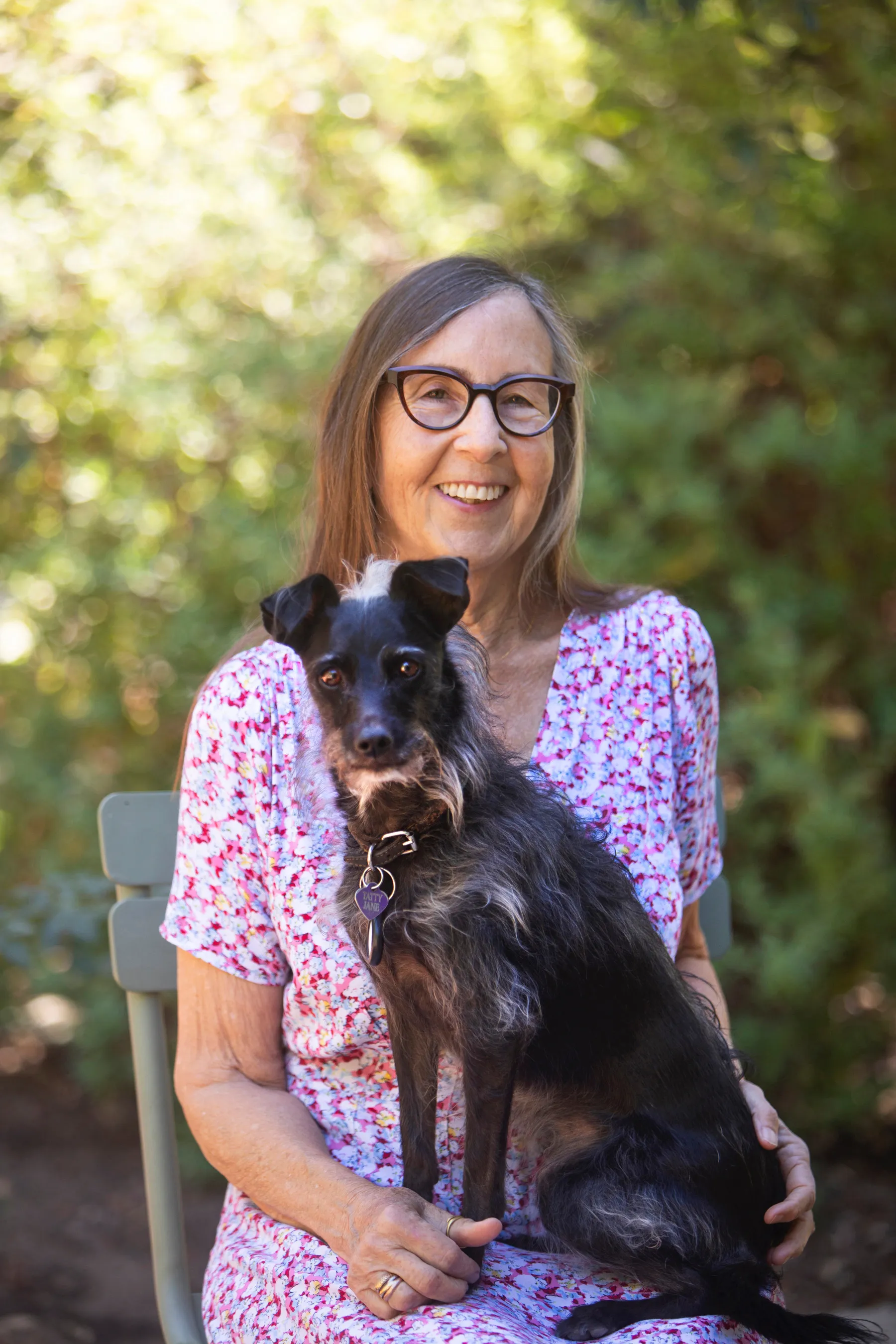
“People say to me about the fire, ‘Oh, it’s the worst thing that’s ever happened to you.’ And it’s not. It’s the biggest thing that ever happened to me, probably. But losing people that you love is really far worse,” says Michelle Huneven. Courtesy of Michelle Huneven.
Chosen family is also a theme in all of Huneven’s earlier books, she points out. Bug Hollow is her first book about unchosen family — the one you’re stuck with.
“I guess with parents … they can be very difficult, they can be very unsupportive, they can be very distant. I had many issues with my father, for example, he was disapproving and competitive. … And yet, when he got older and he lost his memory, and I would go to see him … you would just see love shining from his eyes. And so there’s that basic love, and then there’s all the personality elements that get in the way of us connecting with other people perfectly. So I was interested in dealing with … just love that exists in a family, no matter how much we don’t get along with each other or how different we are. … And also when we don’t get it from our parents, where we do get it? And people do seek it out from one another and create these chosen communities.”
One character also says in the book, when she realizes she can’t do anything to change the fact that someone close to her has died, “All was well, well enough, the world still ached with beauty.”
Huneven explains that life is incredibly beautiful and we are blessed to be alive to see it, but simultaneously, we lose loved ones, which is probably the most painful experience.
“People say to me about the fire, ‘Oh, it’s the worst thing that’s ever happened to you.’ And it’s not. It’s the biggest thing that ever happened to me, probably. But losing people that you love is really far worse,” she says.