
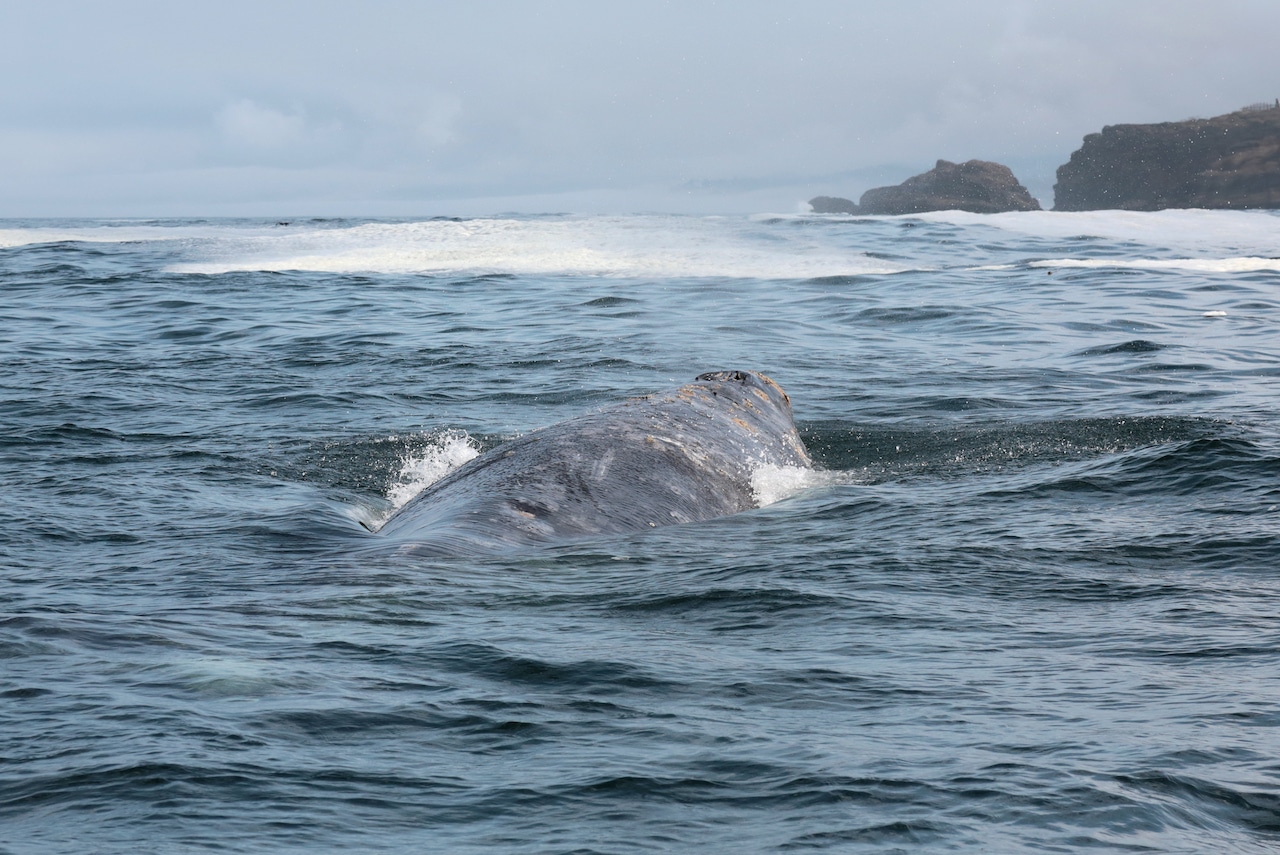
Gray whales are everywhere in Depoe Bay. They’re on T-shirts and mugs and incorporated into the signs of whale-themed businesses along the main drag. There’s a whale museum and even a whale watching center, where people can touch real baleen and slowly scan the ocean with binoculars. On the side of the highway, a big gray whale fountain delightfully spouts water from its blowhole, welcoming people to town.
The whales are also found, naturally, in the waters just offshore.
Depoe Bay describes itself as “the whale watching capital of the Oregon coast,” a title for which there is no competition. While thousands of gray whales make their annual migration up and down the length of the coastline, a much smaller group has developed a fondness for the central Oregon coast town, which is built atop the rough, volcanic rock beside the ocean.
“I call them ‘summer residents,’” said Carrie Newell, a local marine biologist who owns a whale watching business in Depoe Bay, as well as the neighboring Whale Bites Cafe and the Whale, Sea Life and Shark Museum. Some scientists also call the local population the “Pacific coast feeding group,” acknowledging that these whales also stop at spots between Crescent City, California, and Vancouver Island, British Columbia, Newell said. But as far as Oregonians are concerned, Depoe Bay is the place to be.
“They all have to come past Depoe Bay,” on their big migration, Newell said. “I think they stage here for one last hurrah.”
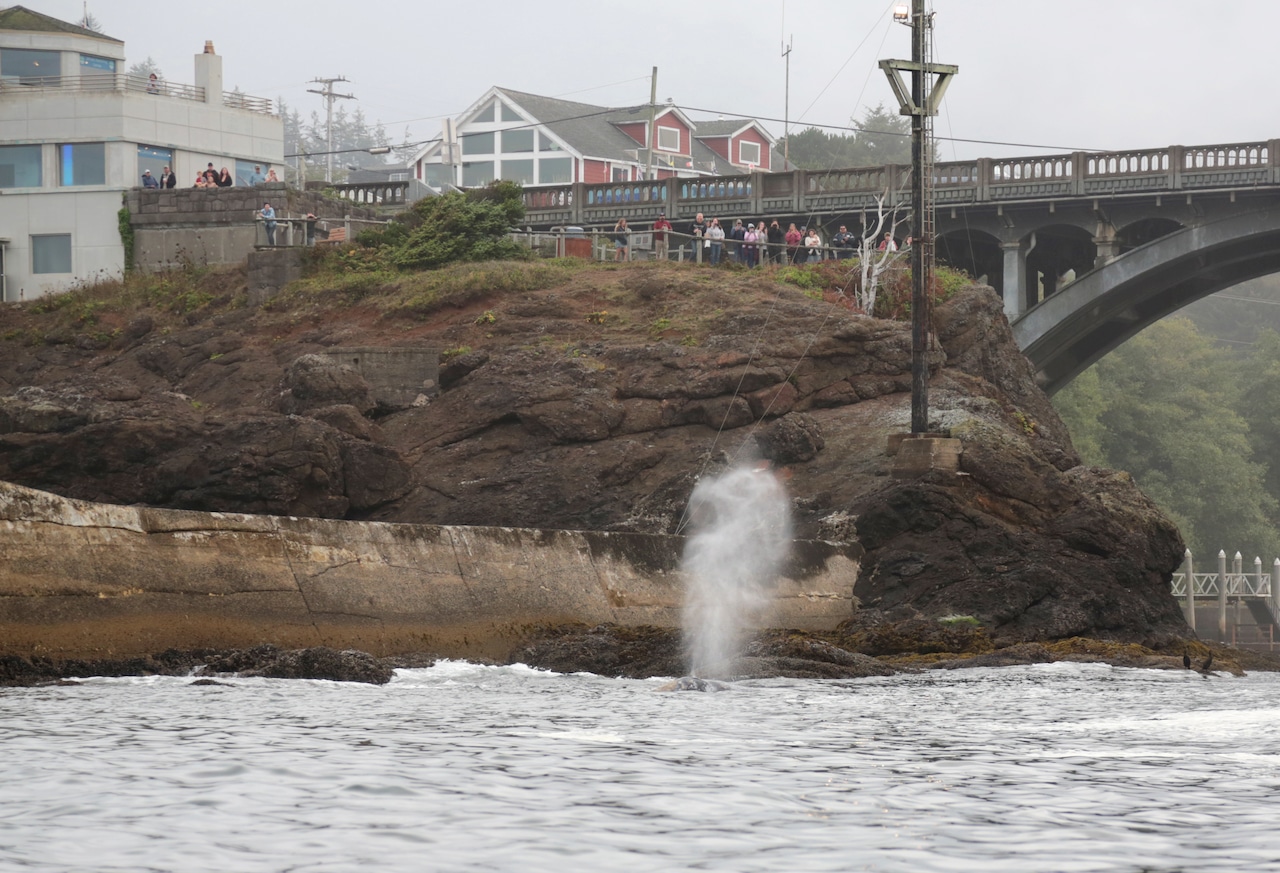 A gray whale spouts in the shallow waters at Depoe Bay as onlookers gather at the Depoe Bay Whale Watching Center.Jamie Hale/The Oregonian
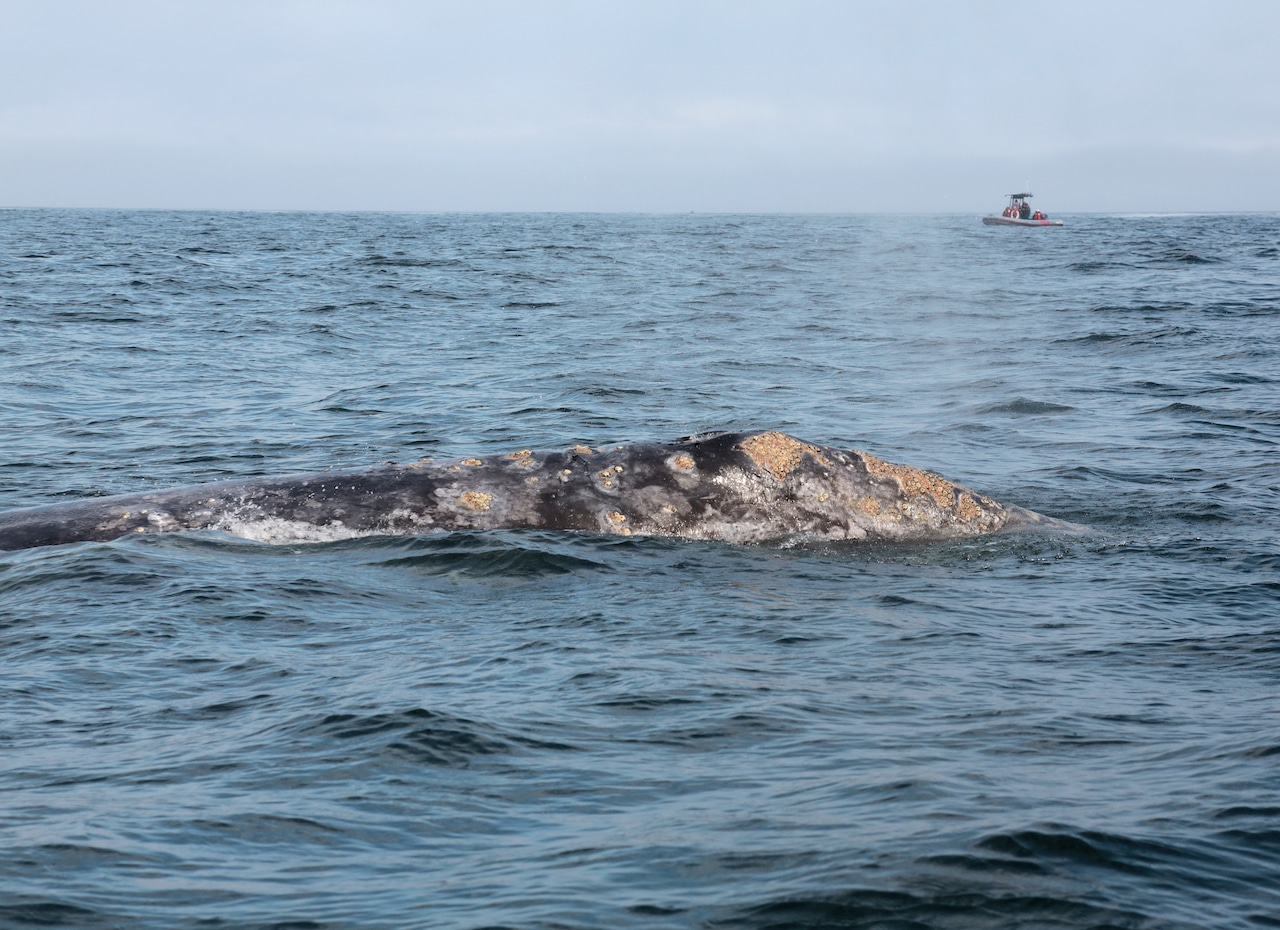 Four companies in Depoe Bay offer whale watching tours.Jamie Hale/The Oregonian
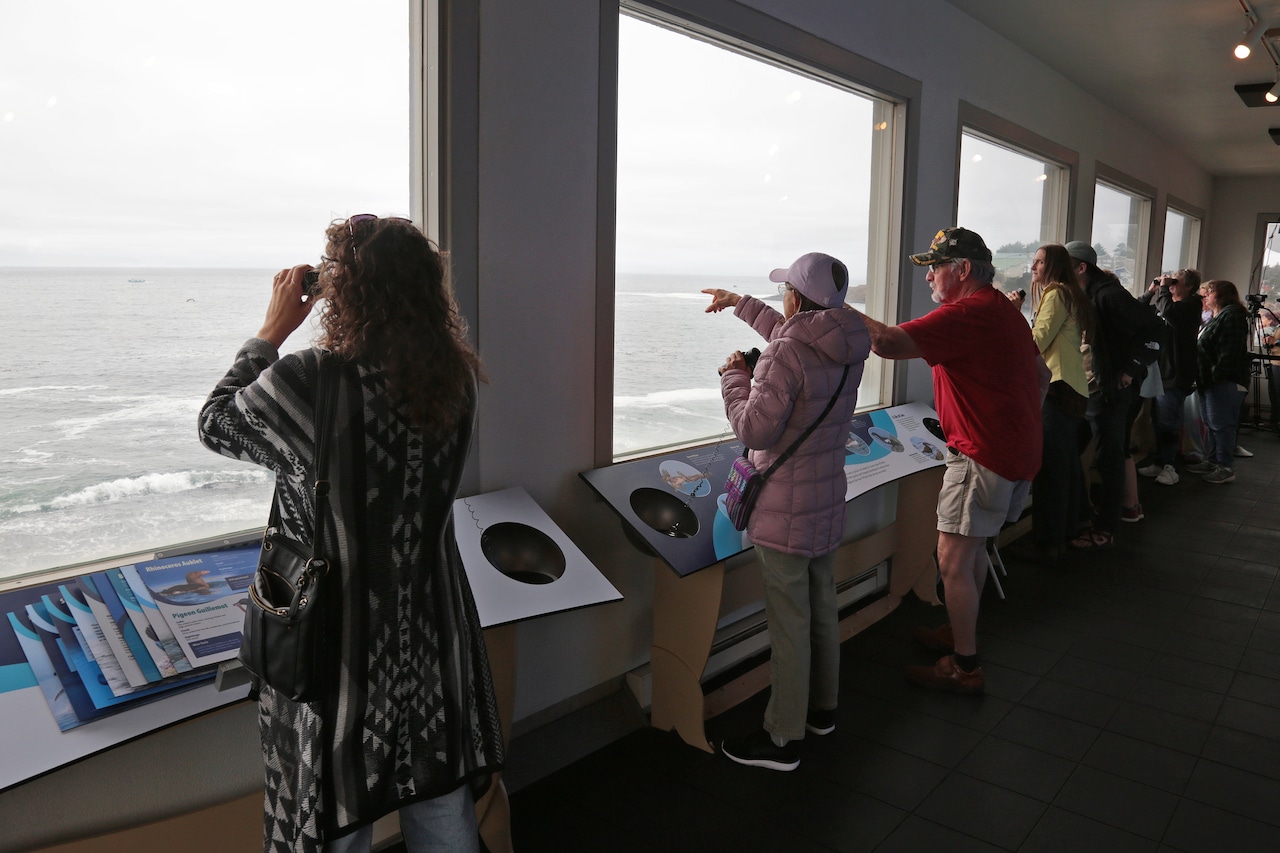 People look for whales inside the Whale Watching Center in Depoe Bay on the central Oregon coast. Jamie Hale/The Oregonian
It was Newell who discovered why those whales pull off their 10,000-mile migratory route from Baja to Alaska and back. Her breakthrough came from collecting fresh feces from the local gray whales, which showed that the cetaceans dine primarily on the tiny mysid shrimp that proliferate in the kelp beds just offshore. Each whale needs to eat about 2,000 pounds of shrimp daily to sate its appetite, Newell said, which means the summer residents spend a lot of time swimming in the shallows.
That gives people a lot of time to watch them.
Whale watching (a thriving industry in the Puget Sound but not so much in Oregon) has become a major attraction in Depoe Bay, where four businesses vie for tourist dollars. They include Newell’s own Whale Research EcoExcursions, as well as Whale’s Tail Charters, both of which specialize in whale watching trips. Dockside Charters offers whale watching alongside its charter fishing trips, as does Tradewinds Charters.
Because the whales stick so close to shore, these whale watching trips are not typically long hauls. On a September tour with Whale Research EcoExcursions, a whale was spotted within seconds. Then another, and another, and another. We saw the tell-tale spouts, the gray arched backs that look like living boulders and the upward flicking of enormous tails as the animals dove into deeper waters. Over a little more than an hour on the water, our group experienced roughly a dozen sightings, much to everyone’s jubilation.
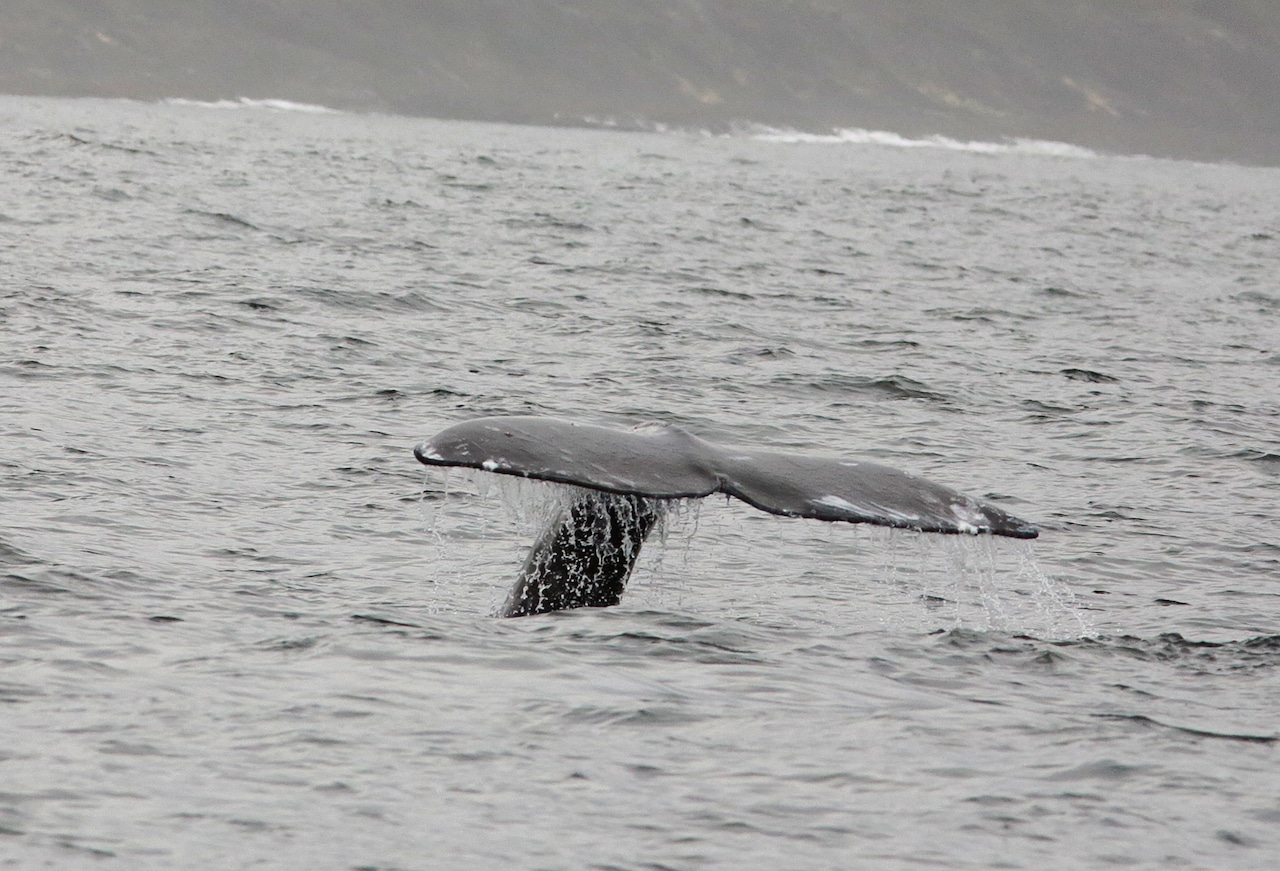 A gray whale raises its tail fluke out of the water as it dives just offshore of Depoe Bay.Jamie Hale/The Oregonian
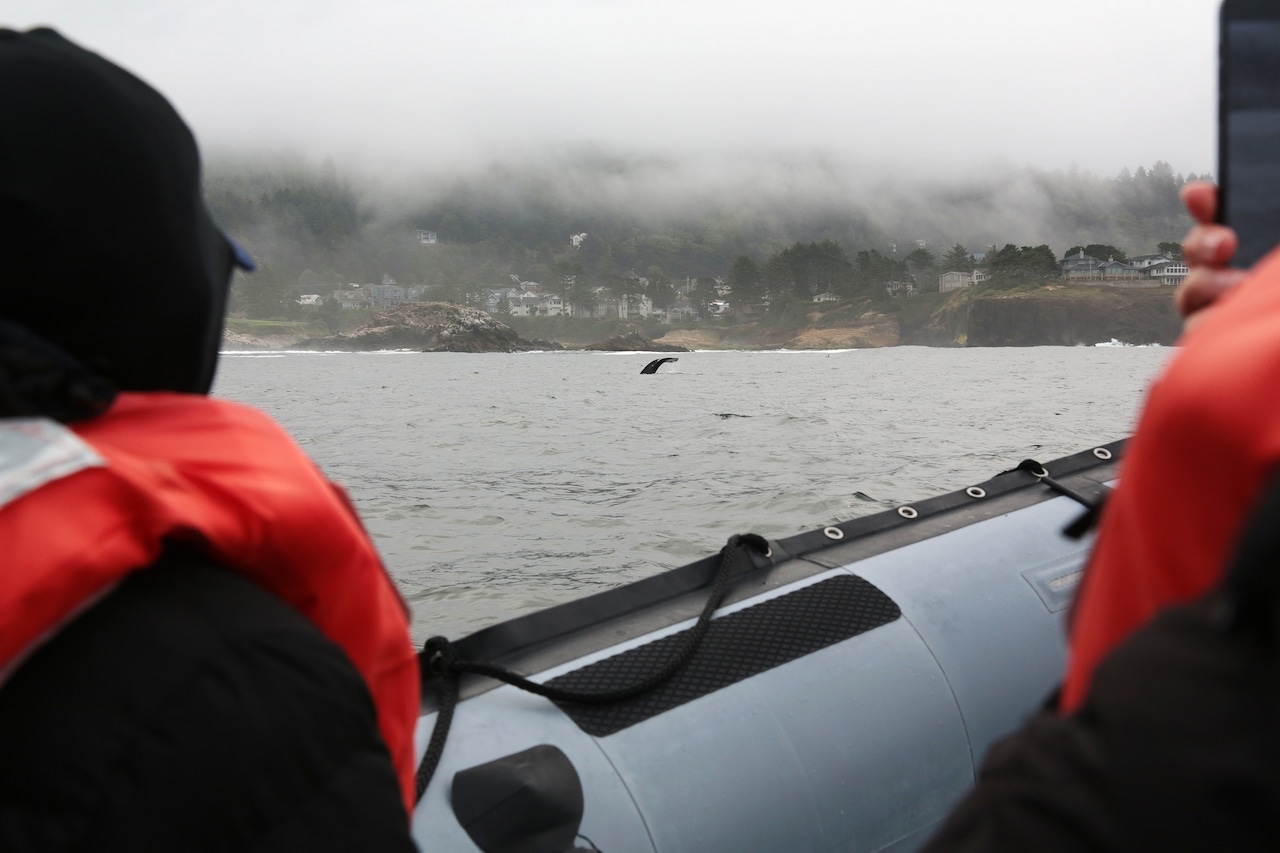 Whale watchers bundle up for a misty summer morning on the ocean.Jamie Hale/The Oregonian
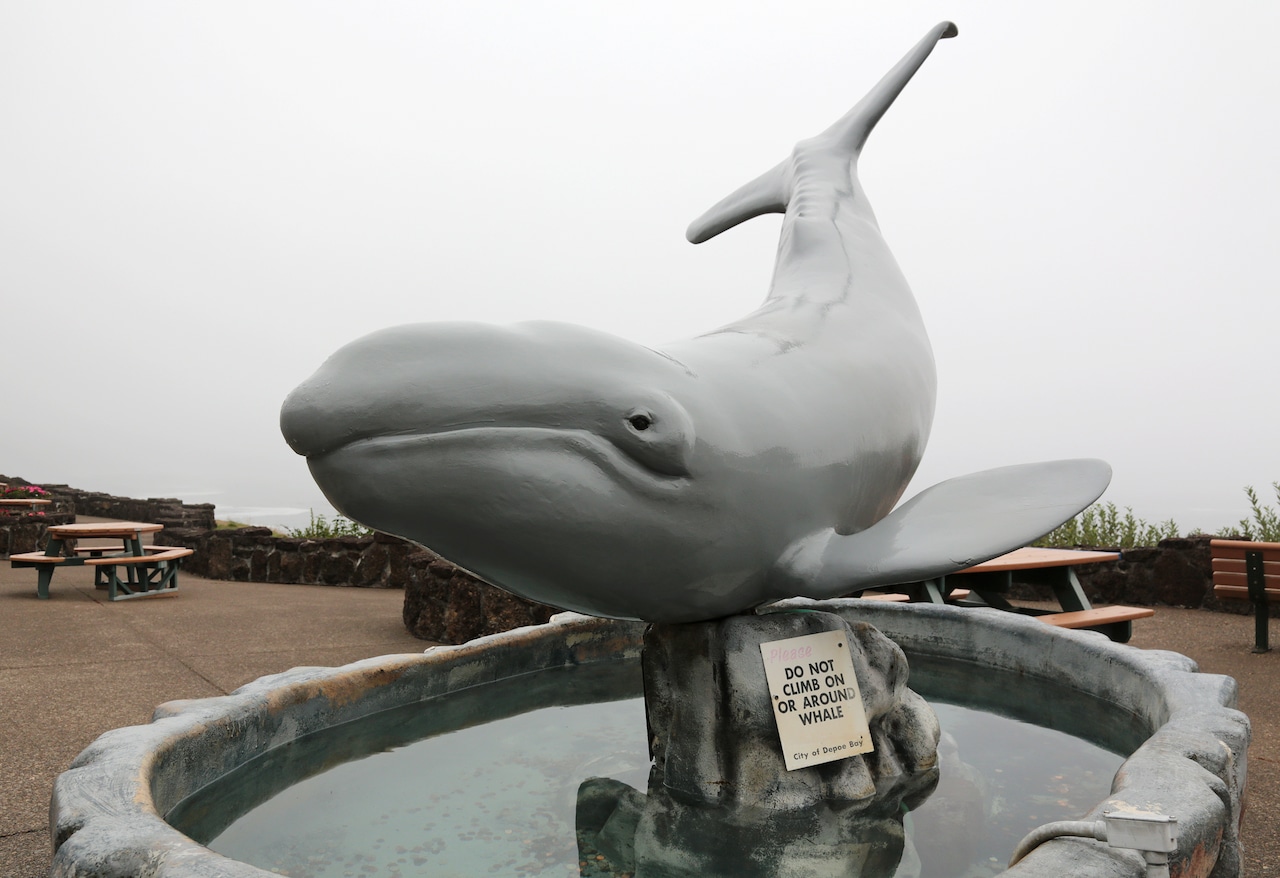 A gray whale statue is displayed prominently in downtown Depoe Bay, known as the “whale watching capital of the Oregon coast.”Jamie Hale/The Oregonian
That said, gray whales are not the most charismatic cetaceans. They don’t leap balletically like humpback whales, and they’re not nearly as playful (nor as brutal) as orcas, which are the gray whale’s primary predator. While gray whales are known to jump from the water, the behavior is rare enough to hardly earn mention. You don’t watch gray whales for the acrobatics, you watch them for the mere fact that they are there – enormous animals living their lives just beneath the surface.
Newell said September is the best time to see the whales in Depoe Bay, when their numbers swell as they stop off for the end of summer. The migratory months are good bets as well. In late December and late March, the Oregon Parks and Recreation Department puts on its biannual Whale Watch Week, in which education rangers are stationed up and down the coast, including at Depoe Bay.
And if you don’t manage to spot a whale, you can always take a hike at Whale Cove, stay the night at the Whale Inn, stop in at the Grey Whale Gift Shop or drink a Moby Red Ale at The Horn, where you might get an upstairs table by the window and gaze out the ocean. If you look long enough, you’ll probably spot a whale spout.
If you purchase a product or register for an account through a link on our site, we may receive compensation. By using this site, you consent to our User Agreement and agree that your clicks, interactions, and personal information may be collected, recorded, and/or stored by us and social media and other third-party partners in accordance with our Privacy Policy.