
Articles
A seaweed-derived biomaterial enhances viral transduction and makes a key step in cell therapy faster and easier.
Sometimes breakthroughs appear in the most unexpected places. While experimenting with seaweed-based sponges, researchers discovered they could help viruses deliver genes into cells with remarkable efficiency. This simple material now offers a faster, easier way to prepare engineered cells that may transform advanced therapies.
Download this article to learn:
How a seaweed-derived sponge improves gene transfer in cell therapiesWhy it simplifies a complex, time-consuming step in the workflowWhat new possibilities it opens for immune cell engineering and drug deliverySponsored by
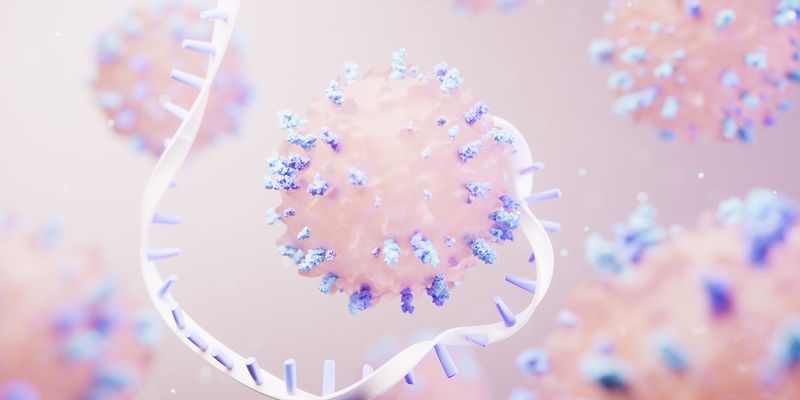
Top Image Credit:
iiStock.com/Jian Fan
Is the form not loading? If you use an ad blocker or browser privacy features, try turning them off and refresh the page.
SPONSORED
CONTENT
on drug delivery, especially using gels and
openings between the pores. This creates
While we continued to consult, the Takara Bio
sponges. Then I met Gianpietro Dotti, an expert
changes in flow speed and direction, which
team did most of the development work indepen
in CAR T-cell therapy, and we began collaborat
forces them to collide tons of times.
dently
after that. I think they did a beautiful job.
ing.
That’s how I shifted into the cell therapy
That seems to be the key. We’re seeing
What does a typical experiment look like
space. Initially, we didn’t plan to change how
something like a 100-fold increase in collisions
with the sponge? How does it simplify the
viral transduction worked, but one postdoctoral
compared to just mixing them in a tube. And
workflow for researchers?
researcher in my group, Pritha Agarwalla, made
those collisions are what drive viral entry and
How a
a surprising observation that set us on this path.
The usual workflow many researchers use is
called spinoculation. This involves mixing cells
How did that discovery happen?
with virus and centrifuging them for several
Simple Sponge
It was almost accidental. Agarwalla was run
hours. After that, cells need to be added to the
ning
a control experiment where she combined
plates and centrifuged again. The entire process
cells and viruses on a dry sponge — one of the
takes about six hours, and there’s a lot of spin
sponges we were using for drug delivery. She
ning
and handling involved. With the sponge, it’s
Supercharges
came back with incredible results: 90 percent of
completely different. It just needs researchers
the cells were successfully transduced. Outside
to pipette the virus and cells together onto the
the sponge, the same mix only achieved about
sponge, which absorbs the mix. After incubation,
Cell Therapy
10 percent transduction. That made us sit up. We
a second solution dissolves the sponge, and the
followed up with more experiments and shared
transduced cells are ready to go.
our results with Dotti, who was creating CAR T
Workflow
Have you seen researchers use the
cells for clinical use at UNC. He got incredibly
sponge in their work yet?
excited. That’s when we knew we had something
really special and exciting.
I’ve heard from a few researchers who have used
it. One researcher at UNC started using the prod
What exactly is the sponge made of?
uct
and later realized it was based on our work
Yevgeny Brudno led the research that uncovered the
A seaweed-derived
These sponges are made out of alginate, which
after attending one of my talks. Most people
lentiviral transduction-enhancing properties of
alginate sponges.
literally comes from algae — seaweed that
are using them for cell therapy applications,
biomaterial enhances
JUST AS P ENICI L L IN WAS
discovered in a speck of mold and
grows in the ocean. Scientists have figured out
such as engineering T cells, natural killer cells,
lentiviral transduction and
of developing technologies like RetroNec
how to purify it and make it biocompatible; it’s
gene transfer. People have tried to engineer
and macrophages. We’re looking into applying
UST
AS
P ENICI L L IN
WAS
discovered in a speck of mold and
tin
® reagent, a gold-standard transduction
in yogurt and medical implants.
this kind of forced contact with microfluidi
this approach beyond viral transduction. We’ve
makes a key step in cell
CRISPR in the immune system of
enhancer for chimeric antigen receptor (CAR)
Alginate has a unique property: it gels easily
chips, but those systems are expensive and
started exploring how the sponge might enhance
bacteria, scientific breakthroughs
T-cell therapy. They parterned with Brudno
when mixed with calcium, forming a Jello-like
complicated. What makes this sponge spe
gene delivery with lipid nanoparticles. We’re also
therapy faster and easier.
often arise from unexpected
to develop a scalable, easy-to-use reagent
substance. That’s how we make our cryogels.
cial
is its simplicity. It’s easy to make, easy to
excited about trying new cell types and target
JUST AS P ENICI L L IN WAS
discovered in a speck of mold and
CRISPR in the immune system of
bacteria, scientific breakthroughs
often arise from unexpected
corners of nature. For Yevgeny Brudno, a
called the Lenti-X™ Transduction Sponge. Now
First, we mix alginate with calcium and water,
use, and it just works.
ing
different tumors.
bioengineer at the University of North Caro
available to researchers around the world, this
and it becomes a paste. When we freeze that
How did the collaboration with Takara
What has it been like for you to see this
lina
(UNC) at Chapel Hill and North Carolina
deceptively simple innovation offers a new way
paste, ice crystals form, and the alginate wraps
Bio come about, and how did that
technology move from a lab discovery to a
IMAGE THIS PAGE:
State University (NC State), one such discov
to streamline cell engineering and accelerate
around them. Then we lyophilize the gel, a pro
The porous alginate sponge improves
collaboration shape the technology?
commercial product?
ery
began with seaweed.
the development of advanced cell therapies.
cess
that turns the ice directly into vapor without
viral gene transfer by increasing cell-virus
Brudno’s lab had been working with algi
melting. This leaves behind a dry, porous struc
Once we knew the sponge worked, Agarwalla
It’s super exciting. I got into bioengineering
interactions during transduction.
Can you tell us about your background
nate,
an algae-derived substance commonly
ture,
essentially a sponge, where each pore cor
encouraged me to reach out to companies that
because I wanted to work on problems that
and what drew you to working on
used in everything from yogurt to wound
responds
to a former ice crystal. Once it’s dry, we
might be interested. I sent a few emails, and the
have real-world impact. Seeing something we
biomaterials for cell therapy?
dressings, to create sponge-like drug deliv
can just keep it at room temperature or in the
Takara Bio team wrote back almost immediately.
created in the lab go out of the lab and have a
ery
materials. During an experiment, his team
I’m a chemist by training and got my PhD in chem
fridge. It’s stable and ready to use.
They already provided reagents for retroviral
real impact is very rewarding.
unexpectedly observed that these sponges
istry
working with David Liu, who’s now well
transduction and were looking for solutions to
Why does the sponge make transduction
could dramatically improve the efficiency of
known for his CRISPR work. Over time, I realized
improve lentiviral transduction.
This interview has been condensed and edited for clarity.
so much more efficien
viral transduction. This process — introducing
I wanted to do something with a real and imme
We sent them some sponges, and it worked
new genes into cells using retroviruses or len
diate
impact — something I could explain to my
That’s still a bit of a mystery, and as a scientist,
on the first try. They said, “This worked right
REFERENCE
tiviruses
— is a critical and challenging step
grandmother. That led me to biomaterials, drug
I love that. But here’s what we know: when
out of the box.” From there, they took the lead,
Agarwalla, P. et al. Scaffold-Mediated Static
in cell therapy workflows, where scientists
delivery, and cell therapies. I wanted to work
we pipette a droplet of cells and virus onto the
scaling up manufacturing, making sure it was
Transduction of T Cells for CAR-T Cell Therapy.
reprogram cells to target diseases like cancer.
on solutions that could directly benefit patients.
sponge, it gets absorbed into all these pores.
reproducible, and working through all the quality
9,
Advanced Healthcare Materials
2000275 (2020).
The finding caught the attention of
When I started my lab at UNC Chapel Hill
The virus and the cells move through this
control steps. Our lab stayed involved during
the
the Takara Bio team, who has a history
and NC State University, we were focusing
network together, squeezing through narrow
early stages to help troubleshoot a few issues.
CREDIT: YEVGENY BRUDNO
CREDIT: YEVGENY BRUDNO
SPONSORED
CONTENT
on drug delivery, especially using gels and
openings between the pores. This creates
While we continued to consult, the Takara Bio
sponges. Then I met Gianpietro Dotti, an expert
changes in flow speed and direction, which
team did most of the development work indepen
in CAR T-cell therapy, and we began collaborat
forces them to collide tons of times.
dently
after that. I think they did a beautiful job.
ing.
That’s how I shifted into the cell therapy
That seems to be the key. We’re seeing
What does a typical experiment look like
space. Initially, we didn’t plan to change how
something like a 100-fold increase in collisions
with the sponge? How does it simplify the
viral transduction worked, but one postdoctoral
compared to just mixing them in a tube. And
workflow for researchers?
researcher in my group, Pritha Agarwalla, made
those collisions are what drive viral entry and
How a
a surprising observation that set us on this path.
The usual workflow many researchers use is
called spinoculation. This involves mixing cells
How did that discovery happen?
with virus and centrifuging them for several
Simple Sponge
It was almost accidental. Agarwalla was run
hours. After that, cells need to be added to the
ning
a control experiment where she combined
plates and centrifuged again. The entire process
cells and viruses on a dry sponge — one of the
takes about six hours, and there’s a lot of spin
sponges we were using for drug delivery. She
ning
and handling involved. With the sponge, it’s
Supercharges
came back with incredible results: 90 percent of
completely different. It just needs researchers
the cells were successfully transduced. Outside
to pipette the virus and cells together onto the
the sponge, the same mix only achieved about
sponge, which absorbs the mix. After incubation,
Cell Therapy
10 percent transduction. That made us sit up. We
a second solution dissolves the sponge, and the
followed up with more experiments and shared
transduced cells are ready to go.
our results with Dotti, who was creating CAR T
Workflow
Have you seen researchers use the
cells for clinical use at UNC. He got incredibly
sponge in their work yet?
excited. That’s when we knew we had something
really special and exciting.
I’ve heard from a few researchers who have used
it. One researcher at UNC started using the prod
What exactly is the sponge made of?
uct
and later realized it was based on our work
Yevgeny Brudno led the research that uncovered the
A seaweed-derived
These sponges are made out of alginate, which
after attending one of my talks. Most people
lentiviral transduction-enhancing properties of
alginate sponges.
literally comes from algae — seaweed that
are using them for cell therapy applications,
biomaterial enhances
JUST AS P ENICI L L IN WAS
discovered in a speck of mold and
grows in the ocean. Scientists have figured out
such as engineering T cells, natural killer cells,
lentiviral transduction and
of developing technologies like RetroNec
how to purify it and make it biocompatible; it’s
gene transfer. People have tried to engineer
and macrophages. We’re looking into applying
UST
AS
P ENICI L L IN
WAS
discovered in a speck of mold and
tin
® reagent, a gold-standard transduction
in yogurt and medical implants.
this kind of forced contact with microfluidi
this approach beyond viral transduction. We’ve
makes a key step in cell
CRISPR in the immune system of
enhancer for chimeric antigen receptor (CAR)
Alginate has a unique property: it gels easily
chips, but those systems are expensive and
started exploring how the sponge might enhance
bacteria, scientific breakthroughs
T-cell therapy. They parterned with Brudno
when mixed with calcium, forming a Jello-like
complicated. What makes this sponge spe
gene delivery with lipid nanoparticles. We’re also
therapy faster and easier.
often arise from unexpected
to develop a scalable, easy-to-use reagent
substance. That’s how we make our cryogels.
cial
is its simplicity. It’s easy to make, easy to
excited about trying new cell types and target
JUST AS P ENICI L L IN WAS
discovered in a speck of mold and
CRISPR in the immune system of
bacteria, scientific breakthroughs
often arise from unexpected
corners of nature. For Yevgeny Brudno, a
called the Lenti-X™ Transduction Sponge. Now
First, we mix alginate with calcium and water,
use, and it just works.
ing
different tumors.
bioengineer at the University of North Caro
available to researchers around the world, this
and it becomes a paste. When we freeze that
How did the collaboration with Takara
What has it been like for you to see this
lina
(UNC) at Chapel Hill and North Carolina
deceptively simple innovation offers a new way
paste, ice crystals form, and the alginate wraps
Bio come about, and how did that
technology move from a lab discovery to a
IMAGE THIS PAGE:
State University (NC State), one such discov
to streamline cell engineering and accelerate
around them. Then we lyophilize the gel, a pro
The porous alginate sponge improves
collaboration shape the technology?
commercial product?
ery
began with seaweed.
the development of advanced cell therapies.
cess
that turns the ice directly into vapor without
viral gene transfer by increasing cell-virus
Brudno’s lab had been working with algi
melting. This leaves behind a dry, porous struc
Once we knew the sponge worked, Agarwalla
It’s super exciting. I got into bioengineering
interactions during transduction.
Can you tell us about your background
nate,
an algae-derived substance commonly
ture,
essentially a sponge, where each pore cor
encouraged me to reach out to companies that
because I wanted to work on problems that
and what drew you to working on
used in everything from yogurt to wound
responds
to a former ice crystal. Once it’s dry, we
might be interested. I sent a few emails, and the
have real-world impact. Seeing something we
biomaterials for cell therapy?
dressings, to create sponge-like drug deliv
can just keep it at room temperature or in the
Takara Bio team wrote back almost immediately.
created in the lab go out of the lab and have a
ery
materials. During an experiment, his team
I’m a chemist by training and got my PhD in chem
fridge. It’s stable and ready to use.
They already provided reagents for retroviral
real impact is very rewarding.
unexpectedly observed that these sponges
istry
working with David Liu, who’s now well
transduction and were looking for solutions to
Why does the sponge make transduction
could dramatically improve the efficiency of
known for his CRISPR work. Over time, I realized
improve lentiviral transduction.
This interview has been condensed and edited for clarity.
so much more efficien
viral transduction. This process — introducing
I wanted to do something with a real and imme
We sent them some sponges, and it worked
new genes into cells using retroviruses or len
diate
impact — something I could explain to my
That’s still a bit of a mystery, and as a scientist,
on the first try. They said, “This worked right
REFERENCE
tiviruses
— is a critical and challenging step
grandmother. That led me to biomaterials, drug
I love that. But here’s what we know: when
out of the box.” From there, they took the lead,
Agarwalla, P. et al. Scaffold-Mediated Static
in cell therapy workflows, where scientists
delivery, and cell therapies. I wanted to work
we pipette a droplet of cells and virus onto the
scaling up manufacturing, making sure it was
Transduction of T Cells for CAR-T Cell Therapy.
reprogram cells to target diseases like cancer.
on solutions that could directly benefit patients.
sponge, it gets absorbed into all these pores.
reproducible, and working through all the quality
9,
Advanced Healthcare Materials
2000275 (2020).
The finding caught the attention of
When I started my lab at UNC Chapel Hill
The virus and the cells move through this
control steps. Our lab stayed involved during
the
the Takara Bio team, who has a history
and NC State University, we were focusing
network together, squeezing through narrow
early stages to help troubleshoot a few issues.
CREDIT: YEVGENY BRUDNO
CREDIT: YEVGENY BRUDNO