
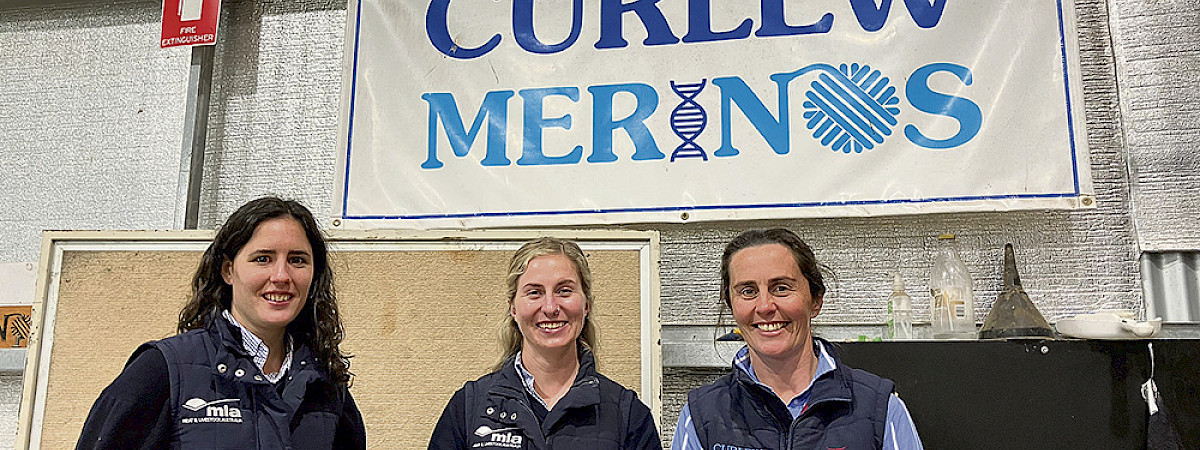
“People came from three different states – there was a lot of interest, and a lot of people were happy to contribute to the conversation.
“They asked questions and were happy to share their experiences with footrot and how sheep with different selection pressure have responded to different footrot strains.”
The development of a footrot breeding value is already delivering positive results in New Zealand, where breeders are using it to improve flock resistance.
A separate trial is now underway in Victoria to validate the NZ findings under Australian conditions.
“At the moment, there’s a collaborative project being undertaken by AWI, Murdoch University, neXtgen Agri and Animal Health Australia – Mark Ferguson showed some of the preliminary trial results,” Ms Kealy said.
“Sheep Genetics representatives were also there, and they shared their timeline.
“They expect that not only will we have a breeding value, but we’ll be able to do genomic predictions for footrot resistance, as well as incorporating it into a flock profile test.”
For the past six years, Curlew Merinos has supported the research by sending cull rams to a host farm for scoring of footrot resistance and scald, contributing valuable data to the national effort.
Curlew Merinos is one of few studs in Australia recording the footrot data and has also used sires that have performed well in New Zealand as a way to benchmark their own flock.
“We were able to share our experiences and selection strategies, and at the end of all of this trial work, sheep genetics will have a footrot breeding value available that people can use,” Ms Kealy said.
“If people want to be kept in the loop as we collect more information, we’re happy to keep sharing our results.”
People can contact Ms Kealy at info@curlewmerinos.com for more information on the trial and its results.
The entire September 24, 2025 edition of The Weekly Advertiser is available online. READ IT HERE!