
Brazil’s judicial system — among the most litigious in the world — is turning to artificial intelligence for help.
Judges are using AI to clear their dockets at a faster clip than ever before, even as lawyers refill them rapidly, also with the help of AI. It’s a “vicious circle,” Rodrigo Badaró, a councilor monitoring AI use at the National Council of Justice, a constitutional body overseeing the judiciary, told Rest of World.
“We note that the use of AI, in the end, rather than diminishing litigation, is increasing it,” he said. “[AI] may be a solution, but no one’s sure if it will actually work.”
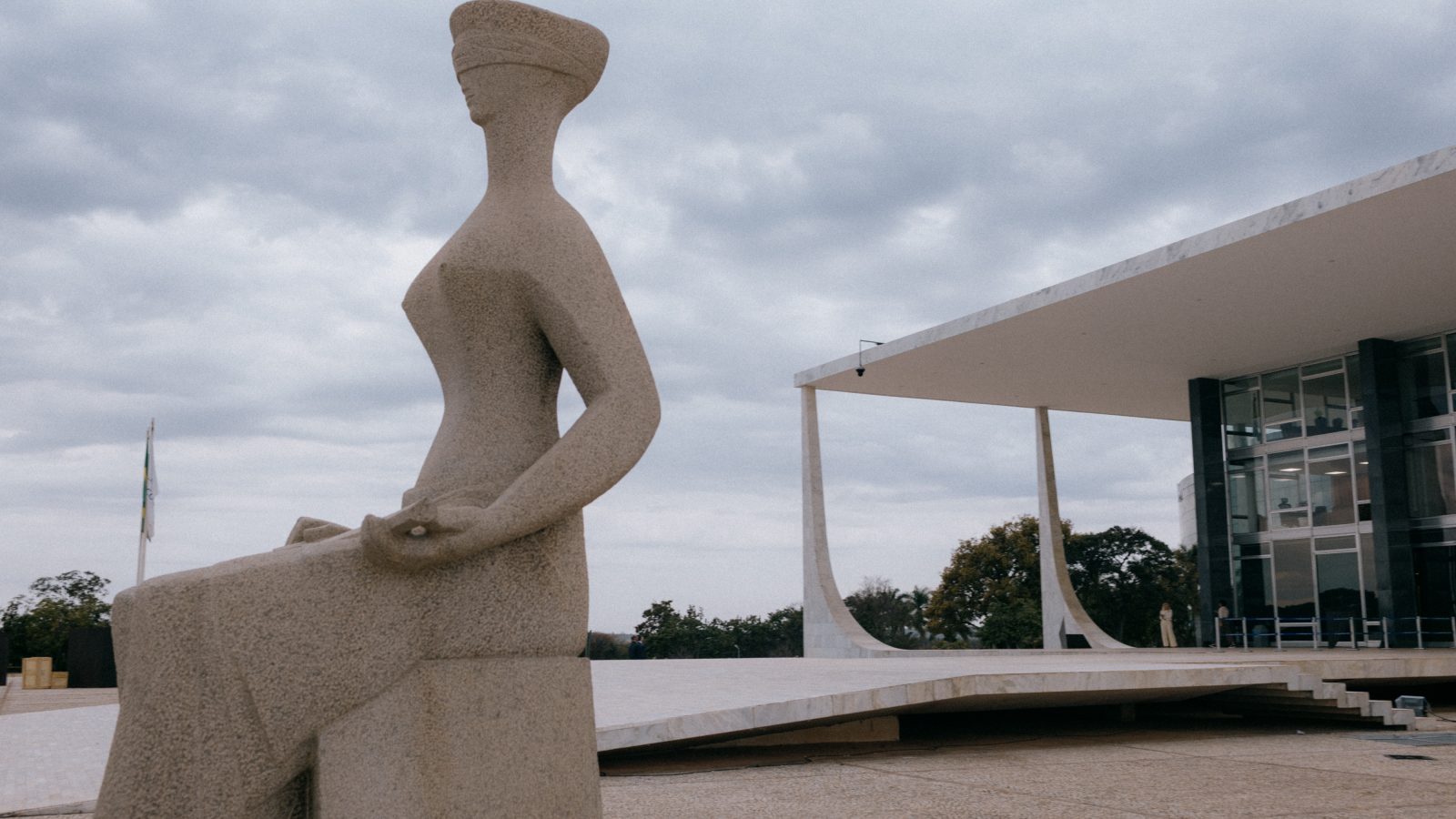
For all the pressure on the system, the nation’s Supreme Court in the capital Brasília appeared serene this August. Lawyers drifted into its glass-walled annex for appointments with the nation’s top judges. The court considers around 80,000 new cases each year, and has delivered landmark rulings recently curbing the influence of Big Tech. In comparison, the U.S. Supreme Court receives around 8,000 petitions a year and hears fewer than 100.
The caseload at Brazil’s top court is a drop in the larger pool of 76 million lawsuits currently clogging the country’s judicial system. Running the overburdened system costs the government $30 billion annually, equal to 1.6% of the gross domestic product.
To cope, Brazil has embarked on one of the world’s largest deployments of AI. Since 2019, its courts have developed or implemented over 140 AI projects that use machine learning or large language models, according to a 2024 survey by the National Council of Justice. The programs find precedents, categorize cases, and help draft documents. Some also forecast the decisions of judges and flag repeat litigants.
Some of the AI tools have helped the courts become more efficient, process documents faster, and cut down the time taken for judicial proceedings, according to the survey.
At the Supreme Court, law clerk Arianne Vasconcelos smiled as she explained how AI helps her deliver better reports to the judges.
The 42-year-old works in a department that handles lawsuits about potential constitutional violations. Typically, her department gets around 76 new cases every month, according to Supreme Court data. Her job is to analyze the argument and create a summary. She also drafts decisions for Luís Roberto Barroso, the current chief justice, to review.

Law books at the Mattos Filho law firm, where partners have lately been using a legal AI chatbot named Harvey.

Arianne Vasconcelos (right), a law clerk at the Supreme Court, said a custom-built chatbot has made her more productive.
Fernanda Frazão for Rest of World
Last December, Vasconcelos got a new helper: MarIA, a generative-AI based tool that helps her write reports. Earlier, she used to write one-pagers and move to the next case on her ever-growing pile, she said.
Now, MarIA drafts the reports, which Vasconcelos reviews.
“Using MarIA, you can now make a much more extensive and complete [report],” she told Rest of World. “It’s easier to adjust [what the AI produced] than start from scratch.”
The MarIA tool was developed by STF’s tech team, and uses Google’s Gemini and OpenAI’s ChatGPT models, said Natacha Oliveira, the team coordinator.
“AI is providing high quality work,” she told Rest of World. “If anything stops working, clerks immediately complain. ”AI tools have helped reduce the backlog at the Supreme Court, Oliveira said.
By June, the backlog dropped to the lowest level since 1992, according to a productivity report from the Supreme Court. Nationwide, judges at various levels of the judiciary closed 75% more cases last year than they did in 2020, data from the National Council of Justice shows.
AI’s helping hand extends to lawyers: More than half of Brazil’s attorneys use generative AI daily, according to a 2025 poll by the country’s Bar Association. They filed over 39 million new lawsuits last year — a 46% jump since 2020, data from the National Council of Justice shows.
Drafting a defense used to take 20 minutes. Now it can be done in seconds, Daniel Marques, president of Brazilian law-tech association AB2L, told Rest of World.
“For a lawyer who bills by the hour, that’s a big efficiency gain,” he said. “But he can’t be lazy. This will be done much faster, but it needs to be reviewed.”
The legal profession is rooted in language, rules, and logic — the very same elements generative AI is good at, according to a report by venture capital firm Contrary Capital. That makes the profession a natural target for AI companies. A Goldman Sachs report estimates 44% of legal tasks could potentially be automated in the future.
Venture capitalists have taken note and invested over $1 billion in global legal-tech startups this year. The market for legal technologies is expected to hit $47 billion by 2029, according to market research firm Research and Markets.
The enthusiasm has been tempered by concerns that AI sometimes makes things up, or hallucinates. There have been over 350 cases so far of lawyers filing court documents containing made-up precedents and laws worldwide, according to estimates by legal researcher Damien Charlotin. Brazil has seen at least six cases this year, resulting in fines for the lawyers involved.
The United Nations cautioned governments this July against “techno-solutionism” in legal work.
“AI should not be adopted without careful assessment of its potential harms, how to mitigate those harms and whether other solutions would be less risky,” the report said.
Lawyer Thiago Sombra’s 12th-floor office overlooks Brasília’s most important courtyard: the Esplanada dos Ministérios, which houses 17 government ministries. If he squints, he might make out the modernist twin towers of the Senate on the horizon.
The location reflects the clout of his employer Mattos Filho, one of Brazil’s most prominent law firms with clients such as Google, Meta, and Microsoft. Big tech companies have repeatedly clashed with the nation’s strict tech rules, making Brasília a major front in global battles over tech regulation.
One August afternoon, Sombra was busy talking to the AI chatbot Harvey, named after the suave lead in the TV legal drama Suits.
Sombra often feeds the chatbot with legal documents, then asks it to look for loopholes. He also uses Harvey to compare opposing expert reports and find out which is more plausible and consistent, he told Rest of World.
Until March 2024, the 44-year-old would’ve done the legwork himself, or assembled his team for a brainstorm. Now, he gets a response within seconds. He uses the chatbot as a research assistant, a document comparison tool, or as a reviewer of court filings, he said.
“It gives me a crude analysis that I can aggregate on my own,” he said. Each lawyer at the firm saves about three hours every week by using Harvey, a spokesperson told Rest of World.
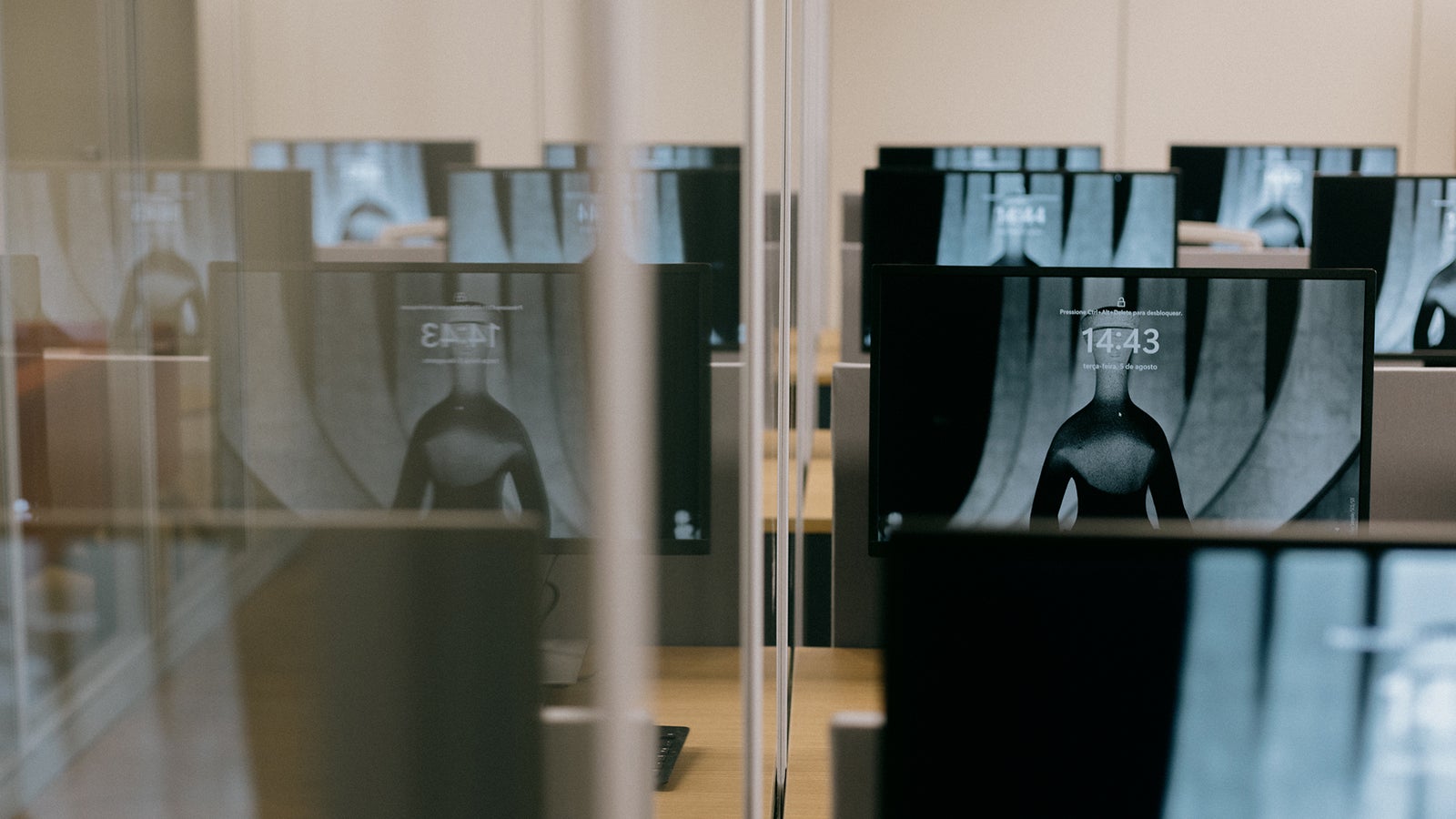
A workspace at the Supreme Court. The nation’s top judges have delivered several landmark rulings on Big Tech.
Fernanda Frazão for Rest of World
Developed by a San Francisco-based tech company valued at $5 billion, the tool uses OpenAI’s models trained on legal data. The company is one of the top legal-tech startups today, funded by investors including Sequoia Capital and OpenAI’s Investment Fund.
Harvey is deployed in 54 countries and has more than 50,000 users, Katie Burke, head of people at Harvey, told Rest of World. The program hallucinates to a lesser degree than top models like Claude and Gemini, the company said. Still, users should review its outputs and cross-check the sources provided by Harvey, Burke said.
“Without the references, I can’t check if [the chatbot] is making things up,” Sombra said.
Legal-tech tools break down legal processes into parts that can be easily handled by computers and automated, said André Fernandes, director at the Research Institute in Law and Technology, based in Recife.
“I look at reality, I put it in a box, I formalize it, I create a product, and I’m efficient, and I sell it and make a lot of money,” Fernandes told Rest of World.
But justice isn’t mechanical, and judges generally consider the context and concepts like fairness and equity in decision-making. “The problem is that a large part of the law is not [standardized],” Fernandes said. “Imagine family law cases, contractual issues, or successions — they involve other elements that need to be considered.”

A sculpture at the Supreme Court. Its legal workers consider 80,000 cases per year.

A meeting room at the Supreme Court.
Fernanda Frazão for Rest of World
Lawyers who don’t have access to proprietary software like Harvey are using free versions of ChatGPT.
In Porto Alegre in southern Brazil, independent lawyer Daniela Solari works out of her home office, surrounded by two toddler boys and three dogs. The 39-year-old finds she often loses her train of thought among their cries and barks.
She uses ChatGPT to search for loopholes in contracts or rewrite clauses related to inheritance and business law. She takes care to not feed the bot sensitive client information, and reviews its outputs for hallucinations, she told Rest of World.
“It brought me such a great optimization that today I no longer need an intern anymore,” she said. “If you take just what it generates and check it in the court’s system, most of the time that case won’t match, the jurisprudence won’t exist.”
Solari said she plans to hire an intern in the future, but would assign them important tasks rather than repetitive busywork, which is better performed by AI.
“I would not use a young person’s energy and high expectations for purely bureaucratic tasks that do little to help their development,” she said. “I was an intern myself and I know how brief and important that time is for understanding the profession.”