
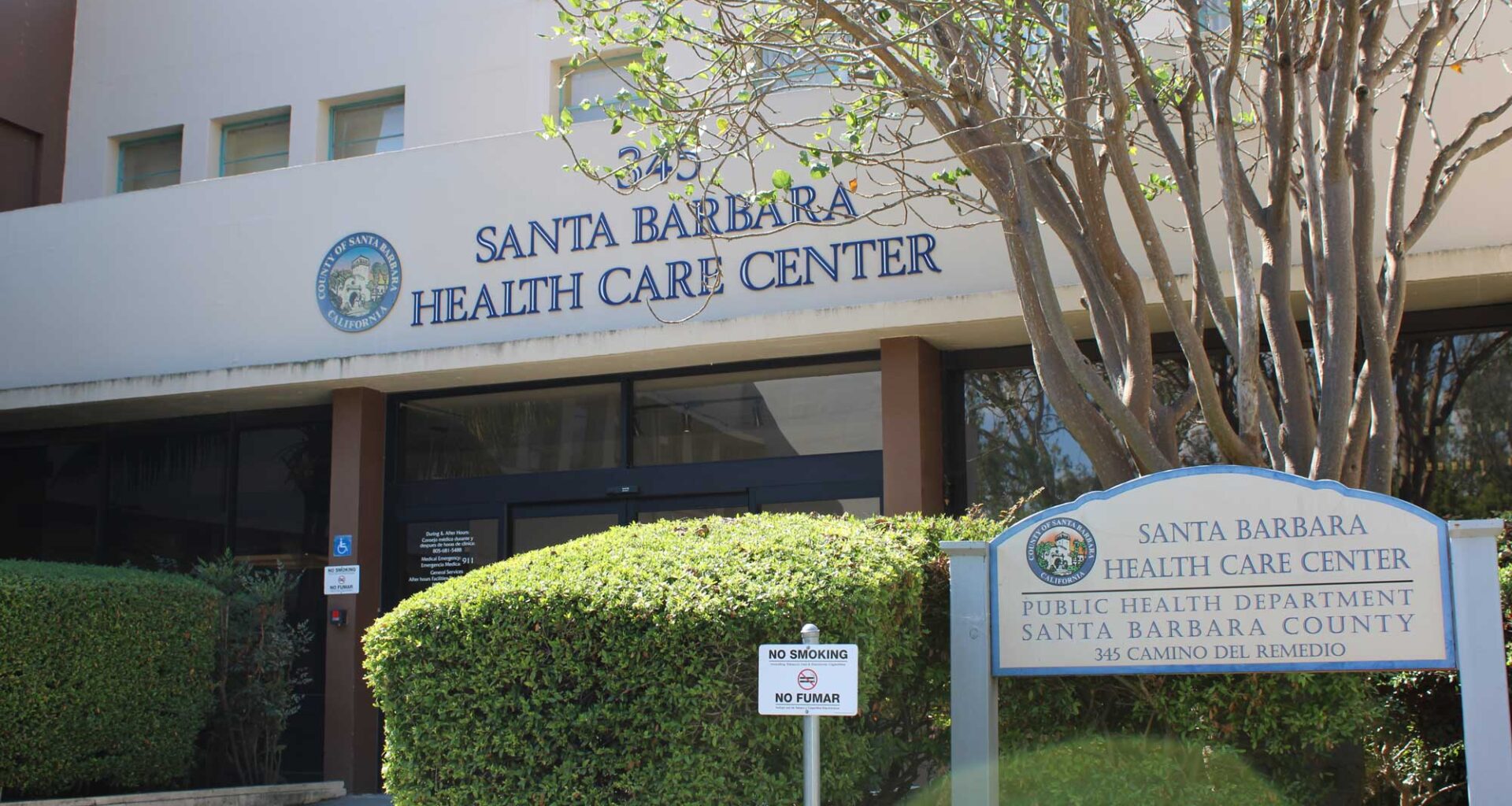
Roughly 7,500 Medi-Cal patients in Santa Barbara County will be reassigned to new health care providers as a result of a federal policy change affecting eligibility at County Health Care Centers.
The shift stems from a recent decision by the U.S. Department of Health and Human Services to classify Federally Qualified Health Centers as a federal public benefit. That designation prohibits clinics that receive federal funding, including all five of the county-operated Health Centers, from serving individuals enrolled in Medi-Cal who are identified as having “unsatisfactory immigration status.”
Although a legal injunction is temporarily blocking the rule change in California, County Health Director Mouhanad Hammami said the department could not afford to wait.
“There are so many uncertainties that we don’t know if (the injunction) will prevail,” Hammami said. “The complexity of managing care and continuity is not something that can be done on a dime.”
He said the transition is underway to give county Health Center patients time to find new providers and allow clinics to prepare before the restrictions take effect Jan. 1, 2026.
Under current Medi-Cal rules, eligibility checks are conducted at the individual level. The new designation applies to the clinics themselves, making it unlawful for them to serve patients with restricted immigration status, even if those patients are eligible for Medi-Cal through California’s expanded coverage, Hammami said.
“All five of our County Health Centers are federally designated and receive federal funding,” He said. “If we are deemed non-compliant, that could put other federal funding in jeopardy.”
Santa Barbara County is among the areas most directly impacted by the policy change, in part because California is one of the few states that allows Medi-Cal enrollment for eligible people regardless of immigration status. “Other states like Texas or Michigan don’t offer that coverage at all, so they aren’t in this situation,” Hammami said.
The county is working with CenCal Health, the local Medi-Cal managed care plan, to identify affected members and begin the reassignment process.
Patients enrolled in managed care will be moved to new providers within CenCal Health’s existing network, which includes more than 1,800 physicians and clinics, according to that organization.
“Several primary care provider practices have expressed willingness to support community health by providing primary care services to more members beginning in January,” said Marina Owen, chief executive officer of CenCal Health, in a statement.
She said affected patients will be contacted with details on the new assignment.
“Members will be notified through a letter which includes the name and location of the new primary care provider, and specific steps that a member can take if they have questions,” Owen said.
She said additional support to minimize disruptions, such as bilingual services and multilingual interpretation will also be available.
“CenCal Health’s clinical and case management team is working to ensure that members in active treatment and/or with ongoing medical needs are transitioned to a new provider,” Owen said. “In the most seamless and coordinated manner to support ongoing care.”
For patients not enrolled in managed care, the county will provide a list of alternative clinics and counseling support. Hammami said Health Center staff will still assist walk-in patients with locating care after the change takes effect.
“We will never abandon our patients or our community,” Hammami said. “If we are unable to provide care ourselves, we will make sure they are still receiving it.”
The shift is also expected to affect the Health Department’s budget, largely due to a projected loss of revenue from patients who will no longer be eligible for services. According to the county, layoffs and the elimination of some budgeted positions are anticipated. A revised budget proposal is scheduled to go before the Board of Supervisors on Oct. 7.
Hammami said the department used the temporary injunction as a window to begin planning without disrupting immediate care.
“I think the injunction gave us a little bit of breathing time to not do it immediately when this was implemented,” he said. “That gave us a couple of months to arrange all of this.”