
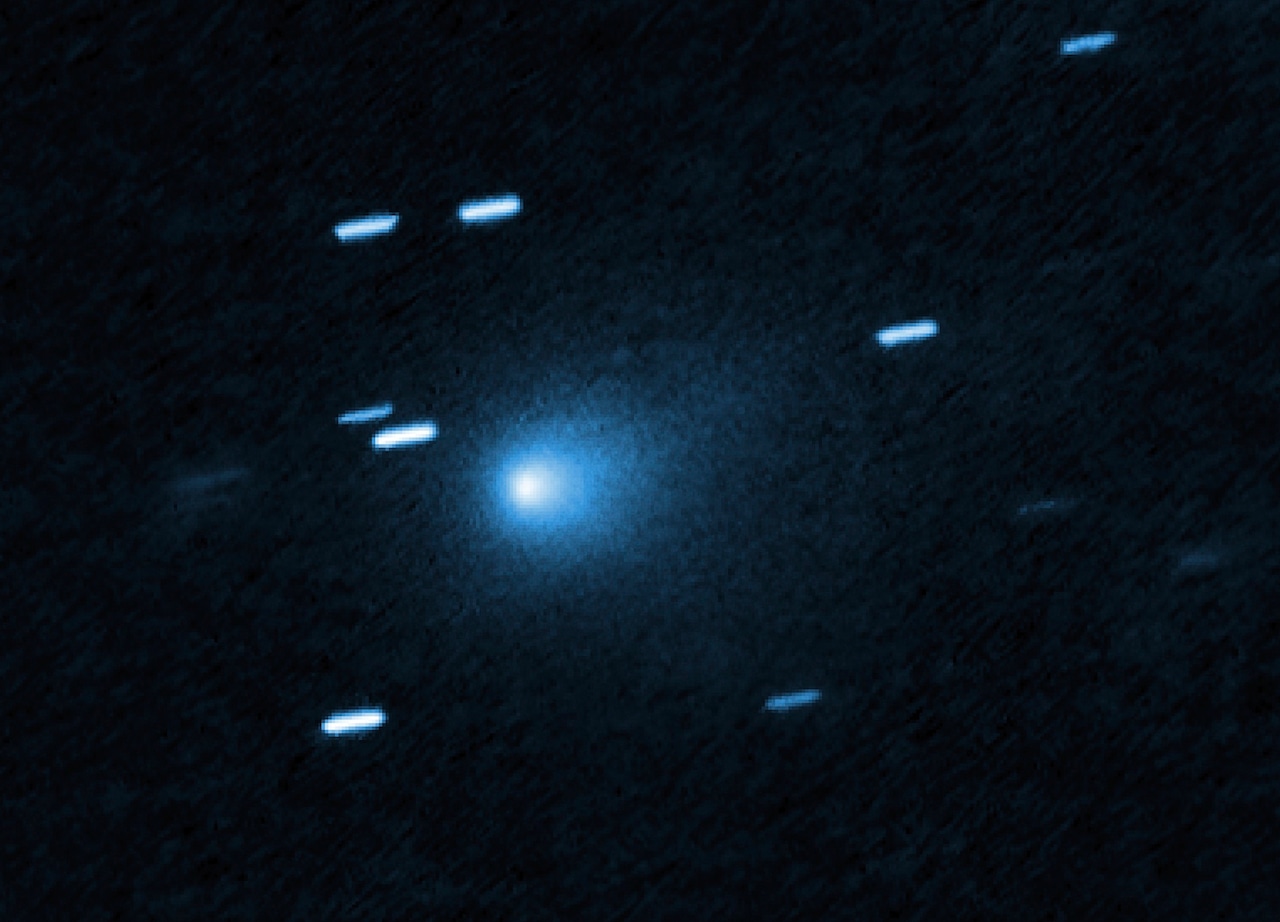
A mysterious interstellar object will be visible for a couple more nights before it gets too close to the sun to observe, according to NASA.
Comet 3I/ATLAS, the third interstellar object ever detected, will be visible from ground-based telescopes through the end of September, NASA said. It will reach its closest approach to the sun around Oct. 30 – just inside the orbit of Mars. By early December, it will re-emerge on the other side of the sun and again be visible.
The comet poses no threat to Earth and will remain at a distance of at least 150 million miles, according to NASA.
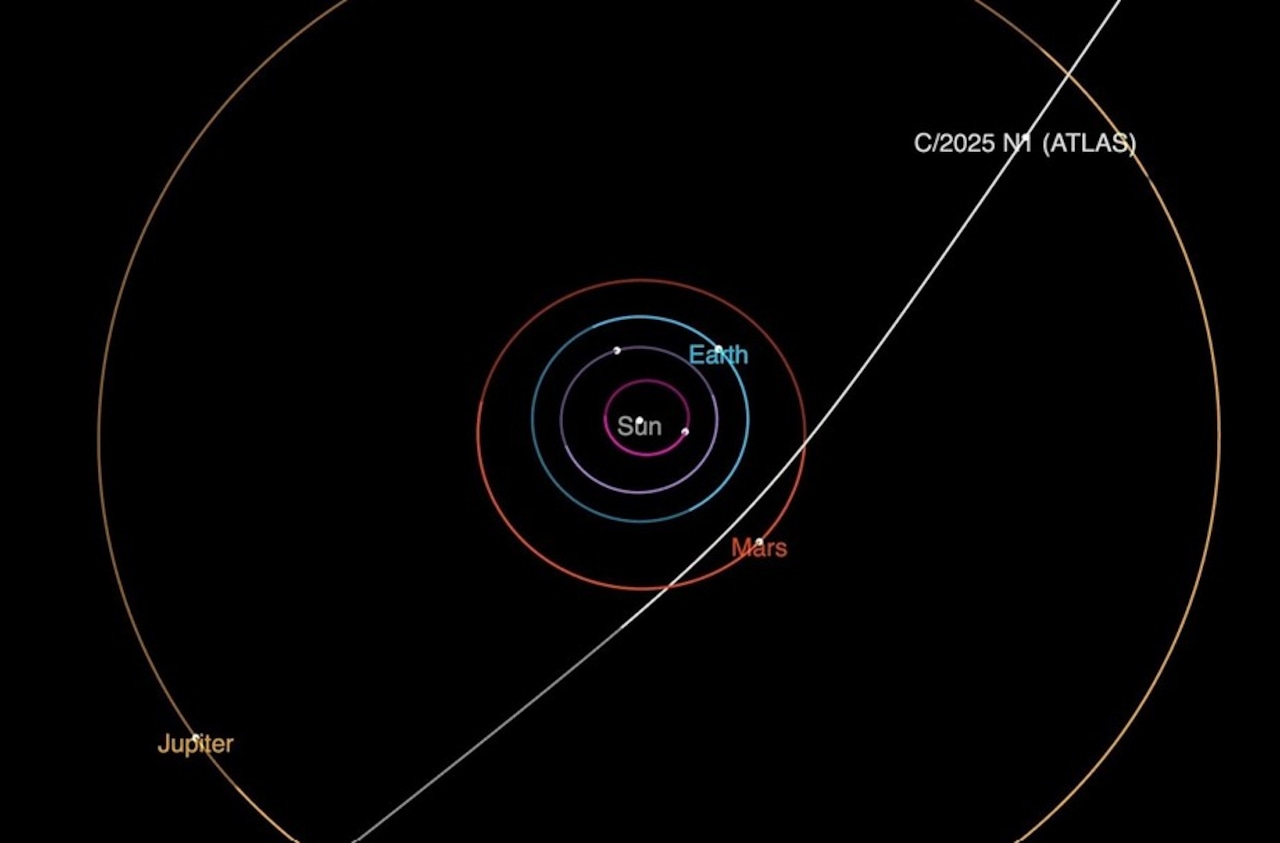 This diagram shows the trajectory of interstellar comet 3I/ATLAS as it passes through the solar system. It will make its closest approach to the Sun in October.NASA/JPL-Caltech
3I/ATLAS was first discovered on July 1 by the NASA-funded ATLAS (Asteroid Terrestrial-impact Last Alert System) survey telescope in Rio Hurtado, Chile. ATLAS reported a comet that originated from interstellar space, from the direction of the constellation Sagittarius.
Since the first report, “pre-discovery” observations were gathered, extending back to June 14.
According to Livescience, the object is traveling towards the sun extremely fast, around 152,000 mph and is on an flat and straight trajectory that’s unlike anything else in the solar system.
The other two known interstellar visitors were spotted in 2019 and 2017, according to Livescience. Comet 2I/Borisov passed through in 2019. ‘Oumuamua, a cigar-shaped object that appeared in 2017, sparked a social media flurry after it was suggested it was an alien probe.
If you purchase a product or register for an account through a link on our site, we may receive compensation. By using this site, you consent to our User Agreement and agree that your clicks, interactions, and personal information may be collected, recorded, and/or stored by us and social media and other third-party partners in accordance with our Privacy Policy.