
Your support helps us to tell the story
From reproductive rights to climate change to Big Tech, The Independent is on the ground when the story is developing. Whether it’s investigating the financials of Elon Musk’s pro-Trump PAC or producing our latest documentary, ‘The A Word’, which shines a light on the American women fighting for reproductive rights, we know how important it is to parse out the facts from the messaging.
At such a critical moment in US history, we need reporters on the ground. Your donation allows us to keep sending journalists to speak to both sides of the story.
The Independent is trusted by Americans across the entire political spectrum. And unlike many other quality news outlets, we choose not to lock Americans out of our reporting and analysis with paywalls. We believe quality journalism should be available to everyone, paid for by those who can afford it.
Your support makes all the difference.Read more
The “space dust” which helps to form the stars and planets around the cosmos is spongier than previously thought, an international team of scientists has found.
Astronomers and astrochemists reviewed years of research to try and resolve a simple question of whether cosmic dust is porous.
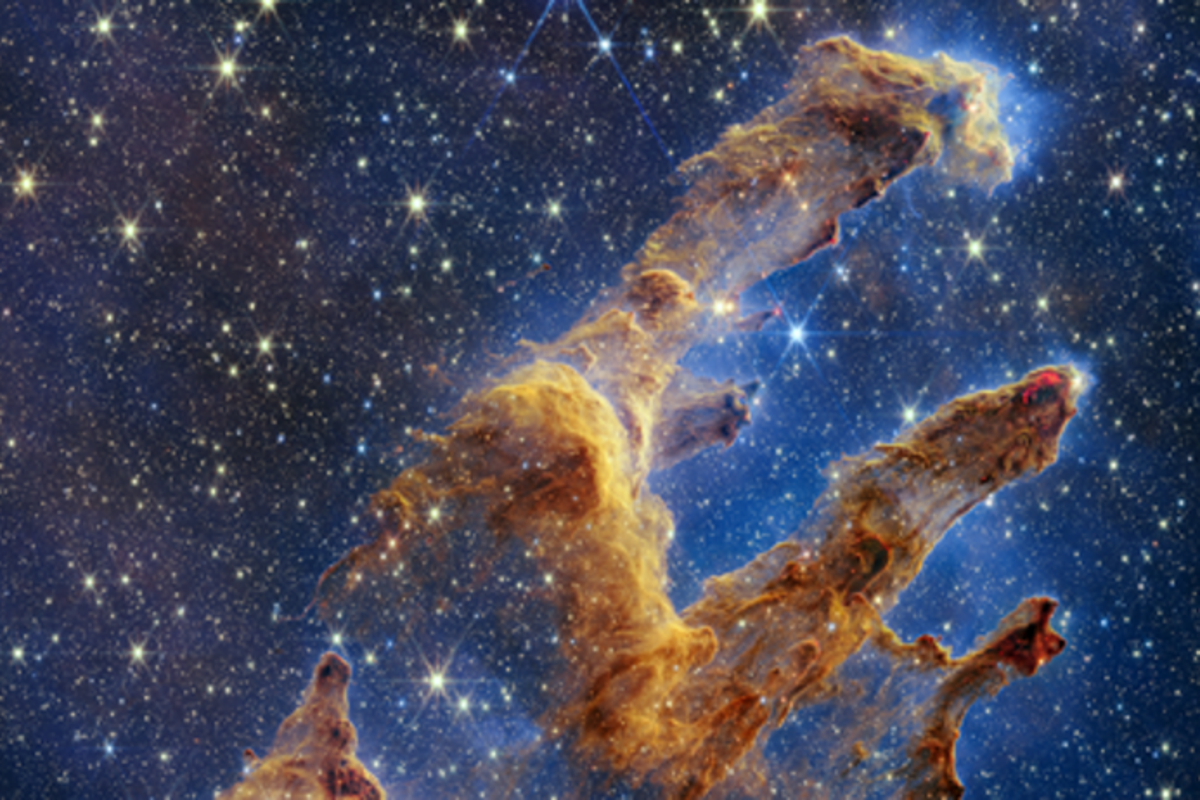
These tiny dust grains are fundamental to astronomy and are found in the star-forming regions of space, such as the Pillars of Creation.
Professor Martin McCoustra from Heriot-Watt University in Edinburgh, who took part in the study published in the Astronomy and Astrophysics Review, said the tiny dust grains are far from being like miniature rocks.
He said: “In fact, they’re more like fluffy little sponges, riddled with tiny voids.”
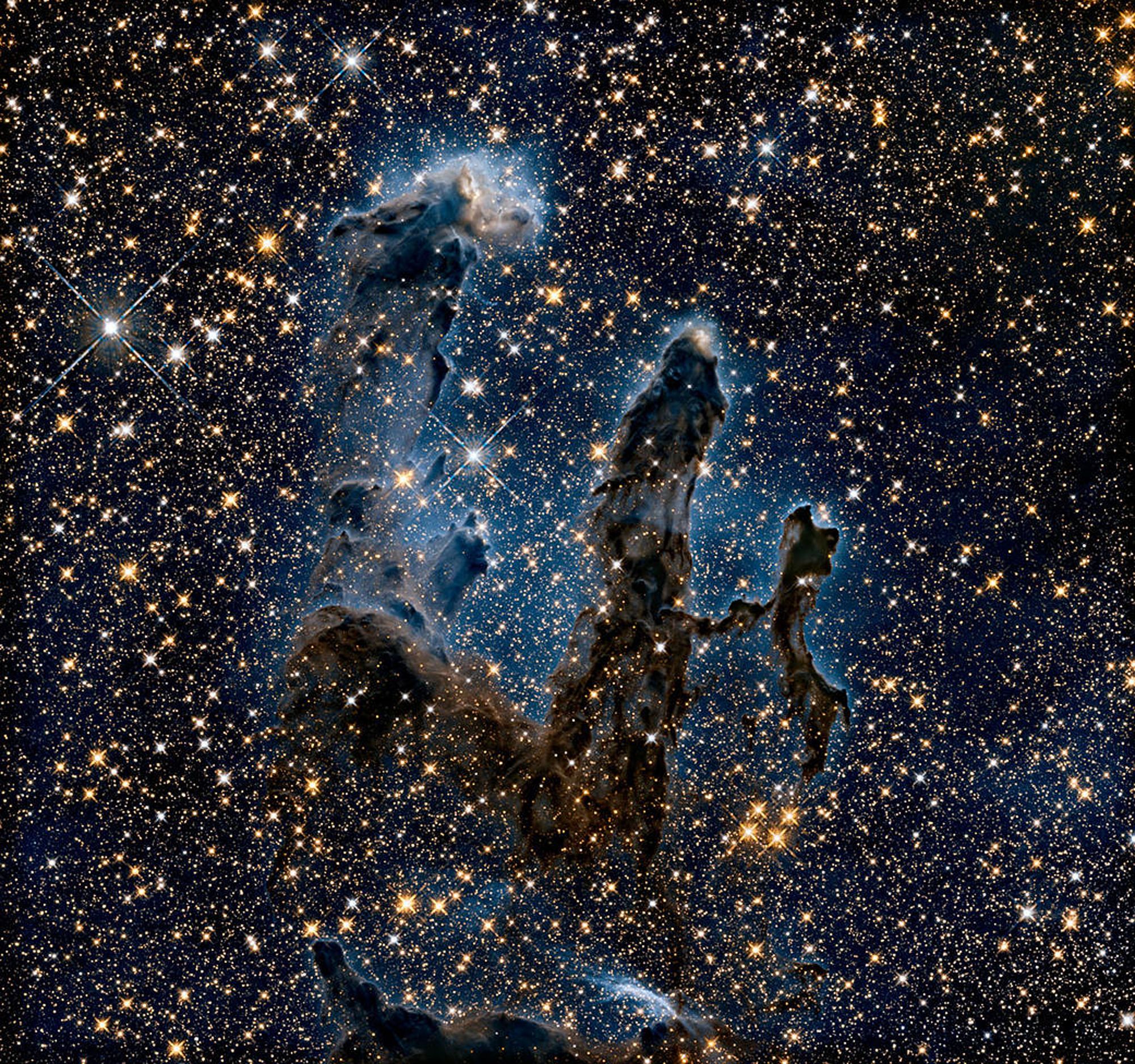 The Eagle Nebula’s Pillars of Creation, captured in infrared (NASA/ESA/Hubble and the Hubble Heritage Team/PA)
Cosmic dust can influence how light travels through space and form the building blocks for life.
The researchers found clues about dust porosity from different observations and space missions.
The European Space Agency’s Rosetta mission to comet 67P also found extremely fragile, fluffy dust particles, some with porosities exceeding 99 per cent.
Professor McCoustra added: “Spongy grains could be more easily destroyed by shocks and radiation as they travel through interstellar space.”
“We should remember that nearly 100 years ago, astronomers did not believe molecules could exist in space, as the environment was considered too harsh.
“Today, astrochemistry is recognised as addressing fundamental questions in terms of star formation and the origins of life.”
Dr Alexey Potapov from the Friedrich Schiller University Jena, the lead author of the review, said: “If these grains are porous, that means they have a far greater surface area than we thought.
“That could radically change our understanding of how molecules form and evolve in space.”
However, astronomers remain divided, with some models suggesting high porosity would make dust grains too cold or fragile to match what telescopes observe in interstellar clouds.
It was concluded that further observations, laboratory work and modelling are required to resolve the debate.