
When Nationals rookie Brady House lined a single to right field to break up White Sox righty Shane Smith’s perfect game bid with one out in the sixth inning Sunday, it ensured there would not be a regular-season no-hitter thrown in 2025. Washington was the final team to get a hit on the final day of the season. For the first time since 2005, baseball played an entire season without a no-hitter.
This is only the fifth season without a no-hitter since MLB first expanded in 1969. The league was also no-hitter-less in 1982, 1985, 1989, and 2005. On average, there were 3.7 no-hitters from 2006-24, and that includes the 60-game 2020 season. There were two no-hitters that year (White Sox’s Lucas Giolito vs. Pirates and Cubs‘ Alec Mills vs. Brewers).
MLB’s last no-hitter was a combined no-hitter started by Cubs lefty Shota Imanaga last Sept. 4 against the Pirates. The last single-pitcher no-hitter was Blake Snell, then with the Giants, against the Reds last Aug. 2. Here is what you need to know about MLB’s lack of no-hitters in 2025, and whether this was a blip, or the start of a trend.
Close calls
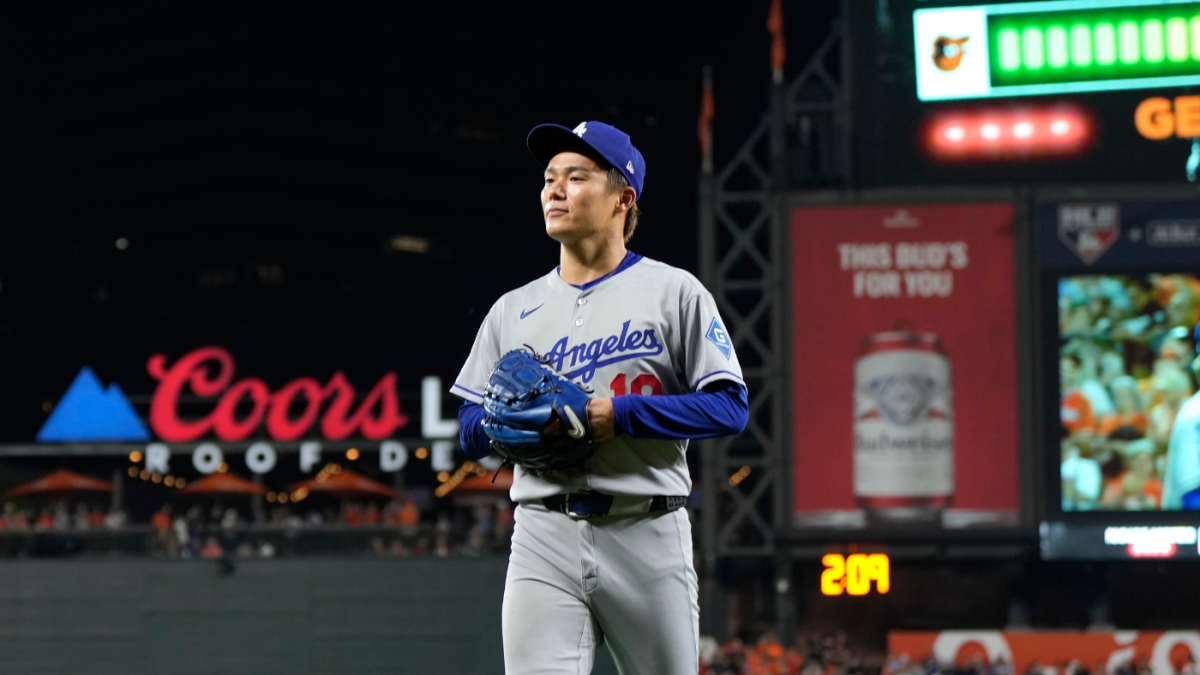
Four times this season a team took a no-hitter into the ninth inning. Most notably, Dodgers ace Yoshinobu Yamamoto was one out away from a no-hitter against the Orioles on Sept. 6. He gave up a solo homer to Jackson Holliday, then the Dodgers’ bullpen melted down and the O’s won the game on Emmanuel Rivera’s walk-off single.
“It’s hard to recount a game like this,” Dodgers manager Dave Roberts said after the game. “Where you feel like there’s so many things where you get a little bit of momentum, build off a great outing by Yoshinobu, and take that into tomorrow. And then, obviously, it completely flipped.”
Here are the three other instances of a pitcher (or team) losing a no-hitter in the ninth inning in 2025:
Yep, the Dodgers took a no-hitter into the ninth inning twice in a three-day span earlier this month. They at least won the Sept. 8 game. That Sept. 6 game is about as bad as losses get.
A lengthy drought, but not unprecedented
Including the postseason, games have been played on 238 days since the last no-hitter, which is a lengthy drought but hardly unprecedented or historic. The all-time record is 535 game-days without a no-hitter, between Aug. 8, 1931 (Senators’ Bobby Burke vs. Red Sox) and Sept. 21, 1934 (Cardinals‘ Paul Dean vs. Dodgers). The current drought is not even halfway to the record.
Possible reasons
One season without a no-hitter is a blip, a fluke, an anomaly. It is baseball’s inherent randomness at work. No-hitter-less seasons have happened before and they will happen. Now, if we go two or three or four years without a no-hitter, then maybe there’s something to it. One year though? I wouldn’t consider this a sign no-hitters are going extinct.
For what it’s worth, the league batting average and strikeout rate have more or less held steady the last few years. Strikeouts had steadily risen for about two decades up until the last four years. I wouldn’t go as far as to say the league strikeout rate is going down, but the rise in strikes has been halted. Here are the numbers:
2021
.244
.292
23.2%
2022
.243
.290
22.4%
2023
.248
.297
22.7%
2024
.243
.291
22.6%
2025
.245
.291
22.2%
That .243 league batting average in 2022 and 2024 is the lowest since the mound was lowered in 1968, and that 23.2% strikeout rate in 2021 is the highest in a non-pandemic season in baseball history. It has never been harder to get a hit than it is right now. Pitchers are so good, matchups are optimized, and defenses are so well-prepared. It’s hard out there for hitters.
Still, the decline in batting average and rise in strikeouts the last few years would lead you to believe there will be more no-hitters, not a full 162-game season without one. No-hitters are outlier performances. A lot has to go right for one to happen. It just so happened that it never did come together this season. There is no obvious cause for this year’s lack of no-hitters. It’s just baseball.