
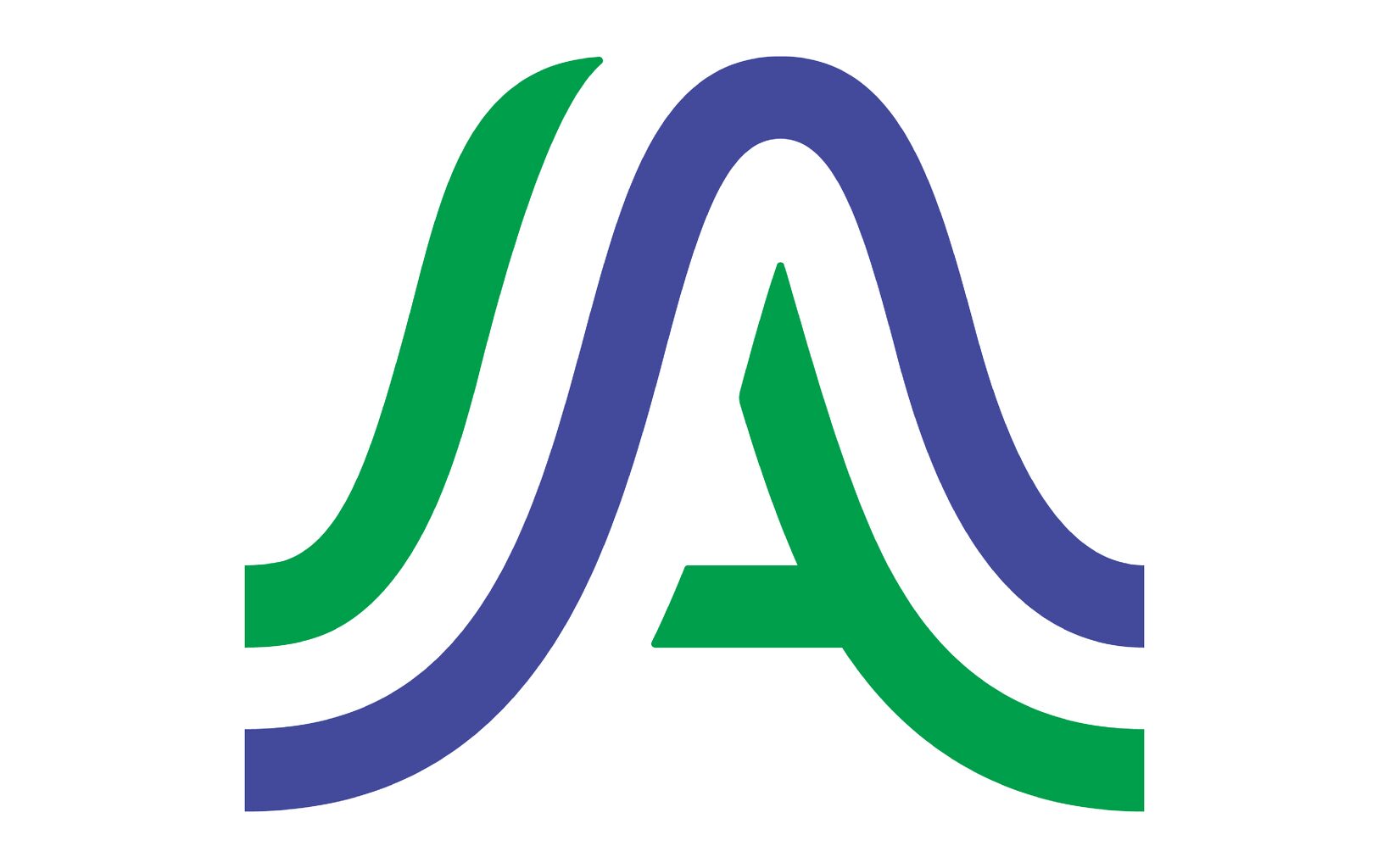
The “Austin A” sparked criticism when it leaked before its official unveiling.
Courtesy of City of Austin
An example of the “Austin A” in use on the city of Austin’s social media channels.
Courtesy of City of Austin
The City of Austin’s new municipal logo hasn’t been officially unveiled by the city yet (despite a press conference addressing the logo’s leak and its slow rollout across city websites), but it’s already sparking online backlash and criticism. Many Austinites have questioned the design choices, the cost and the process behind the rebrand.

DJ Stout, partner at the international design firm Pentagram and principal of its Austin office, has lived in the capital city since 1986 and has worked as a designer for even longer. Stout and his team of five designers created the new logo over the span of a year, in collaboration with the city. He spoke to the American-Statesman about the project, the public’s response and what the new “Austin A” is all about.
Article continues below this ad
Q: Let’s start with the basics. How did Pentagram become involved in the city’s rebrand?
Stout: The city approached several design firms and narrowed it down to three finalists. We each pitched at city hall more than a year ago. Pentagram was awarded the design part of the project, while TKO, an Austin ad agency, handled brand strategy and the public rollout campaign.
Q: How did audience surveys and research play a role in shaping the direction of the logo design?
Stout: The city had already done a lot of testing before TKO and Pentagram came on board. Because it’s the city, they really had to do their due diligence to talk to as many people as they could. All of that information was put together into a findings brief and given to us before we even started designing.
Article continues below this ad
The survey questions were pretty open-ended: “What do you like about being an Austinite? What do you think is the most important part of being an Austinite? What do you think separates Austin from other cities?”
Based on that information, some of the things that were clear is people did not want this to feel like state government; they wanted it to feel specific to the city. They didn’t want a capital building, they didn’t want a Texas Lone Star. People feel like Austin is very tolerant and accepting of different lifestyles and points of view, and they’re proud of that. The idea of reaching out to other people and being welcoming was a big differentiator, and the bridges were important as a symbol of that.
People are also very proud of their natural resources here, and that’s one of the things that separates this city. There’s a river that runs directly through the city. The city is built around Lady Bird Lake.
When I moved here in 1986, the Save Our Springs initiative was all over the news. The Save Our Springs initiative was to try to keep developers off of the Edwards Aquifer. One of the defining factors about Austinites, at least it was clear to me when I first moved here, was a really amazing defense of our natural resources. Barton Creek and Barton Springs are really symbolic of the soul of this city.
Article continues below this ad
Q: How does the final “Austin A” design reflect those values?
Stout: The simple A that we’ve done is made of two arcs, these two graceful arcs. There’s a green arc and there’s a blue arc. Those arcs are meant to symbolize bridges, and the reason that the green arc is kind of intertwined with and overlaps with the blue arc is to symbolize this sort of weaving together, or coming together, of different points of view, based on these two bridges.
The green arc is supposed to be symbolic of the Hill Country. The blue arc represents our wonderful water resources, including Barton Springs, Town Lake, Lake Austin, Deep Eddy, all of those natural water resources. It’s a little arc, which is representing a little swell or wave.
The other part of the blue color is the violet crown here in Austin. O. Henry coined this term — there’s something about the western sky in Austin, where the Hill Country starts. For centuries, people have looked out there and noticed this distinctive purple glow to the sunsets. That was coined by O. Henry as the violet crown.
Article continues below this ad
The blue is not just a normal blue, it’s a violet blue. It’s a purple blue on purpose.
It’s symbolic of all those things: bridges, the sky, trees, live oaks, the water, all those natural things. That is what the people said, they wanted us to reflect those natural resources.
The color palette behind the logo reveals that the source of inspiration behind the design is primarily natural resources and landscapes.
Courtesy of City of Austin
Q: What was the design process like?
Article continues below this ad
Stout: There were a lot of rounds. All of these big identity projects are design by committee, for the most part. There was the group that we presented to a whole bunch of times, and it had the leaders of all the different services: police chief, mayor, head of the airport.
There were somewhere between 15 and 20 different design iterations initially.
First the committee narrowed it down to about five, and that was over a period of time with us exploring lots of different variations on those five. Then they narrowed it down to three, then it was narrowed down to two. One of the finalists was a variation on a star. It was one that we really liked, because it wasn’t a lone star.
They decided on the one that we’re calling the “Austin A,” mainly because they like that symbolism of the bridges, the weaving together of the bridges showing all these different points of view coming together, all these different personalities coming together to make the city, the fact that it represented our natural resources — the Hill Country, the green. We have all of these trees in this city, the urban forest, which a lot of Texas cities don’t have.
Article continues below this ad
Q: Public criticism has been incessant. What do you want critics to know about the design?
Stout: The one thing that’s clear is that this was supposed to be an identity system for the city of Austin — for the city government. Obviously, the city of Austin’s governing body wanted all Austinites to like it, but they knew trying to get a million people to all like an identity is ridiculous. You try to solve the problem based on all the information that was gathered at the beginning of the project.
The city wanted something simple, and this identity — the logo by itself — needs to stand up in all kinds of different application situations. A lot of the work of the city is done digitally: It exists very small on phones, it exists on the internet, so it had to stand up to that, but also, it’s going to go on city vehicles all over the city, it goes on documents and tickets, it goes on uniforms.
Any contemporary identity is not an illustration — it’s not an illustration of the capital, or a guitar pick. It’s all symbolic. That’s what the best logos are based on.
Article continues below this ad
Q: People are especially hung up on the $1.1 million price tag for the project. How much of that went to Pentagram?
Stout: That money was not just for the design part. Pentagram made around $150,000 — that was our fee. The $1.1 million was approved by city council in 2018, just to do a real, big city, comprehensive identity project. I don’t have the detail of what they spent that money on, but the only part that we were paid was around $150,000. Which actually, is very, very low for this kind of project. I did it because I love the city. I’ve lived here a long time, I’m a sixth-generation Texan. I love this place. Most of the partners (at Pentagram) would probably not even take on a project like this, with fees that low, but I did it because I love the city.
Every time I’ve done a big identity system, people just look at a single logo and say, ‘Why did that cost a million dollars? ’ It didn’t cost a million dollars. That’s not true. It was a big, multi-year project.
Q: The logo was initially supposed to be unveiled Oct. 1, but it leaked early. What now?
Article continues below this ad
Stout: Pentagram and TKO were both supposed to have announcement campaigns and materials ready for the public release on Oct. 1. A low-res, badly reproduced version of one logo, from an identity system that has multiple versions of the logo, was leaked maliciously. There is going to be a more substantive, professional unveiling.
There’s so much misinformation — people badmouthing this identity, people badmouthing the city. The people I worked with there, they’re really, I think, trying to do the best they can for the city. I think we have one of the best city halls in the whole country.
Q: How do you personally feel about the criticism?
Stout: Everybody’s welcome to their opinion. If you don’t like the logo, that’s fine. But what has happened in the world of social media, it gives everybody an equal voice. It’s like a mob mentality. Anybody can criticize anything without any knowledge or background. Not that knowledge is going to change your mind — but it might.
Article continues below this ad
The other thing I would say is, this is the first identity system the city has ever had. It’s something amazing.
The City of Austin Identity “Town Hall” Program, hosted by AIGA Austin, will be the evening of Wednesday, Oct. 22 from 7-8:30 p.m. on the rooftop event space of the Contemporary Jones Center. RSVPs will be required.
Article continues below this ad