
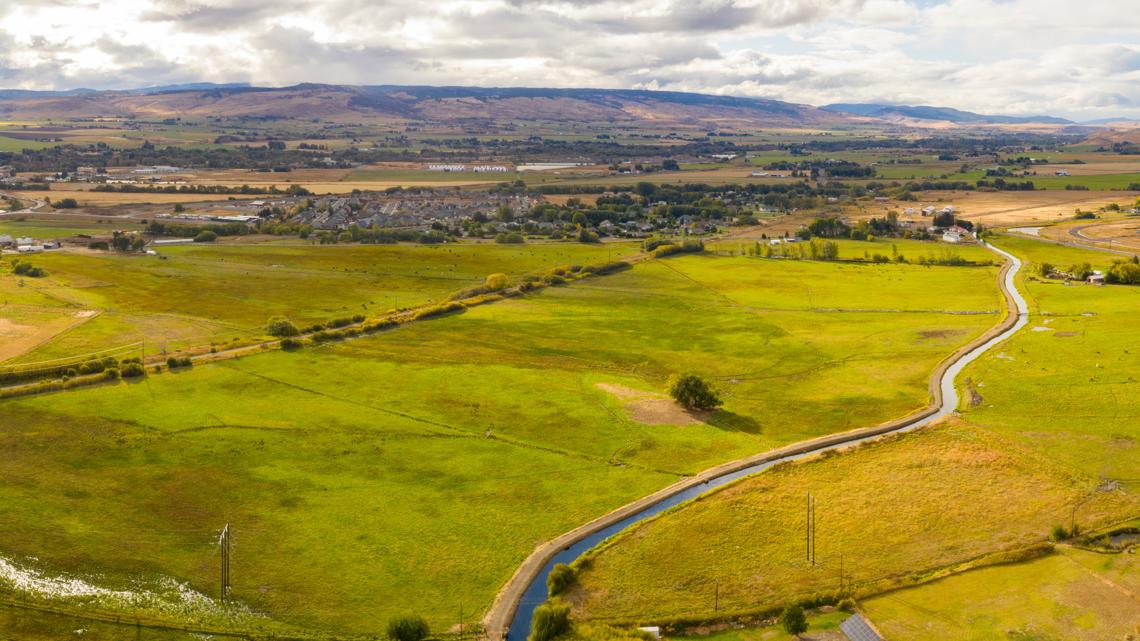
The Washington Department of Ecology orders a water use halt in the Yakima Basin due to severe drought.
YAKIMA, Wash. — For the first time in state history, the Washington Department of Ecology is ordering a halt to surface water use in the Yakima Basin, citing critically low reservoir storage and streamflows after three straight years of drought.
Starting Oct. 6 and lasting through the end of the month, more than 1,500 water rights holders will be barred from diverting water. The restrictions may also extend to residential use, forcing some communities to limit lawn and garden watering.
RELATED: Farmers, Tribe unite to save salmon in drought-stricken Washington river
“We have not experienced a drought like this in over 30 years, and it’s forcing us to take actions we’ve never done before,” said Ria Berns, manager of Ecology’s Water Resources program. “We know that restricting water diversions will impact communities across the Yakima Basin, but this is a necessary step to protect water for fish and senior water rights in the face of continued drought conditions.”
The orders became necessary because water stored in Yakima Basin reservoirs is expected to run out after Oct. 6. Once that supply is gone, precipitation and natural river flows will not be enough to satisfy senior irrigation rights.
“For years, the Yakima Basin has been a national model for collaboration and water management,” said Ecology Director Casey Sixkiller. “That partnership has led to more than $1 billion in investments. But the conditions we see today show that there is much more work still ahead of us to improve water security for the region.”
Under Washington water law, the most senior water rights holders must be served before junior rights are filled. With supplies at historic lows, only those senior rights holders will continue to receive water this fall.
The state is working with the federal government to monitor water flows, which will determine if the restrictions need to be extended. In the meantime, the Department of Ecology is monitoring diversions to ensure farmers and ranchers are complying with the order.
This winter’s rainfall and snowpack will be critical for the Yakima Valley’s water supply and the survival of its crops.
Locals feel the impact
The drought is visible at local markets. Apples at the Fruit City Market in Union Gap are smaller than usual this year, but customers keep coming. The fruit comes from grower Mark Barrett, who has invested in drip irrigation and sprinkler systems at his Yakima orchard to conserve every drop of water.
He said the state needs to focus on long-term solutions to mitigate the effects of drought.
“The Department of Ecology needs to spend more time figuring out how they’re going to get more water in storage, more conservation maybe. They need to figure that part out, not [take away] the water rights of farmers,” he said.
Farmers and ranches will soon feel the effects of the new restrictions on water use.
“We’ve never experienced drought like this in over 30 years, and it’s forcing us to take actions that we’ve never taken before,” said Berns of Ecology.
She said the order underscores the urgent need for storage projects and conservation plans.
“Water is scarce. We need to conserve, and we need to start making investments in water supply to address the impending climate change impacts on our water,” Berns added.
Barrett said he and other growers are doing their best to use water efficiently.
“We’re diligent to make sure that we are using water the way we should and conserve it,” he said.