
You might have noticed a growing buzz around the WNBA over the past few years, but do you know how it all began?
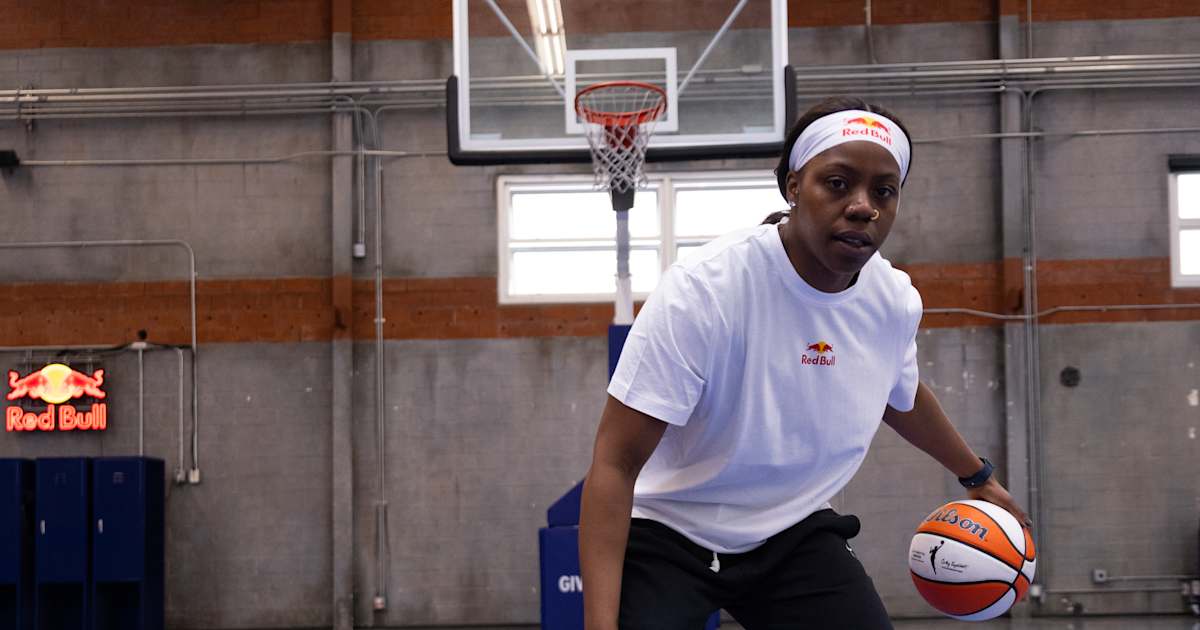
The Women’s National Basketball Association (WNBA) plays a pivotal role in moving women’s sports and women athletes forward. It was officially founded in April 1996 by the NBA, with the goal to provide the platform and space for women athletes to compete at the highest level. The timing was perfect, as the U.S. women’s basketball team dominated and won gold at the 1996 Atlanta Olympics. The league symbolizes more than just basketball – it represents gender equality in sports, visibility and progress in sports. The WNBA has and continues to challenge stereotypes, expands opportunities to women in sports and sparks critical conversations about pay equity, representation and more. WNBA stars like Arike Ogunbowale, known for her clutch performances and cultural presence, embody what this league stands for: excellence, confidence and impact.
The league has become a platform for powerful and important voices and it’s a movement that continues to evolve, inspire and redefine what’s possible.

Arike Ogunbowale
© Sean Berry/Red Bull Content Pool
01
Early days and growth – Late 1990s-2000s
Their inaugural season happened on June 21, 1997, with the very first WNBA game in Inglewood, California between the New York Liberty and the Los Angeles Sparks. Over 14,000 fans were in attendance and it was aired live on NBC. The New York Liberty clinched the league’s first ever victory.
With the slogan, “We Got Next,” the WNBA launched eight original teams:
Charlotte Sting
Cleveland Rockers
Houston Comets
New York Liberty
Los Angeles Sparks
Phoenix Mercury
Sacramento Monarchs
Utah Starzz
One of the standout features of the early era was the Houston Comets and how they dominated the league. The Comets won the league’s first four championships from 1997 to 2000. The team was led by superstars Cynthia Cooper, Sheryl Swoopes and Tina Thompson. The Comets set a high competitive standard and brought excitement to the brand new league.
Other household names included Lisa Leslie, Rebecca Lobo and Teresa Weatherspoon, who all helped a new generation of women athletes with national recognition.
In 1998, the league started to expand with new teams pretty quickly. It grew from eight to 16 teams within four years of the league’s debut.
1998: Detroit Shock and Washington Mystics were added
1999: Minnesota Lynx and Orlando Miracle were added
2000: Indiana Fever, Miami Sol, Portland Fire and Seattle Storm were added
02
Challenges and evolution – 2000s-2010
Following the rapid growth, the WNBA entered the 2000s with momentum – but also challenges.
Some teams folded or had to move due to financial reasons.
Folded: Houston Comets, Miami Sol, Portland Fire, Charlotte Sting and Cleveland Rockers
Relocated: Utah Starzz (became the San Antonio Silver Stars) and Orlando Miracle (became the Connecticut Sun)
During these challenges, the WNBA stayed committed to its mission. It was still an essential time for the league to grow and pave the way for future success.
As the league started to reshape itself, the 2000s were also when a new era of star players made their debut to the league. Some of the standout players that dominated on the court and helped elevate the league included Lauren Jackson, Tamika Catchings, Diana Taurasi, Sue Bird, Candace Parker and Sylvia Fowles.
By the late 2010s, the WNBA began to see increases in TV ratings, sponsorships and fan engagement. Some of that had to do with stronger presence on social media, increased visibility of players off the court and more coverage from TV networks.
This era also welcomed a new wave of athletes. Players like Maya Moore, Elena Delle Done, Nneka Ogwumike, Jewell Loyd, Breanna Stewart and A’ja Wilson and more became faces of the league.
Much like the Houston Comets in the late ‘90s, there was a new team that became the top of the pack in this decade – the Minnesota Lynx. Led by Maya Moore, Sylvia Fowles, Seimone Augustus and Lindsay Whalen, the Lynx were four-time WNBA champions (2011, 2013, 2015, 2017).
Throughout this decade, the league made strides in their infrastructure and visibility: they had a bigger presence on networks and digital platforms, the fanbase continued to grow, partnerships were increasing and the 2018 CBA (collective bargaining agreement) laid the groundwork for player empowerment and better compensation.
Modern day and cultural impact – 2020s-present
The 2020s have launched a new era for the WNBA. It’s one where the league has truly broken into the mainstream spotlight. What was once considered a small market and a niche league now commands serious attention from fans and media across the country.
There are now 13 active teams and two conferences in the WNBA:
Every era has its icons, and the 2020s are no different. This generation of stars is not only elite on the court, but they’re also cultural figures with all eyes on them off the court. A lot of that attention can be credited to the popularity of women’s college basketball, which has helped carry fan excitement into the pros.
Names like Caitlin Clark, Sabrina Ionescu, Aliyah Boston, Paige Bueckers and more represent a new era of influence and talent. These are some of the players who bring in millions of followers, major endorsements and a younger and more engaged fan base.
Beyond the game, the WNBA’s cultural relevance has never been more apparent. A big milestone came in January 2020 with the approval of CBA. This agreement secured players key benefits like paid maternity leaves, salary increases and improved travel accommodations.
As viewership and national interest in the WNBA continues to grow, so does the demand for more teams. Potential future expansion teams include, but are not limited to:
Toronto (2026)
Portland (2026)
Cleveland (2028)
Detroit (2029)
Philadelphia (2030)

Arike Ogunbowale
© Sean Berry
With the recent surges in popularity, viewership, elite talent, higher salaries and improved conditions, the WNBA is growing faster than ever. As it continues to expand, the WNBA is proving that women’s sports are worthy of attention.
From sold-out arenas to prime-time TV deals, players are becoming household names and not just for their performance on the court.
More than a sport and more than a league, the WNBA is continuing to set the standard and shape the future of women’s sports.
Part of this story
 Arike OgunbowaleLeaving her mark on and off the court, Arike Ogunbowale is letting her passions drive her championship mentality.