
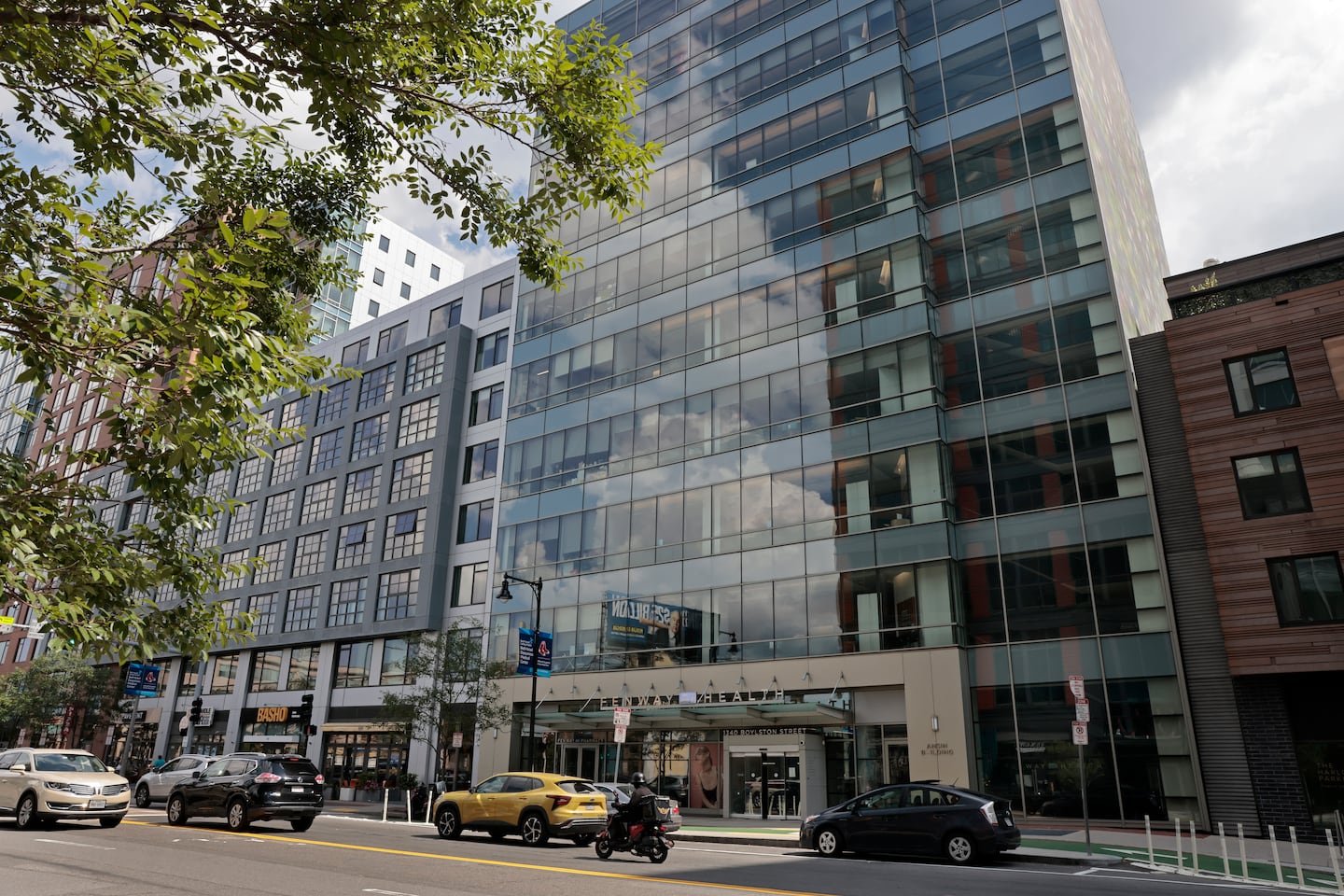
Fenway Health, one of the major providers of gender-affirming care in Boston, will no longer offer hormones or puberty blockers to transgender patients under age 19 following a change to federal funding requirements.
The community clinic, which specializes in LGBTQ+ care, announced the change Monday afternoon in a letter to patients. The new limitations in care for teen patients are necessary to remain in compliance with the Health Resources and Services Administration, the clinic said.
Fenway Health, which treats more than 30,000 patients, is a Federally Qualified Health Center, meaning it provides medical services regardless of patients’ ability to pay. It could lose its FQHC designation and funding if found out of compliance with federal rules.
“This change in position is a response to a shifting federal landscape that requires us to adapt in order to remain compliant, sustainable, and able to provide healthcare, support, and services to all our patients and the community,” Fenway Health said in the letter to patients. “Losing this status would challenge our ability to meet the needs of all who rely on us.”
Earlier this fall, Health Resources and Services Administration said stopping medical and surgical gender-affirming care for adolescents was a priority for the agency.
The agency did not immediately respond to a request for comment.
New England has been bracing for the impact of restrictions on gender-affirming care for minors for months. New Hampshire Gov. Kelly Ayotte signed a ban on such care into law in August, making the state the first in the region to enact such legislation. In Connecticut, two hospitals announced they would stop offering some or all gender-affirming care for minors.
Nationwide, 26 states have banned hormones and puberty blockers for minors.
Lisa Thornton and her daughter moved to Boston from Florida at the end of last year to access gender-affirming care at Fenway Health. Her 16-year-old daughter, who is transgender, was unable to get treatment in her home state because of Florida’s 2023 ban.
Thornton and her daughter received the letter from Fenway Health saying the treatments would no longer be available at the clinic. Nearly a year after moving, Thornton said, she was at first filled with rage.
But, she added, “I assured (my daughter) we would be fine and her care won’t be interrupted since we’ve been through this before and found a way. We will always find a way.”
As recently as August, Fenway Health official said they were preparing for an influx of transgender patients from other states and able to accommodate them. But in Monday’s letter, Chief Medical Officer Will Giordano-Perez said the clinic had identified other resources for affected patients and a member of the clinical team would call them to discuss next steps.
“We recognize how stressful and disruptive this is for you and your families,” Giordano-Perez wrote.
Other providers offer medical gender-affirming care in the Boston area, including Boston Children’s Hospital and Boston Medical Center. Neither organization immediately responded to requests for comment.
Nina Selvaggio, executive director of the Greater Boston’s chapter of LGBTQ+ advocacy organization PFLAG, said her team received calls on Tuesday from parents whose children are treated at other clinics and hospitals in the area. Selvaggio said she is not aware of other local gender-affirming care providers limiting access to children under 19.
Selvaggio said the Trump Administration’s efforts to halt gender-affirming care for minors have been exhausting.
“It feels like daily there are blows dealt to our community,” Selvaggio said. “We’re all trying to do the best we can.”
This is a developing story and will continue to be updated.
Marin Wolf can be reached at marin.wolf@globe.com. Sarah Rahal can be reached at sarah.rahal@globe.com. Follow her on X @SarahRahal_ or Instagram @sarah.rahal.