
NEED TO KNOW
A coronal mass ejection (CME) from the Sun is expected to reach Earth on Thursday, Oct. 16, potentially triggering a G2 geomagnetic stormJust after sunset, auroras could be visible across parts of the northern U.S. statesTo maximize viewing, head to rural areas away from city lights and check NOAA’s aurora forecast
The auroras are back after a triple solar blast!
There’s something otherworldly about the northern lights and how they dance across the night sky with their dazzling ribbons of color.
If you consider yourself an avid skywatcher, or perhaps dream of seeing the aurora borealis in real time, this week might be your chance.
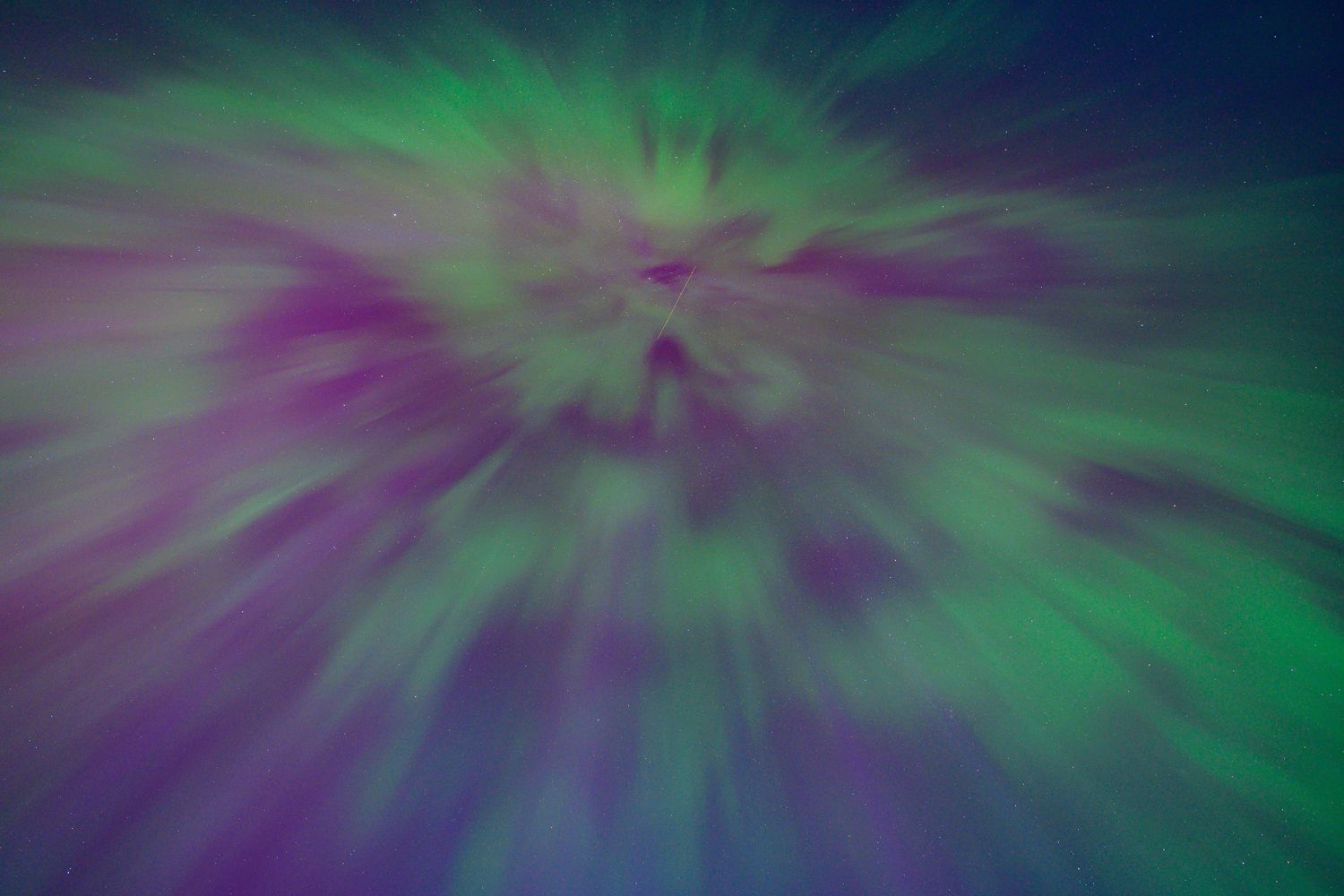
The northern lights are a result of geomagnetic storms, which occur when charged particles from the sun collide with gases in the Earth’s atmosphere, creating brilliant waves of light in the sky.
Just our luck, thanks to some recent solar activity, parts of the northern states (and Canada) could be treated to a stellar light show starting Thursday, Oct. 16.
A burst of energy from the Sun — also known as a coronal mass ejection — is currently speeding toward Earth. But when it collides with our planet’s magnetic field, it can spark a geomagnetic storm strong enough to ignite the auroras that shimmer across northern skies!
More importantly, the National Oceanic and Atmospheric Administration’s Space Weather Prediction Center (SWPC) published a geomagnetic storm watch, forecasting a G2-rated geomagnetic storm.
The Kp index — which runs from zero to nine — could reach a five or six, as per NOAA’s three-day forecast.
Grab a jacket, charge your camera and keep your eyes on the horizon!
Here’s everything you need to know about when, where and how to catch a glimpse of the auroras.
When will the northern lights be visible?
A polar aurora (also known as the Northern Lights in the northern hemisphere and the Southern Lights in the southern hemisphere) is a luminous phenomenon.
Philippe Bourseiller/Getty
If the weather permits and the forecast holds, aurora activity is expected to ramp up after sunset on Thursday, Oct. 16, and continue into the early hours of Friday, Oct. 17.
According to NOAA, Earth is about to experience a G2 geomagnetic storm, which is considered “moderate” on a scale of G1 to G5. Still, this type of storm can make the northern lights visible much farther south than usual, especially under dark, clear skies.
NOAA’s models predict the strongest activity between 4:00 p.m. and 7:00 p.m. ET, but timing can vary depending on your location and weather.
Where will the northern lights be visible?
TOPSHOT – Northern lights or aurora borealis illuminate the night sky over Fusch an der Groglocknerstra.
JFK/APA/AFP via Getty
Are you ready for a stellar light show?
If you live in Alaska or the northern parts of Washington, Idaho, Montana, Wyoming, the Dakotas, Minnesota, Wisconsin, Michigan, New York or Maine, it’s your lucky week.
The farther north you go (and the farther you are from big-city lights), the better your chances of catching a glimpse.
Tip: Drive 30 to 60 minutes away from the city glow, look north and let your eyes adjust to the darkness.
How to watch the northern lights?
Northern lights crown bursting with color, Iceland.
Arctic-Images/Getty
Witnessing the aurora borealis is all about patience, persistence and above all, preparation.
The key is to head outside once the sky is dark and find a wide-open view of the northern horizon. As always, be sure to give your eyes at least 20 minutes to adjust. But for the best views, some skywatchers head to a designated Dark Sky Place or use light pollution maps.
Also, if you want real-time updates, NOAA’s 30-Minute Aurora Forecast is your new BFF, or you can always download apps like My Aurora Forecast, Aurora Now or Glendale Aurora for live alerts and solar wind data.
How to take photos of the northern lights?
Depending on your location, capturing auroras on camera has become easier than ever (on a DSLR or mirrorless camera), or if you use a smartphone.
For smartphones, be sure to switch to Night Mode or Pro Mode, use your main lens (not ultra-wide), and stabilize the device on a tripod or solid surface. Longer exposures will bring out those green and purple hues that might look faint to the naked eye.