
Written by Kavi Khandelwal
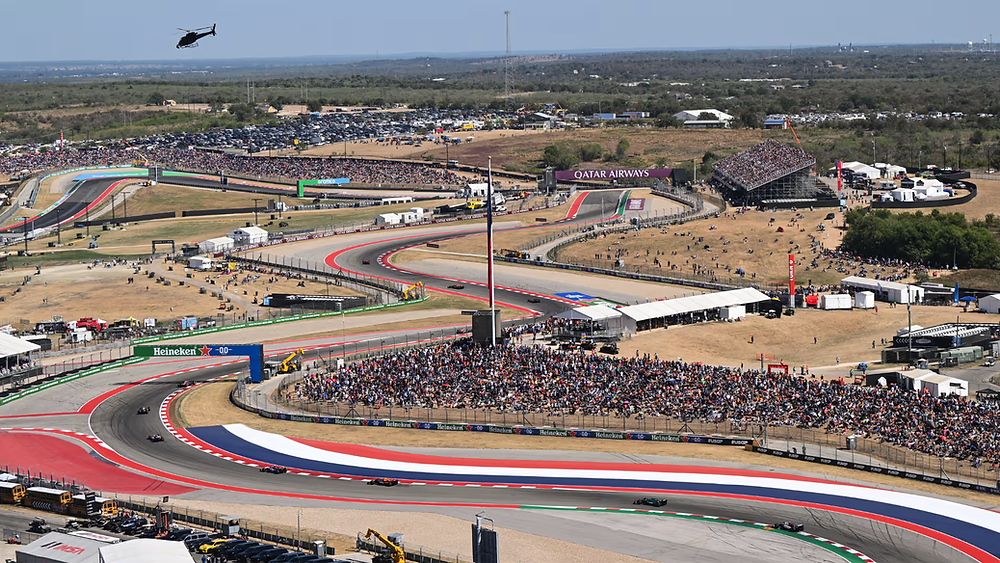
The Fédération Internationale de l’Automobile (FIA) has officially declared a ‘Heat Hazard’ for the upcoming 2025 Formula One United States Grand Prix at the Circuit of the Americas.

The declaration was made on 16th October 2025, after the official weather service forecast that the Heat Index will climb above 31.0°C during the Sprint or Race this weekend.
Issued by FIA Formula One Race Director Rui Marques to all teams and officials, the announcement activates specific safety protocols under Article 26.19 of the Sporting Regulations. This marks the second time a heat hazard has been declared, with the first being at the Singapore Grand Prix just a fortnight ago.
The regulations necessitate that all cars be fitted with a mandatory driver cooling system. For the 2025 season, drivers have the option to wear a special cooling vest connected to this system, with those who opt out required to carry an additional 0.5kg of ballast in the cockpit to ensure no weight advantage is gained.
These measures were introduced following the alarming events of the 2023 Qatar Grand Prix, where several drivers suffered from severe heat exhaustion and dehydration in cockpit temperatures that can approach 60°C. The Singapore Grand Prix, known for its gruelling heat and high humidity, saw the first implementation of these new rules.

Driver opinion on the new cooling vests has been mixed. George Russell, a director of the Grand Prix Drivers’ Association (GPDA), has been a proponent of the system. Speaking in Singapore, Russell stated: “When you’re racing in 90% humidity and the cockpit [temperatures] are getting on for 60 degrees, it’s a bit of a sauna inside the car, so I think we all welcome it”. He did, however, acknowledge some initial discomfort with the placement of the tubes within the vest.
Conversely, reigning world champion Max Verstappen expressed his reluctance, stating: “No, I’m not going to wear it. I don’t really suffer from the heat that much, and it’s going to be warm anyway. Sweating a bit is fine for me, and after 15 to 20 minutes the vest gets really hot as well. So, it doesn’t help at all”.
The heat hazard declaration in Austin will once again bring the debate over driver cooling to the forefront, adding a strategic element for teams and a significant physical challenge for the drivers as they prepare for the race weekend. The cooling vests are set to become mandatory in 2026 for any event where a heat hazard is declared.