
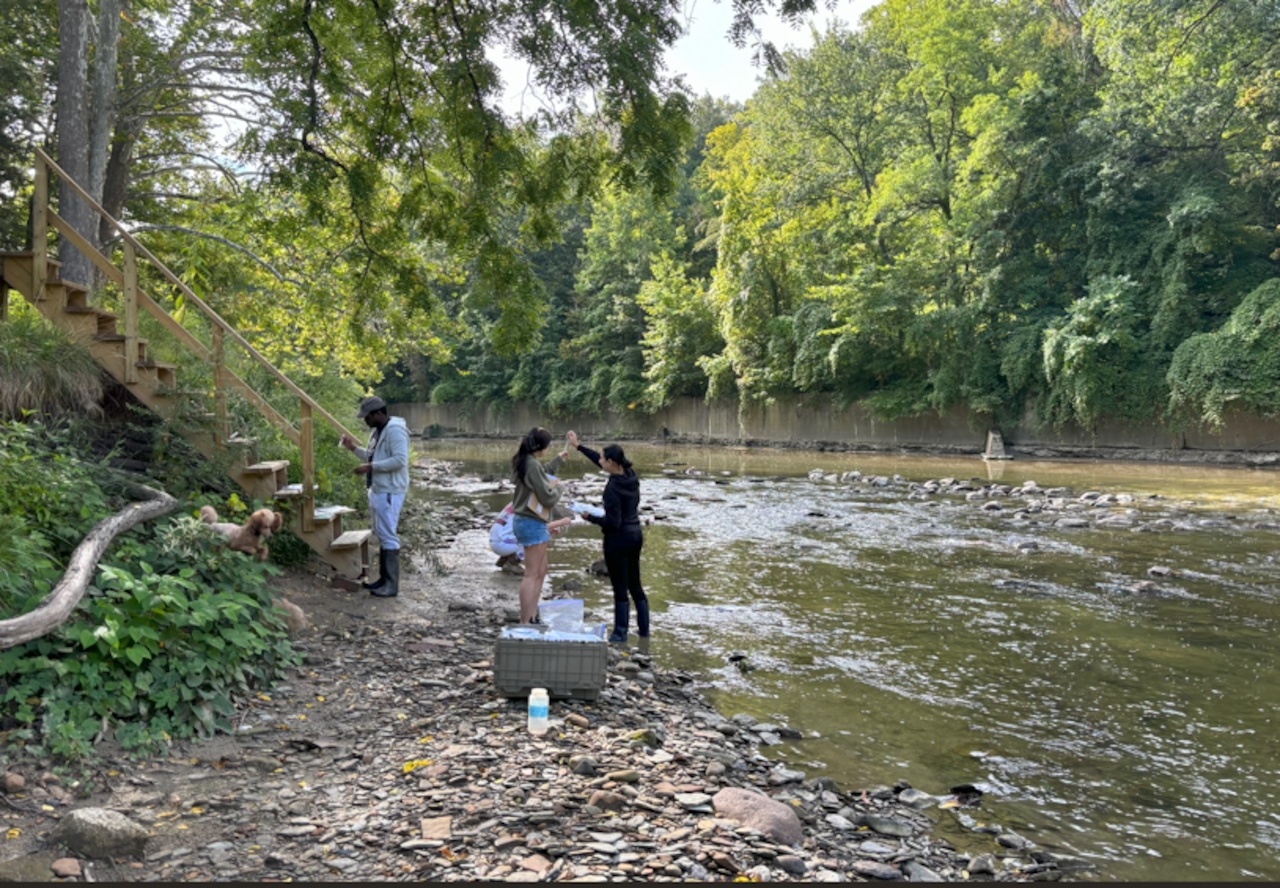
CLEVELAND, Ohio – A Cuyahoga Community College biology class on a field trip to the Chagrin River made a startling discovery: a crayfish with a rare genetic mutation, splitting its body into two distinct colors.
Sean Williams, who took his Principles of Biology class to the river to study invertebrates, and a crayfish expert from West Liberty University in West Virginia plan to write a science paper on the find.
These are 5 takeaways from the original article published by cleveland.com:
1. A Tri-C class made the shocking discovery
Williams and his students encountered the highly unusual crayfish during a morning trip to the Chagrin River in Willoughby Hills in September. A student, Maykala Hooper, first spotted the creature in shallow water. After moving a large rock, Williams was able to capture the crustacean, which had a clear line down its middle separating its brown half from its orange half. Recognizing the significance of the find, Williams took the crayfish, later named Chris, back to a tank at Cuyahoga Community College for further observation and study.
2. The crayfish has an extremely rare genetic mutation
The two-toned appearance is the result of a bilateral color variation, a rare genetic oddity. Zackary Graham, a crayfish expert and assistant biology professor at West Liberty University, noted the extreme rarity of the discovery.
After Williams sent him a photo, Graham traveled to Cleveland to see the specimen for himself. Graham said he is aware of only about 10 historical reports of this type of bi-colored crayfish, with the first documented case occurring in Germany in 1666. This places the Chagrin River discovery in a small, exclusive group of scientifically significant finds.
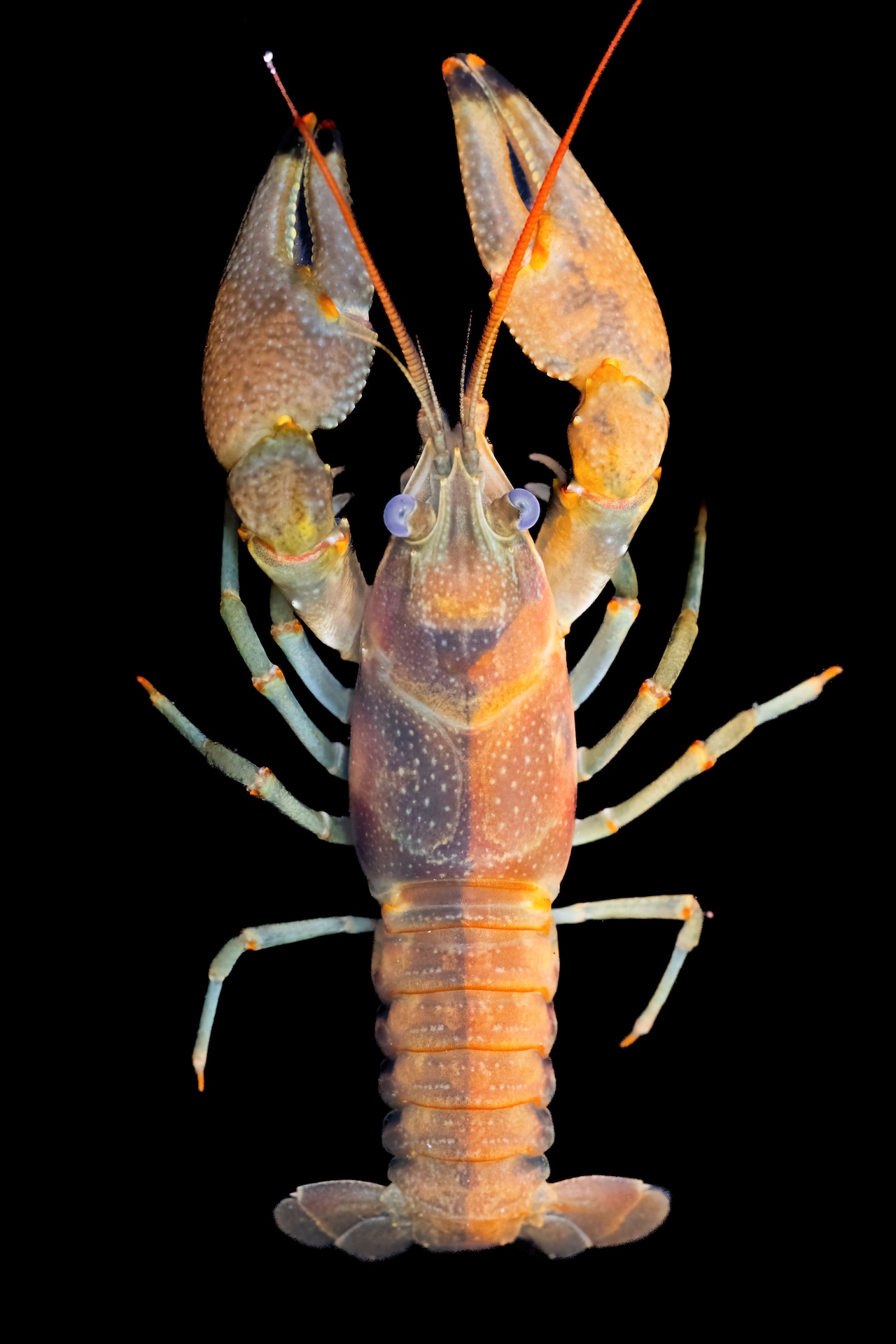 Rusty crayfish caught in the Chagrin River has rare bilateral color mutation.Sean Williams3. Scientists have a leading theory for the bizarre coloring
Sean Williams believes the mutation was caused by a combination of two rare events. The first is a developmental anomaly where the egg cell had two nuclei instead of one, allowing it to be fertilized by two different sperm cells. Following this, a rare color mutation occurred within one of those distinct sets of genes, resulting in the half-and-half appearance. While Graham agrees it was caused by “an error in the cell division process” after fertilization, he notes other possibilities exist. Both scientists plan to explore these theories in an upcoming paper.
4. The find will be documented in a peer-reviewed scientific paper
Williams and Graham are collaborating on a paper that they plan to submit to a peer-reviewed science journal. In a significant nod to the class’s involvement, some of Williams’ students will be listed as co-authors on the publication. Williams stated that by documenting the find, science will gain a “a better understanding of the developmental process of animals,” which could have future implications for human biology if a similar phenomenon were ever observed.
5. The mutation is considered a random event, not caused by pollution
While higher pollution levels can lead to increased mutation rates, Williams does not believe environmental factors contributed to the crayfish’s unique coloring. He attributes the occurrence to probability, comparing it to the random chance of any single person winning the lottery. For the students in his class, the discovery provided a major source of excitement and became a “nonstop conversation,” turning a routine field trip into an unforgettable lesson in real-world science.
If you purchase a product or register for an account through a link on our site, we may receive compensation. By using this site, you consent to our User Agreement and agree that your clicks, interactions, and personal information may be collected, recorded, and/or stored by us and social media and other third-party partners in accordance with our Privacy Policy.