
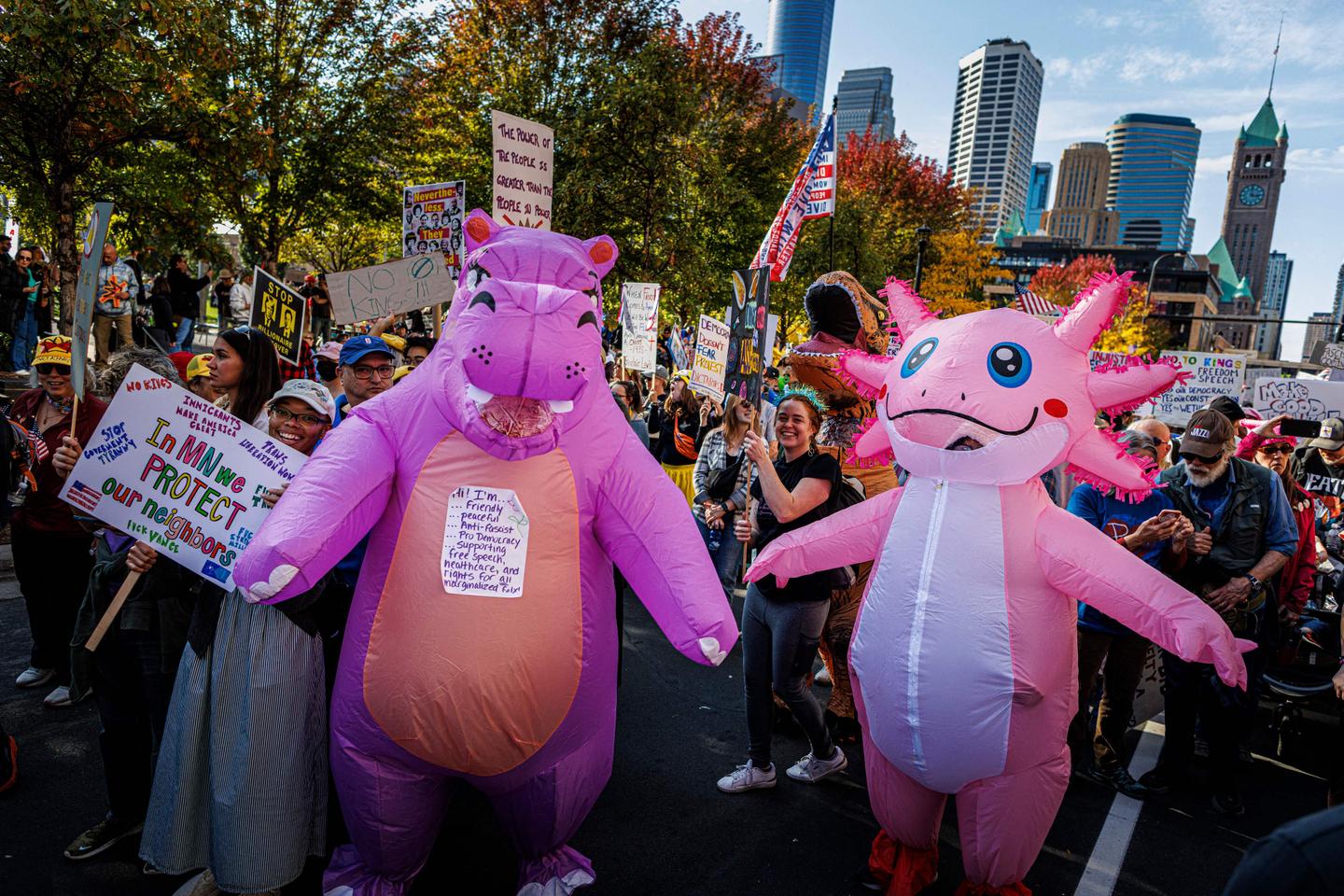
The seemingly endless, colorful and joyful procession stretched its way between the buildings along New York’s 7th Avenue. It was 2 pm on Saturday, October 18, and the protest against Donald Trump was supposed to have ended over an hour earlier. Yet, the stream of demonstrators continued to flow. They congratulated each other on their costumes, took selfies and delighted in the limitless creativity of their signs, endlessly riffing on the day’s slogan: “No Kings,” a condemnation of what they saw as an increasingly authoritarian rule. “This is what democracy looks like!” they chanted in unison. More than anything, they seemed relieved by the massive turnout. One sign summed up the mood: “When New Yorkers walk this slowly, you know things are serious!”
With more than 100,000 participants, according to the police, the Manhattan march was one of the largest in the country. In Washington, the main rally brought together nearly 200,000 people, according to organizers. Los Angeles, Chicago, San Francisco – footage from the nation’s major cities showed massive crowds. In total, organizers claimed the participation of seven million people, though those numbers are difficult to verify. But the most telling figure was the number of protests: 2,600 rallies were scheduled nationwide, 600 more than in June.
Read more Subscribers only Large crowds gather across the US against Trump, in both joyful and anxious atmosphere: ‘We needed to know there were others like us’ A carnival atmosphere
There were two ways to interpret this second edition of “No Kings Day.” The opposition, like Democratic Senator Chris Murphy (Connecticut), quoted by The Wall Street Journal, wanted to see it as “a decisive moment” in the face of the “authoritarian takeover” by the White House. Donald Trump and his supporters, meanwhile, described the event as an “anti-American” gathering of a small “far-left” fringe, bent on confrontation.
You have 77.89% of this article left to read. The rest is for subscribers only.