
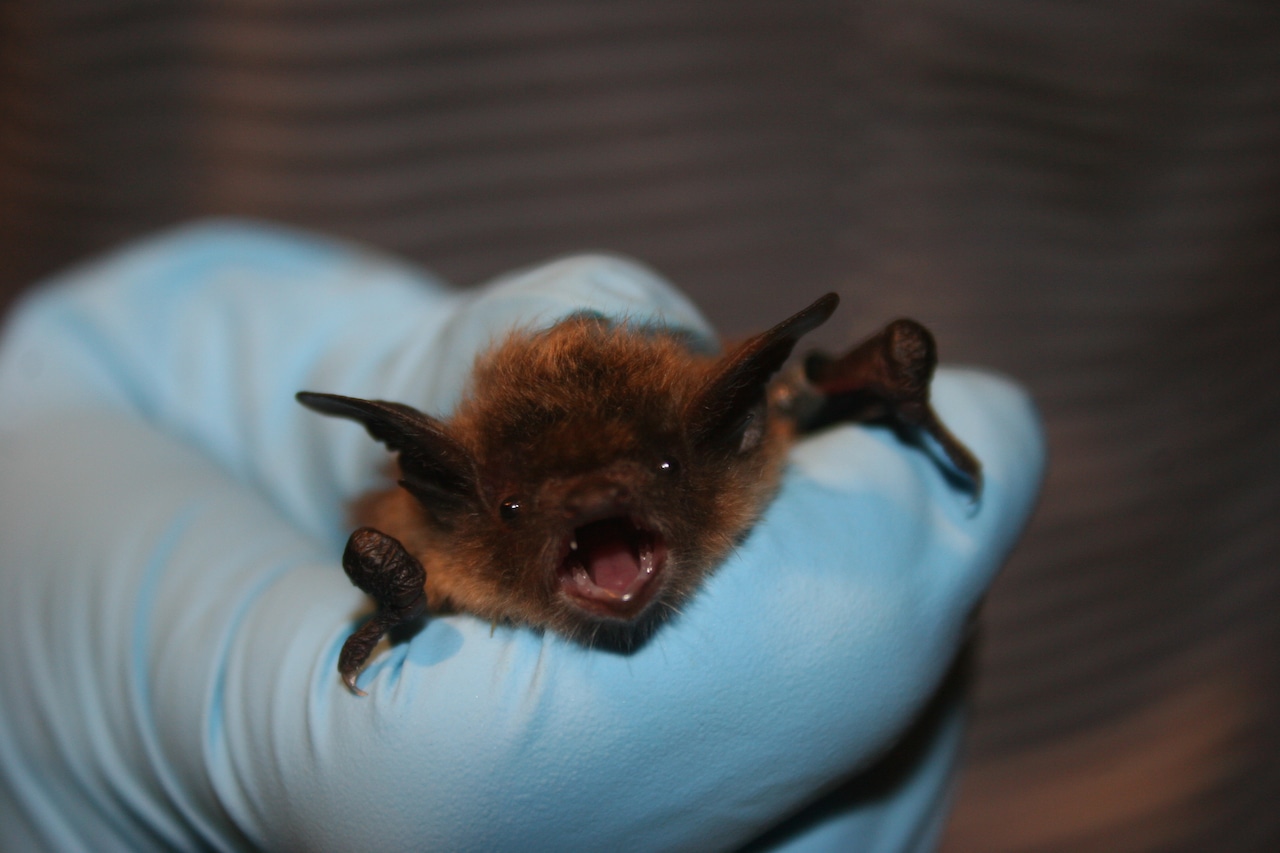
The New Jersey Division of New Jersey Fish and Wildlife is asking residents to keep an eye out for bats and provide officials with reports on sightings.
Researchers use several methods to track wildlife, including bats, such as attaching small transmitters to them and using a network of acoustic detectors to record bat calls.
Officials are encouraging the public to get involved and report sightings of tagged or roosting bats.
Some bats – like the hoary bat, the eastern red bat, and the silver-haired bat – migrate south to warmer climates for winter.
Other bats, such as the little brown bat and the big brown bat, remain in New Jersey.
These bats hibernate in local caves, mines, and abandoned buildings.
These temporary bat stops are normal behavior, as migrating bats typically rest in place for several days before continuing their travel.
Scientists are working to better understand the specific migration routes bats follow between their summer and winter habitats.
That’s why researchers are seeking public assistance to help map these migration patterns, officials said.
The information will help them learn more about where bats travel during this seasonal movement.
If you spot a bat roosting, state experts are asking residents to take a photo and email it with the bat’s location.
Bat information can also be sent through the NJ Wildlife Tracker website
Wildlife officials warn not to disturb or touch any bats if you find them.
If you purchase a product or register for an account through a link on our site, we may receive compensation. By using this site, you consent to our User Agreement and agree that your clicks, interactions, and personal information may be collected, recorded, and/or stored by us and social media and other third-party partners in accordance with our Privacy Policy.