
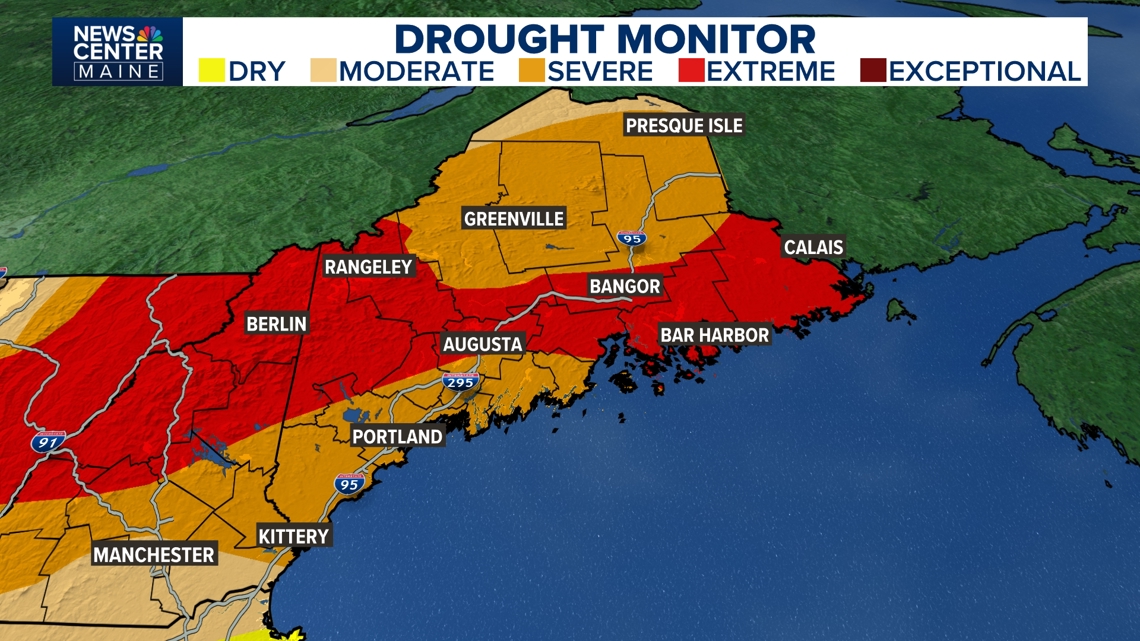
Maine is facing worsening drought conditions, with more than 80% of the state in severe or extreme drought, leading to reports of dry wells and more wildfires.
MAINE, USA — Drought conditions across Maine have worsened, with seven counties experiencing “extreme” drought, according to a U.S. Drought Monitor report on Thursday.
Over 80% of Maine is experiencing “severe” or “extreme” drought, compared to the reported 70% just last week.
RELATED: U.S. Drought Monitor: ‘Extreme’ drought spreading in Maine, battle with historic dry spell continues
Counties experiencing “moderate” drought
Counties in “severe” drought
Aroostook PiscataquisPenobscotSomersetYorkCumberlandSagadahocLincolnKnoxAndroscogginKennebec
Counties experiencing “extreme” drought
WashingtonHancockWaldoPenobscotSomersetFranklinOxford
According to the Maine Emergency Management Agency (MEMA), widespread reports show that hundreds of residential wells have run dry, while stream and river levels have plunged to historic lows. Farms across Maine report sharply reduced yields in potatoes, blueberries, and other key crops.
MEMA director Pete Rogers called this past summer “one of the driest summers Maine has ever recorded,” adding, “Several streams and rivers are at record lows, farms are feeling significant impacts, and hundreds of households have reported dry wells.” The Maine Drought Task Force convened on Oct. 2 to coordinate responses.

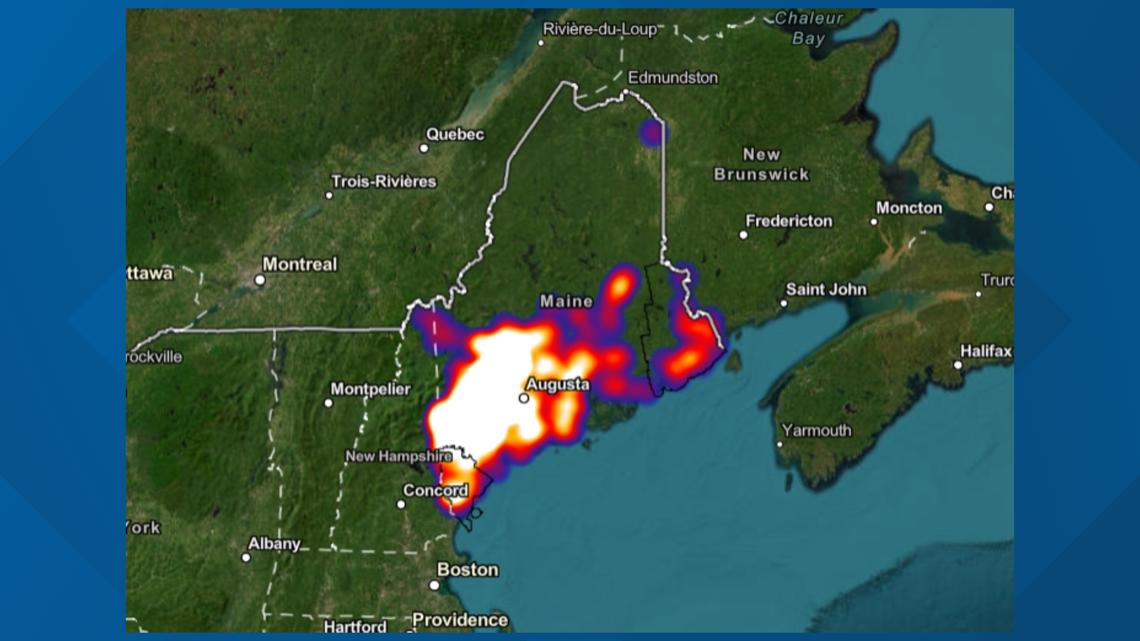
The Maine Drought Task Force reported that 457 wells have gone dry across Maine in 2025—the majority in Oxford, Cumberland, Androscoggin, Franklin, Kennebec, Somerset, and York counties.
In response, state agencies are urging residents to:
Conserve water wherever possible
Repair leaks and avoid water waste
Heed local burn bans
Report dry wells via MEMA’s online survey to help assess statewide water supply stress
Meanwhile, the Department of Agriculture, Conservation and Forestry has allocated grants for water infrastructure projects like drilled wells, storage ponds, and water-management planning to support farmers navigating the shortages.
The drought’s economic and ecological toll is mounting. Farmers report poor hay yields and stunted crops, while foresters warn of heightened wildfire risk. The Maine Forest Service has responded to above-average fire activity this fall as parched ground and dry vegetation persist.
Number of Maine wildfires by year

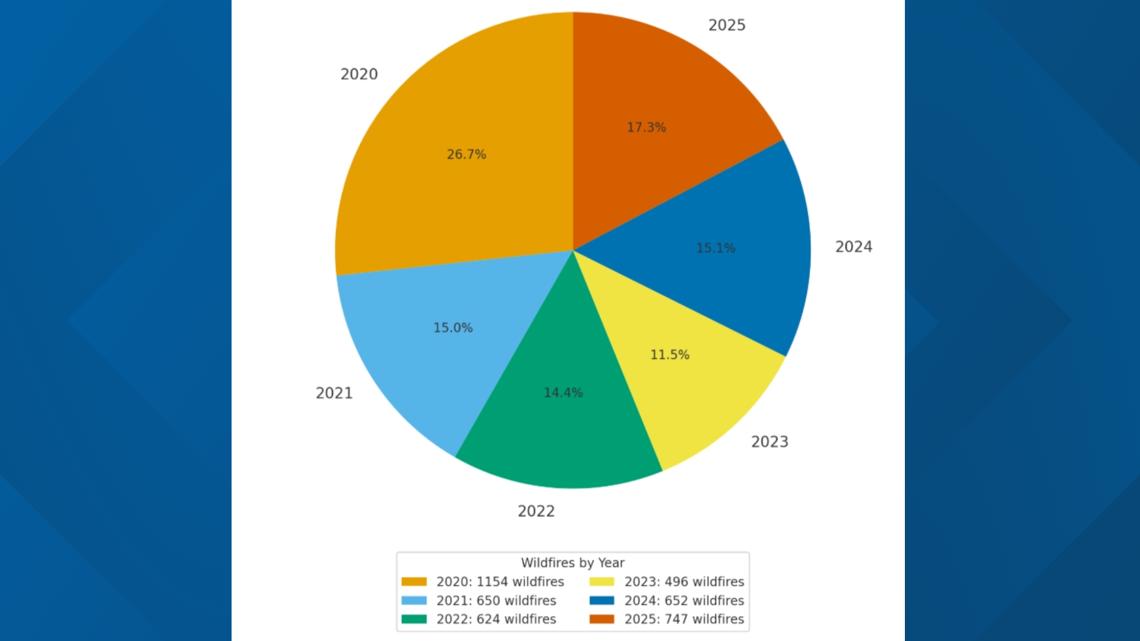
The record-high number of wildfires in 2020 was attributed to drought conditions and more people staying home during the COVID-19 pandemic, with many “utilizing wildland fire to work around the home,” according to the Maine Drought Task Force. As shown in the chart, 2025 has seen the most wildfires since that record year.
For daily updates of wildfire risk, check the Maine Forest Service, Wildfire Danger Report.
For more local stories continue with us on our NEWS CENTER Maine+ streaming app.
Don’t miss these NEWS CENTER Maine stories