
23 Hrs Ago
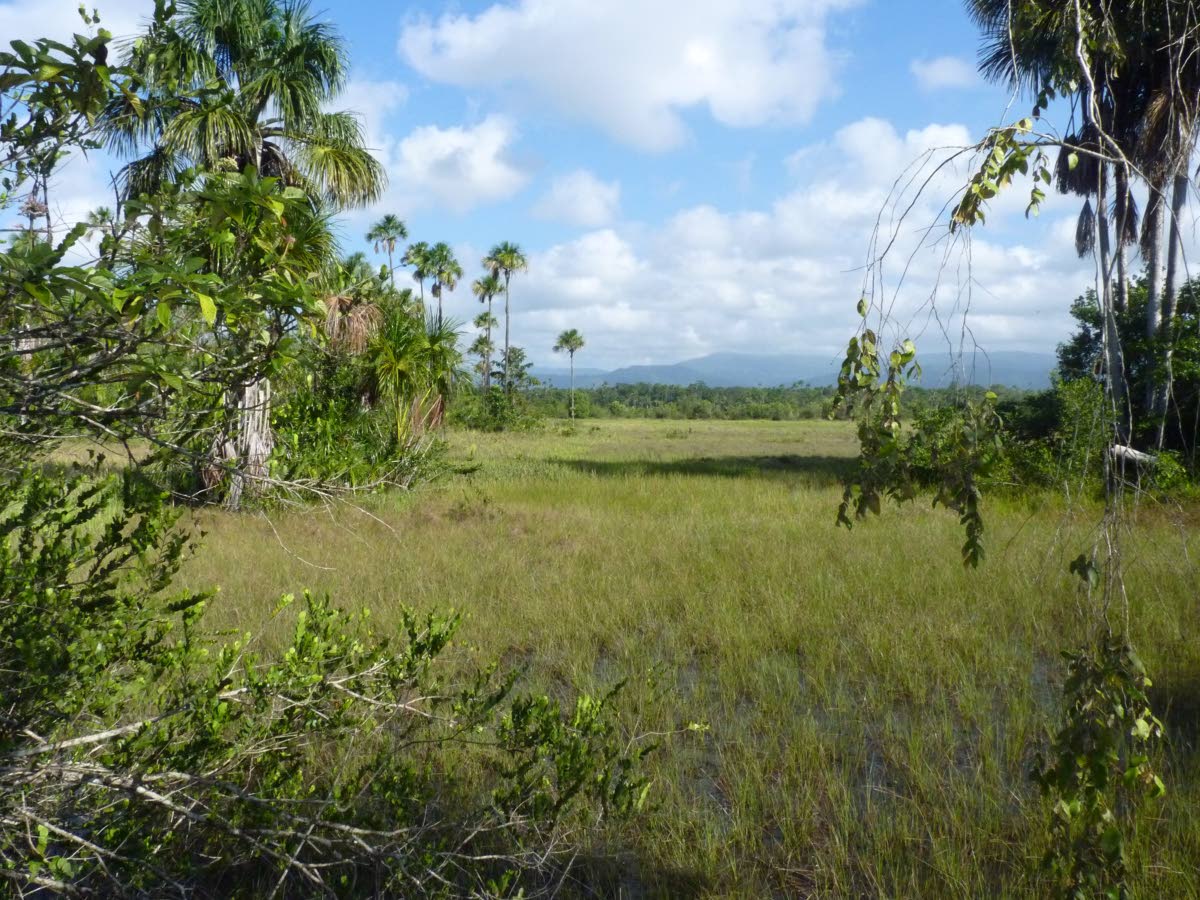
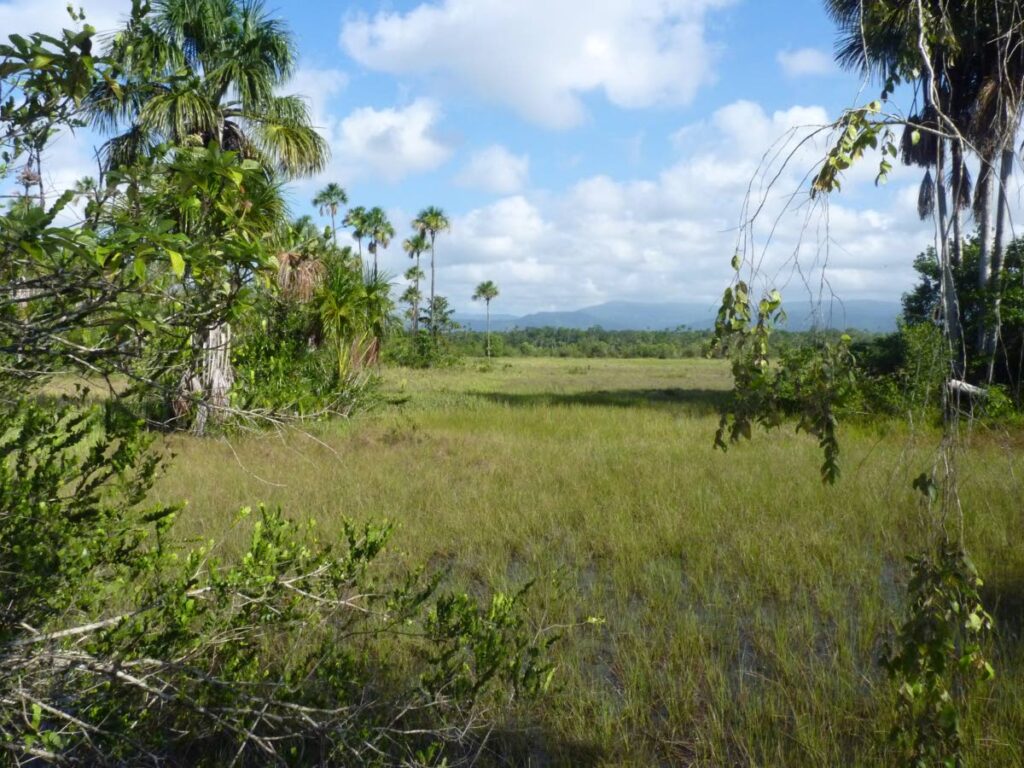 The Aripo Savannas – our last remaining natural savanna ecosystem. –
TT is blessed with amazing natural resources in the form of its biodiversity. However, as a small island with limited landmass and a growing population, we have to take a serious stance on preserving this resource.
In a previous article (Sunday Newsday July 6) we discussed the threats faced by the Aripo Savannas, which is the only remaining natural savanna ecosystem in Trinidad. As we continue to highlight the plight of this national treasure, today we discuss one of the potential solutions.
In August 2007, the Aripo Savannas Scientific Reserve (ASSR) was designated an environmentally sensitive area (ESA), strict nature reserve. Despite being protected, Illegal squatting, land clearing and poaching continues to threaten the Aripo Savannas. Comparisons of publicly available online map resources suggest at least 28 acres have been lost to squatters in the last ten years.
Unfortunately, the relevant authorities have lacked either the necessary resources or the political support to enforce its protection.
Part of the problem is that the boundaries of the Aripo Savannas are wide open, marked only by occasional signs along its perimeter. Some signs are blatantly ignored (at least one sign prohibiting entry is in the centre of a cluster of illegally constructed structures). In other areas, the boundary is unmarked and easy to “accidentally” trespass into the protected area.
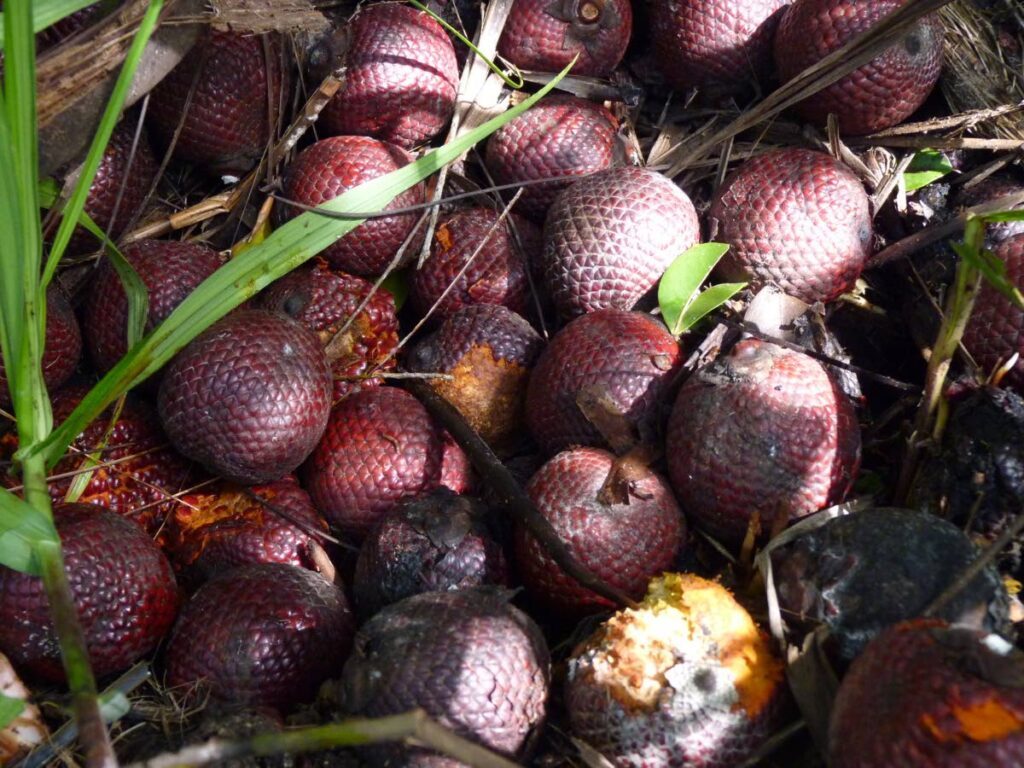 Fruit of the moriche palm, Mauritia flexuosa, in the Aripo Savannas Scientific Reserve. –
Written permission is required from the Forestry Division and Environmental Management Authority (EMA) in order to enter the Aripo Savannas. The Environmental Management Act prescribes a fine of up to $100,000 for trespass and or clearing of land in the protected area.
However, both of these breaches openly occur in full view of the authorities but without consequence. Unimpeded, the existing structures will become entrenched and new squatting sites will continue to emerge as seen over the years.
With the construction of the Elmina Clarke-Allen Highway, the savannas are now isolated, completely surrounded by busy roadways on all sides. The two animal crossings (essentially drains running under the highway), are likely to be woefully inadequate in allowing non-flying animals to effectively disperse in and out of the savannas.
Given that the Aripo Savannas have now become an island, one of the “last resort” options now available for its protection may include the construction of a security fence along the entire perimeter of the Aripo Savannas.
While not visually appealing, a fence would present a physical barrier to entry, keeping persons from illegally entering the savannas and clearly demarcating the protected area.
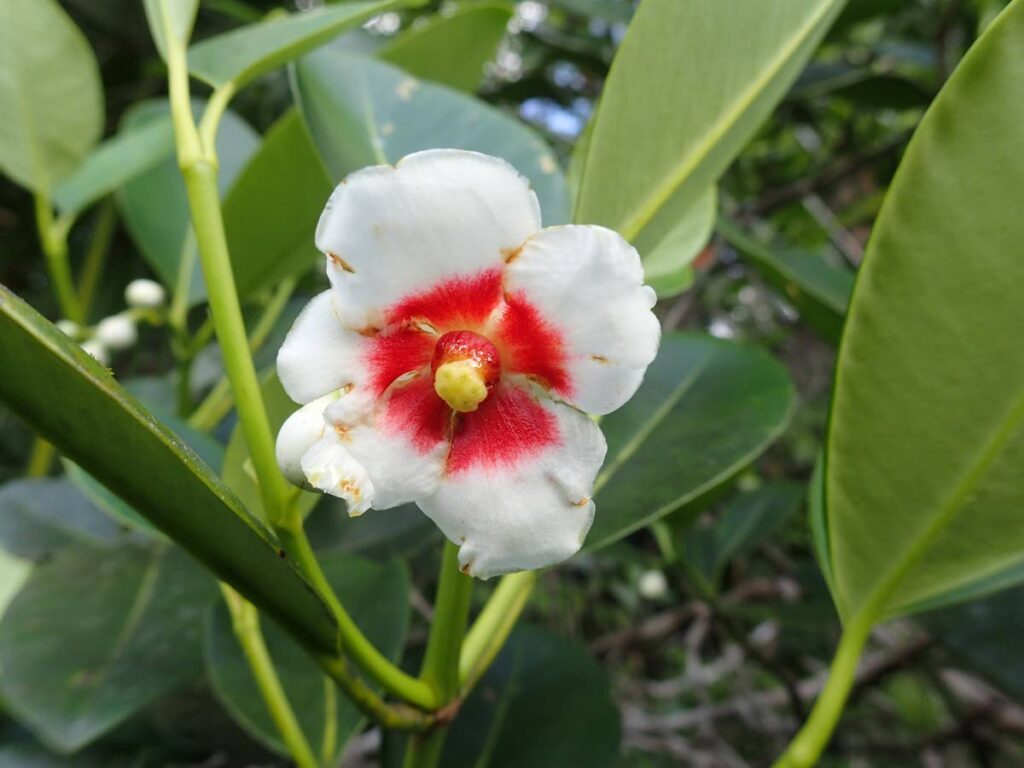 A member of the Clusia family found in the Aripo Savannas Scientific Reserve. –
Another benefit of fencing would be the potential improved usage of the wildlife corridors. The fencing would allow wildlife to be funnelled towards the crossings and safely transit to the other side. This is vastly better than the current “hit or miss” approach which depends on animals discovering the two crossings and hopefully not wander into oncoming traffic. A similar line of fencing on the southern side of the highway at the exit of the wildlife crossings would further improve their effectiveness.
Given the limited resources of the Forestry Division, having a fence in place should make patrolling the perimeter of the Aripo Savannas easier and patrols can more readily detect signs of illegal entry.
Access could be managed by the EMA by controlling the designated access points that may be required (e.g. an access point for WASA to access its infrastructure and an access point near the Forestry Division office).
The perimeter of the Aripo Savanna is approximately 96,000 feet and may potentially cost in the region of $5 million to construct. A sum of this magnitude represents a fraction of the $11,792 million balance in the Green Fund (as at September 2024).
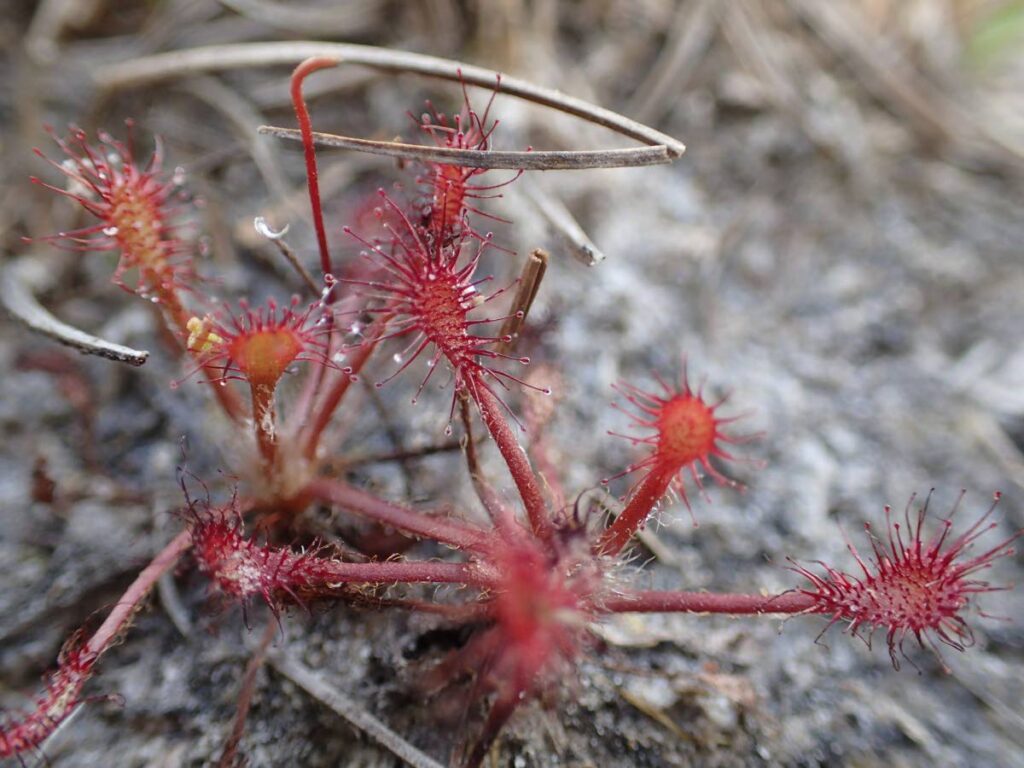 In Trinidad, the pink sundew, Drosera capillaris, is restricted to the ASSR. –
In terms of execution, the EMA is also well positioned to manage such a project. Past EMA projects funded by the Green Fund, like the $69 million Nariva Swamp Restoration, Carbon Sequestration and Livelihoods Project, demonstrate that the EMA as an organisation would be able to apply for and successfully manage subcontractors to do the actual fence construction.
A final advantage of the fencing solution is that it is largely reversible – if one day in the future the country is at a point where it can manage resource access properly, the fence could be removed.
 –
–
To this end, while we would always hope that more inclusive measures (such as education and community involvement) may succeed, it may be time for the authorities to seriously consider the option of fencing the Aripo Savannas as a practical and effective “last resort” for controlling accessibility and improving management of this critical natural resource.
Today’s feature was written by Kris Sookdeo. For more information on our natural environment, you can contact the TT Field Naturalists’ Club at admin@ttfnc.org or visit our website at www.ttfnc.org and our Facebook or YouTube pages
TT is blessed with amazing natural resources in the form of its biodiversity. However, as a small island with limited landmass and a growing population, we have to take a serious stance on preserving this resource.