
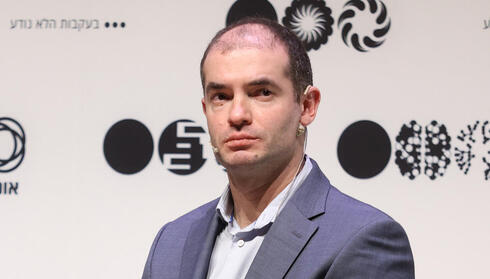
Ilya Sutskever, the former chief scientist of OpenAI and one of its co-founders, has forcefully rejected Elon Musk’s latest attempt to hold him in contempt of court, arguing that Musk’s legal team is overreaching.
In new filings last week, Sutskever said that Musk’s motion accusing him of defying a court order was “hastily filed” and “manufactured,” defending his decision to limit what he would disclose about his financial stake in OpenAI and to protect a sensitive internal memo. He described the court’s earlier discovery order as “clearly erroneous,” saying it invaded his constitutional right to financial privacy and ignored prior agreements on the scope of the subpoena.
The dispute is part of Musk’s ongoing lawsuit against OpenAI, which accuses the company of betraying its nonprofit roots by transitioning to a for-profit structure. Musk, who was an early backer of OpenAI, claims he was misled into donating tens of millions of dollars based on assurances that the company would remain a nonprofit developing AI for the public good.
On Wednesday, U.S. Magistrate Judge Thomas Hixson declined to entertain Musk’s request to initiate contempt proceedings against Sutskever, noting that the court’s prior order did not set a firm deadline for compliance. Hixson instead directed Sutskever to complete his deposition and produce the requested document, known as the “Brockman memo”, by November 5, unless he secures a stay from the district court.
The decision temporarily defuses Musk’s demand for immediate sanctions but leaves Sutskever facing a looming deadline. The court had ordered him to sit for a second deposition after he declined to answer questions about his OpenAI equity holdings during an earlier session. Musk’s lawyers argue that his stake is directly relevant because Sutskever could stand to lose financially if the plaintiffs succeed.
Sutskever’s attorneys counter that his cooperation has been reasonable and proportionate, offering to make the memo available for review under strict confidentiality and to participate in a narrowly limited video deposition. He maintains that Musk’s team is seeking to turn routine discovery into a spectacle.
The document at the center of the dispute, the so-called “Brockman memo,” was reportedly circulated to OpenAI’s board before the removal of co-founder Greg Brockman as chair. Musk’s team contends it is crucial to understanding OpenAI’s internal deliberations and the motives behind its governance shift. Sutskever argues the memo is both confidential and outside the agreed scope of discovery.
Sutskever’s legal skirmish unfolds as he leads his new venture, Safe Superintelligence (SSI), one of the most secretive and well-funded AI startups in the world. Founded last year, SSI has raised more than $3 billion at a valuation of $32 billion, backed by major investors including Google and Nvidia. Earlier this year, Sutskever confirmed that SSI’s co-founder Daniel Gross had departed for Meta and that he would now serve as CEO.
In his public statements since leaving OpenAI, Sutskever has emphasized independence and caution in building advanced AI systems, a stance that contrasts sharply with the increasingly commercial trajectory of his former company. “We have the compute, we have the team, and we know what to do,” he wrote in a message earlier this year. “Together we will keep building safe superintelligence.”