
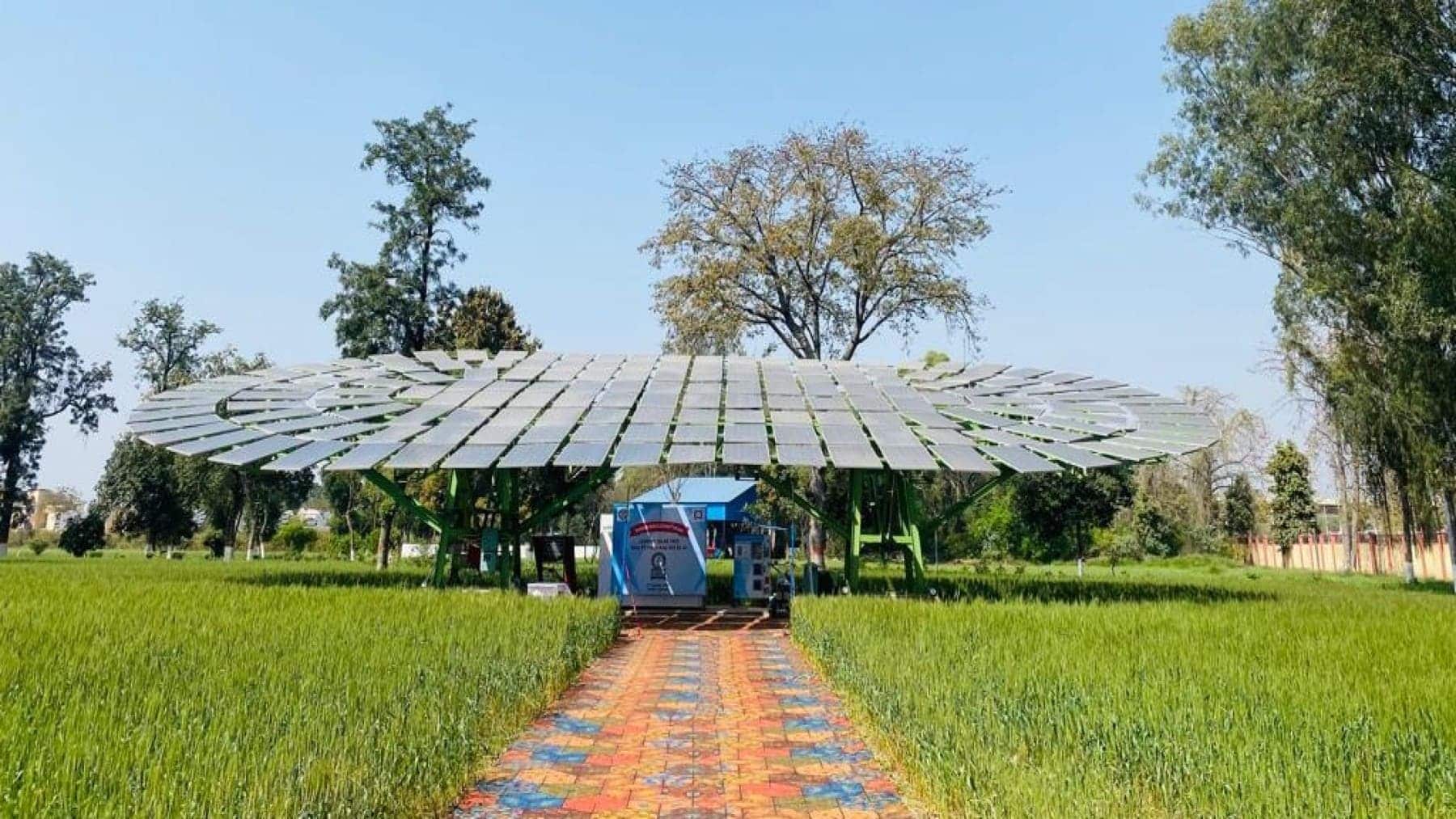
In India, solar trees have been installed, metallic structures that absorb sunlight and inhale carbon. Each one of them produces 53.6 kW of power and removes 12 tons of CO2 from the environment in a year. But over time, something strange happens: the air cools, the pollution drops off, and below the trees’ roots, the soil begins to hum the silent energy.
The rise of solar trees in India: Harnessing sunlight, powering the future
India’s transition towards renewable energy has been striking, and the ‘solar tree’ is a clear representation of that transition. The solar tree is set up to look like a tree with solar panels as leaves, which is not an impressive structure, but it also produces clean energy in tens of kilowatts; one model generated up to 53.6 kW
Why this model? Because in India, there is very little land for a large solar park. Often, every square meter matters in many areas, and a model that accommodates a considerably smaller footprint and produces a high output is particularly attractive.
Design-wise, the trunk of the tree safely houses all wiring and supporting systems; branches are adjustable, and the panels are arranged to limit shadow. The metaphor of “tree” is meant to visually express a more integrated assimilation of technology into living systems; growth, nature, sustainability, etc.
When technology takes root: The solar tree that cleans the air of 12 tons of carbon
What does it signify when we state that a solar tree absorbs 12 tons of CO2? First, consider the numbers: Many of these solar tree systems are stated to produce tens of thousands of units of electricity per year, with solar panels replacing fossil-fuel generation.
For instance, one tree model purports to save 12,000 kWh and 14,000 kWh a year and therefore avoid about 10-12 tons of CO2 emissions.
The process is to replace fossil fuel (coal, diesel) source electricity, and one solar tree generates enough clean power locally to displace electricity from pollution sources in general, which leads to carbon dioxide not entering the atmosphere, just like the groundbreaking red photovoltaic tree, powering homes. The 53.6 kW capacity model represents a step up from this.
Greener than green as solar trees bring together land efficiency, renewable power, and measurable carbon savings
These solar trees have the potential to be installed in areas that would typically not be suitable for large PV farms, along field margins, roadways, rural infrastructure, or small plots of land, resulting in a “multiplier effect” of efficiency, clean power generation, and emissions reductions.
While noting that each tree can offset about 12 tons of CO2 per year (representing the high range of reported savings), even smaller installations of solar trees can provide measurable impacts at scale.
The strange effect of solar trees that goes beyond the purpose of generating electricity and extends to green technology
Now we get to the exciting part, away from kilowatts and tons of CO2, an unexpected transformation is taking place.
The solar trees generate micro-entrepreneurship and energy independence in agriculture, while reducing economic reliance on diesel, a resource that is rapidly being depleted. The symbolism expands socially because “a tree” producing energy represents growth, regeneration, and aspiration. Culturally and mentally, the oddity of absorbing 12 tons of CO2 is celebratory, a new forest of technology, optimism, and opportunity, not just new growth.
India is not only cultivating energy, but it is cultivating optimism. Each solar tree absorbs 12 tons of CO2 every year, producing clean energy and further values change. Beyond watts and tons, they have made the most significant cultural impact in changing the outlook on energy, land, and the future, just like the Mumbai solar mountain innovation. Their legacy will be the next step to show we can grow, energize, and even rebuild.