
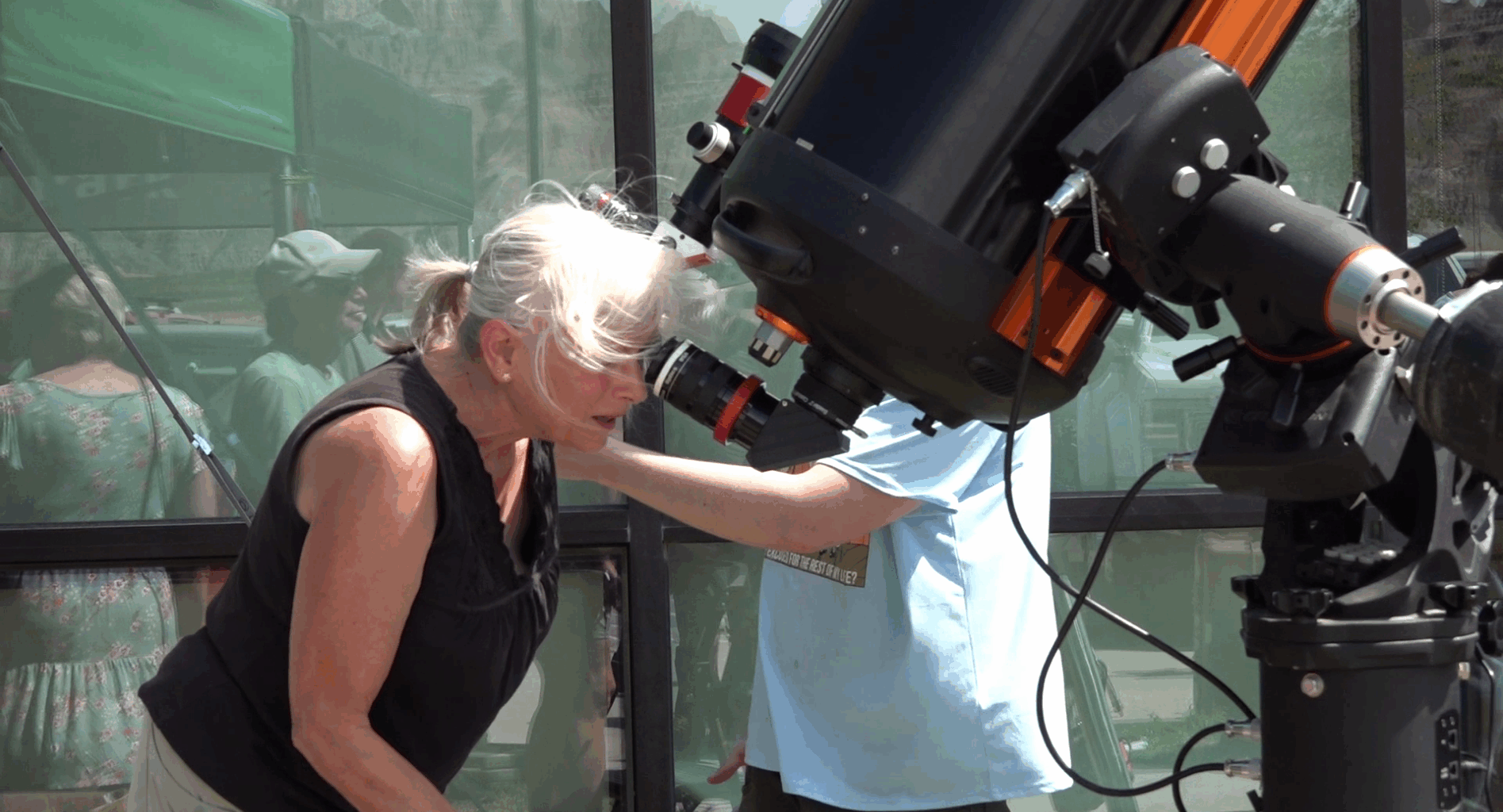
BADLANDS NATIONAL PARK, S.D. — The 13th annual Badlands Astronomy Festival drew hundreds of space science professionals, amateur astronomers, and curious visitors to the area this weekend for a three-day celestial celebration under some of the darkest skies in the country. The festival ran from Friday through Sunday, and has become one of the park’s most popular events.
“AstroFest is our biggest event of the year,” said Park Ranger Lydia Jones, “We do it annually here, and this is our 13th year approximately of doing AstroFest here at Badlands.”
The event is co-sponsored by Badlands National Park and the NASA South Dakota Space Grant Consortium. It also serves as a key outreach opportunity for partners like the University of Utah, which brings state-of-the-art equipment for the public to use.
“We just like bringing all of our telescopes and displays and everything and just letting the public interact with the sky in ways that most people actually don’t get the chance to do so,” said Paul Ricketts, observatory director for the University of Utah.
Novices and experts alike enjoyed a variety of family-friendly activities. Daytime events included guided “planet walks” to demonstrate the scale of the solar system, opportunities to view solar flares through special telescopes, and paper rocket building and launching sessions hosted by staff from the nearby Minuteman Missile National Historic Site.
Each evening concluded with presentations from guest speakers followed by public stargazing at the Cedar Pass Campground Amphitheater. Astronomers from the Black Hills Astronomical Society and Dark Ranger Telescope Tours guided visitors through the universe, offering views of planets, nebulae, and distant galaxies.
The festival’s location is a major part of its appeal. The Badlands are nestled in a corner of the Great Plains with very little light pollution, making it one of the best places in the country to see the Milky Way. Park officials are working to preserve this resource for future generations.
“We’re actually working on getting our International Dark Sky Association certificate right now. So, we’re in the process of going through that to get dark sky certified,” Ranger Jones said, “But we have remarkable dark skies. We’re really far away from any major sources of light pollution, so this is an amazing opportunity for people to come out here and really truly get a chance to see the night sky.”
While the focus is on the stars, the park’s unique, out-of-this-world geology is another reason visitors keep coming back. The dramatic buttes and spires are eroding at a rate of about one inch per year, meaning the landscape is constantly changing. For some, this transient beauty is part of the draw.
“Everything here and the animals and also since it’s not going to be here much longer. Just a couple more thousand years. That’s why,” said Daven Dover, a visitor from North Carolina who makes the trip for the festival annually.
Even as the festival ends, park rangers note that any clear night in the Badlands provides a spectacular, front-row seat to the cosmos.

Per grew up in Sioux Falls and graduated from South Dakota Mines. He found his passion for weather reporting by the impact it has on the community, both in how people work and how it brings people together through severe weather preparation. He also has a passion for preventing health issues with Air Quality Index awareness. Per can be found enjoying outdoor activities in the Black Hills when the weather allows.