
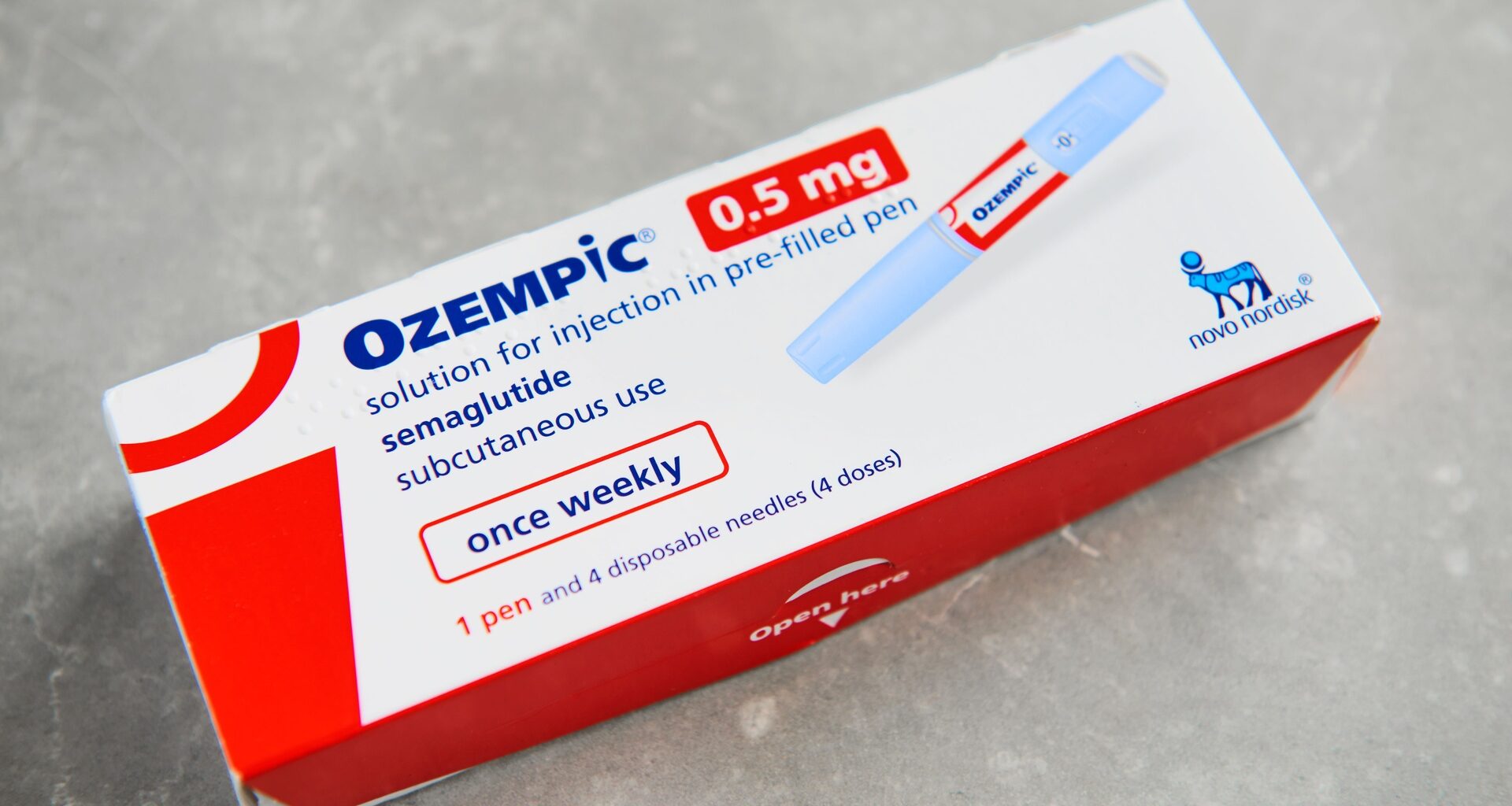
President Donald Trump announced Thursday that two major drugmakers had agreed to lower the price of popular GLP-1 medications for weight loss. Eli Lilly dropped its price for Zepbound from $1,080 for a month’s supply to $346 per month, while Novo Nordisk’s Wegovy will now cost Americans $250 per month, down from $1,350, Trump said in the Oval Office.
Robert F. Kennedy Jr., secretary of the Department of Health and Human Services, and Dr. Mehmet Oz, the administrator for the Centers for Medicare and Medicaid, both remarked that reducing the price of these drugs is one of several important steps toward combatting America’s obesity and chronic disease crisis.

Download the SAN app today to stay up-to-date with Unbiased. Straight Facts™.
Point phone camera here
How many Americans are overweight?
Around 31% of adults in the U.S. are overweight, about 42% are obese, and more than 76% of Americans have a chronic disease.
Some 31% of adults in the U.S. are overweight, about 42% are obese, and more than 76% of Americans have a chronic disease. While individuals who are not overweight can suffer from a chronic disease, obesity is a significant risk factor for many chronic illnesses, from heart disease and diabetes to cancer and Alzheimer’s.
Kennedy claimed that with expanded access to GLP-1 medications, Americans would lose “125 million pounds” by next year. Oz then said updated numbers put that number at 135 billion pounds.
Straight Arrow News (SAN) asked the Centers for Medicare and Medicaid whether Oz may have misspoken. We have not yet received an answer.
Regardless, SAN crunched the numbers.
How much weight could Americans lose?
There are 342 million Americans, of whom around 239 million are adults, according to the U.S. Census Bureau. If Americans were, as Kennedy claims, to lose 125 million pounds in a year, each adult would need to lose just over half of one pound (0.523 pounds to be exact).
If we restrict that collective weight loss to the 73% of Americans who are overweight or obese, each person would need to lose about 0.7 pounds by next year. (That’s 125 million pounds divided by 174,470,000 adults.)
If Americans were, as Oz claimed, to lose 135 billion pounds in a year, each adult would need to lose just over 565 pounds by next year. That’s unlikely, given that the average American man weighs 199 pounds, and women weigh an average of 172 pounds, according to the Centers for Disease Control and Prevention.
Of course, GLP-1 medications are not appropriate for everyone. Many adults may opt not to take drugs, and even the reduced cost of Wegovy and Zepbound might still be unaffordable for millions.
One clinical trial reported that adults taking Zepbound for 72 weeks lost an average of 35.5 pounds when taking the lowest dose of 5 milligrams per week. Those taking a higher dose of 15 milligrams per week lost an average of 52 pounds.
If every overweight or obese adult in the U.S. started taking Zepbound tomorrow, then in 72 weeks, Americans would collectively lose 6 billion pounds when taking the more conservative average weight loss of 35.5 pound weight loss.
However, most people who start taking these drugs do not continue for that amount of time. One study found that only 44% of people who started on a GLP-1 drug were still taking it after three months and only 19% kept up with the shots after one year.
If only 19% of overweight or obese Americans — about 33 million people — continued to take their medication after one year and succeeded in reaching that 35.5 pound average weight loss, then America collectively would lose just over 1 billion pounds.
Will cheaper GLP-1 drugs reduce U.S. health spending?
The CDC estimates that obesity costs the U.S. health care system more than $170 billion each year. In 2019, annual medical costs were $1,861 higher per person for obese adults compared to adults with a healthy weight. For adults with severe obesity, annual costs rose to $3,097 more per person. Overall, that amounted to $173 billion in medical expenditures.
The National Institute for Health Care Management Foundation estimated that 90% of the $4.5 trillion spent each year on health care in the U.S. went toward caring for people with chronic diseases.
Expanding access to GLP-1 drugs at a lower cost may reduce overall health care spending.
Start your day with fact-based news.
Last year, the Congressional Budget Office (CBO) mulled a proposal for Medicare to cover anti-obesity medications, which included GLP-1 drugs.
One report estimated that doing so would increase federal spending for Medicare by $35 billion between 2026 and 2034. The CBO analysis found that the annual cost to cover these medications would be $5,600 per person on the drug in 2026, decreasing to $4,300 in 2034. (It’s not clear how the report came up with these numbers, given that most GLP-1 drugs currently cost about $1,000 per month; however, the analysis assumed the prices of these drugs would come down over time.)
But weight loss improves health and reduces overall health expenditure. The CBO found that the total cost savings of covering anti-obesity drugs would be about $3.4 billion between 2026 and 2034, even after accounting for the increased funding.
With Wegovy newly priced at $250 per month and Zepbound at $346, the annual cost per Medicare recipient would still be between $3,000 and $4,152.
The CBO report estimated that 2% of the 12.5 million Medicare beneficiaries would take the drug, resulting in a total direct cost of somewhere between $750 million per year, if all recipients took Wegovy, and $1 billion if all recipients took the slightly more expensive Zepbound.
Across the 2026 to 2034 time period, Medicare would spend roughly $6.8 to $9 billion, well below the cost savings of weight loss and improved health from taking GLP-1 drugs.