
Oregon Health & Science University leaders say a federal drug discount pilot set to begin next year could create a “significant cash-flow risk” for the institution and undermine its ability to serve low-income patients.
The concern centers on a pilot approved last month by the Trump administration that would test a major change to the long-standing 340B Drug Discount program, which was created in the 1990s to help hospitals and clinics that serve large numbers of low-income, uninsured or Medicaid patients. The program allows those safety-net providers to buy certain outpatient medications at steep discounts — often half the usual price or less — while billing insurers at regular rates. Hospitals say the savings help fund free and reduced-cost care.
Under the new 340B Rebate Model Pilot Program, hospitals and clinics would no longer receive discounted drug prices upfront. Instead, they would pay full list price and apply for a rebate later — essentially fronting the cost and waiting for repayment.
Federal officials say the pilot is intended to test whether a rebate system can be implemented fairly and transparently while addressing longstanding concerns from both hospitals and manufacturers. In announcing the program, the Health Resources and Services Administration said it wants to better understand the strengths and weaknesses of a rebate model and evaluate whether such an approach could align with the 340B statute and the administration’s broader health policy goals.
The pilot is voluntary for drugmakers, and eight pharmaceutical manufacturers have opted in. It will run for one year starting Jan. 1, and apply only to nine drugs, which were among those recently selected for Medicare price negotiation under the Inflation Reduction Act. Those medications — among the most expensive Medicare covers — include Jardiance, Enbrel, Farxiga, Januvia and the widely prescribed blood thinner Eliquis.
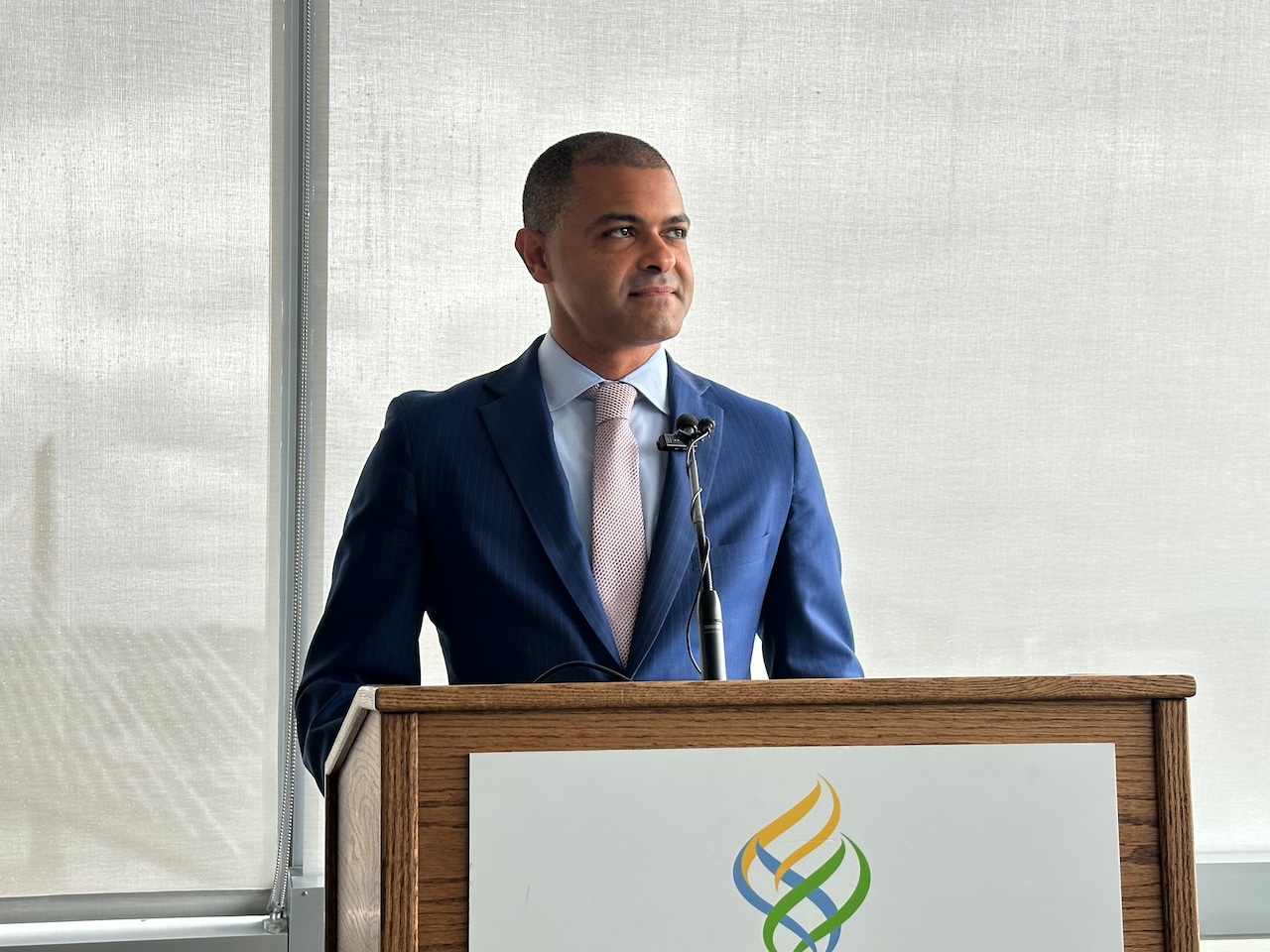
OHSU President Dr. Shereef Elnahal said in a media briefing Wednesday that the change could significantly disrupt the hospital’s cash flow, since it would have to front the full price of costly medications before receiving any reimbursement.
“A lot of our patients rely on Medicare and Medicaid. … We also treat a lot of folks who have no insurance,” he said. “I’m raising this alarm bell because we are in the business of providing that care … and the (340B) program is in place for a reason.”
Hospitals and clinics participating in the 340B program would also face new administrative requirements. To receive rebates for the impacted drugs, they must submit detailed data to manufacturers within 45 days of dispensing a drug. Drugmakers would then have 10 days to issue payments.
The 340B program has become an important revenue stream for OHSU. In the fiscal year ending June 2025, the university earned $480 million from the program — $137 million more than the previous year.
Critics, including drugmakers and some members of Congress, say the program has grown far beyond what lawmakers originally envisioned. They argue that large hospital systems have reaped sizeable profits without always demonstrating how the savings benefit patients.
Participation has expanded sharply in recent years. More than 50 of Oregon’s 61 hospitals, along with over 30 federally qualified health centers, are enrolled. Nationwide, more than half of nonprofit hospitals now take part. Drug purchases through 340B rose from $12 billion in 2015 to $66 billion in 2023, according to federal data.
Supporters say that growth reflects broader changes in health care. Medicaid enrollment increased after the Affordable Care Act, and hospitals expanded into underserved regions.
Still, studies have found that the program’s expansion has contributed to higher health care costs for employers, government programs and taxpayers, prompting renewed calls for more oversight and transparency.
If you purchase a product or register for an account through a link on our site, we may receive compensation. By using this site, you consent to our User Agreement and agree that your clicks, interactions, and personal information may be collected, recorded, and/or stored by us and social media and other third-party partners in accordance with our Privacy Policy.