
Terry Gerton The SBIR program channels federal R&D funding to small businesses with high-risk, high-reward technologies, fueling innovation in areas like defense, health, and energy. Some groups want to pair that reauthorization with reforms to improve oversight and commercialization. Here with one set of proposals is Eric Blatt, executive director of the Alliance for Commercial Technology and Government and a partner at Scale LLP. Mr. Blatt thank you for joining me.
Eric Blatt Thanks so much, Terry. It’s a pleasure to be here today.
Terry Gerton It’s about time to review and reauthorize the Small Business Innovation Research Program. Why do you wanna make sure that that happens?
]]>
Eric Blatt Well, the SBIR program… Is a tremendously important tool for a number of things, including funding nascent high risk technology, but also transitioning that technology to the federal government and particularly to our national security system. So, the SBIR program annually awards about $4 billion a year to startups and small businesses. About half of that is awarded by the Department of Defense, and the DOD uses this program for a number of things, including to identify startups, commercial technology startups, that would not ordinarily think to work with the federal government, but they have technology that has a national security application. And this program provides a great front door entry point for companies to come in, get a contract, start working with the federal government, prove out that that technology can advance our national security, and then contribute to the mission.
Terry Gerton But you represent a company that’s part of a coalition that doesn’t just want to reauthorize SBIR. You wanna make some changes to it. And as I understand it, one of the arguments is that a significant portion of SBIR funding goes to companies that never commercialize their products.
Eric Blatt Yeah, so I represent the Alliance for Commercial Technology and Government. This is a trade association. We have about 75 members. Our members are commercial technology startups that want to come in and work with the government, and they don’t want to come in as sort of dedicated defense contractors. They have products that have real national security applications, and they want to sell their products as products and contribute to national security but also not completely upend the way they do business. They want to sell their product as product. So we do believe that the SBIR program is a fantastic program. Particularly in recent years where we’ve started getting open topics, reducing barriers to entry, making it easier for those types of high performing technology startups to come in and work with the federal government. So we certainly don’t want to see a lapse in the program, however, the program is not perfect. There are real problems in the program. It’s still too hard for new companies to get into the ecosystem. There are barriers to entry. And the other really important category is there are barriers to exit. It’s very difficult for companies to transition their technology and move from these sort of smaller research and development contracts to real procurement contracts where the technology is actually being delivered and actually being used in the real world to make an impact, advance our national security and be commercialized. So, our top goals are to Yes, reauthorize, but also make sure that we are addressing those barriers to entry and those barriers to transition. And yes, it’s true that there are companies in the ecosystem that have for years encountered that resistance, that barrier to transition, and some of the companies have wound up sort of pivoting their business model. So instead of trying to do research and development, turn it into product, and transition it, and build a product around that transition product… what they’ve said is, that’s too hard; I want to just do phase one, and then phase two, and then go back to phase one. And I’m going to do thousands of these research projects, and if the government comes to me and sort of pulls one forward, I’m willing to let them pay me to transition it, but I’m not going to put my own private capital and my own effort into building those transition pathways myself. So we do have some companies in the ecosystem that really haven’t invested in transition and commercialization the way they really should have, and we think that’s a problem.
Terry Gerton Well, one of the recommendations that you all make is calling for a formal phase three program. As you just sort of mentioned, people get stuck in the phase one, phase two, but you would suggest that there’s a particular funding cycle, the phase three cycle, that would help companies get over that valley of death. Explain how that would work.
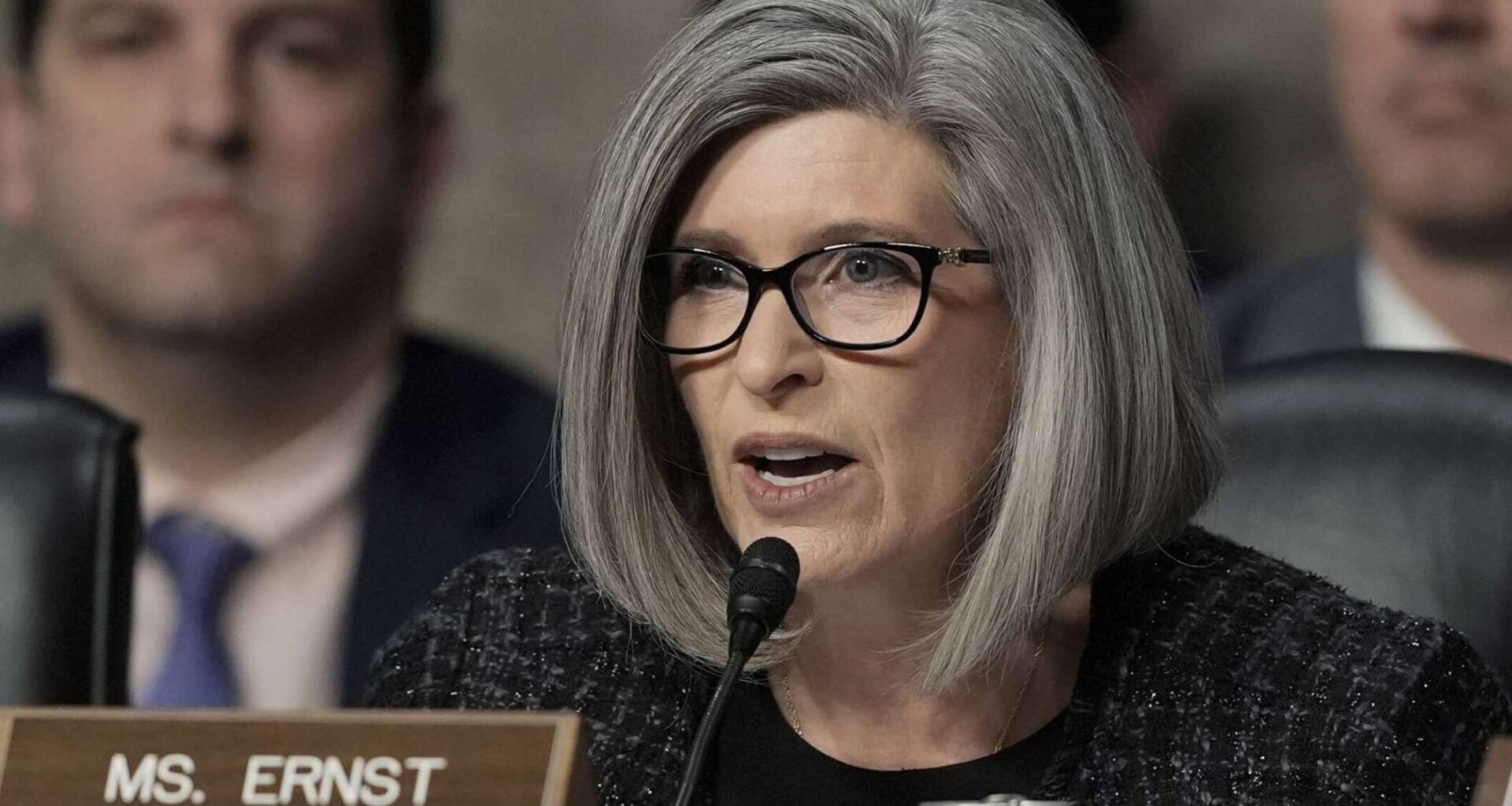
Eric Blatt The SBIR program has been around for about 40 years and there’s phase one and then there’s phase two. There’s something called a phase three, but there really is no phase three program. So we have, you have companies coming in and then they complete their prototyping, the technology works, it solves the government need, but there’s no process on the other end and companies wind up getting stuck. And so we have advocated for a formalized phase three program. The way that that was implemented in the bill text in Sen.[Joni] Ernst’s (R- Iowa) Innovate Act is something called the Strategic Breakthrough program. What the Strategic Breakthrough program does is it allows a company to essentially match. So you go to your customer in whatever component you’re working with, the Air Force, the Navy, the Army, Special Operations Command, whoever it is; you go to your customer and you say, I have technology that I have developed under the SBIR program. Here it is, here’s why it advances your mission — but I know that you have all sorts of pressures on your budget. If you can contribute a certain amount of money, say, if you can buy $5 million of my product, through the Strategic Breakthrough program, I’m going to be able to match that with SBIR funds, the Strategic Breakthrough funds, and potentially also with private capital sources. So you can say, if, you can find $5 million in your budget to purchase this from me, I can actually deliver $20 million of value to you because it’s going to be matched by other funding sources. So that can become a potentially very powerful tool for companies to get across that line and start actually selling their product to that customer that they can support.
Terry Gerton I’m speaking with Eric Blatt. He’s the executive director for the Alliance for Commercial Technology and Government and a partner at Scale LLP. So in addition to that phase three funding proposal that you have, you also emphasize the open topics opportunity. Tell us a little bit more about that and how you think it would benefit the program if it was more widely used.
Eric Blatt Sure, so the open topics, this is an innovation that is coming up on maybe seven, eight years. But, essentially the way the SBIR program had historically worked before the open topics is you would have various folks across the government and say, hey, I have this particular problem that I’m hitting — the bolts on my Joint Strike Fighter are falling out and I need some way to get them to stick in a little bit better. Or, the components on my mine are not working properly, and I want to improve how those are working. And there’s a certain type of company that responds to that… If you are a research and development service contractor that is dedicated to working with the Department of Defense, you’ll comb through all of these narrow, niche-y topics, and you’ll find the ones that interest you. You’ll put it in a proposal, and you will win some percentage of them. But compare that to a commercial technology startup that might be working on high impact technology and AI, cyber security, chips, space technologies, quantum, all of these different areas. If you are one of these companies, you are required by your investors to focus very, very intently on your specific technology domain so that you can create the best technology in the world in that particular field because you have to be able to compete on a global scale. You have to focus very intently. So, if you’re that type of company, you’re not going to come through thousands of topics, the vast majority of which are irrelevant to what you’re doing. What the open topic does is it says, if you have technology that has a credible mission application, you can come in on our solicitation and just tell us. Tell us what the technology is, tell us why it meets a mission application. And if you are persuasive in doing that, you can have a contract and you can start working with us. So that’s what the open topic does. It winds up bringing all these companies in that otherwise wouldn’t contract with the Department of Defense at all and wouldn’t participate in the program at all… In 2022 [as] a requirement, all the agencies were told you have to have at least one open topic. You don’t have to use all of your funding for open topics but you have at at least one. Some of the components since that time have really embraced that. Others have sort eschewed and circumvented that requirement by taking the sort of same niche legacy topic that they would have otherwise used and just appended the word open in front of it. I can give you examples if you’d like. Essentially what that does is it eliminates the open topic and sort of avoids that requirement, and so companies don’t come in. The Innovate Act would propose to fix that by just by providing a clear definition for open topic, which I think should be uncontroversial.
]]>
Terry Gerton That’s really helpful. What are you hearing about Congress’s perspectives on reauthorizing it?
Eric Blatt Everyone I’ve spoken to on the Hill has been clear that they want the program to be reauthorized. The gap is whether we should do a reauthorization with some of the reforms to sort of reduce barriers to entry, improve transition, or whether we just preserve the status quo. We got a little bit of a late start this year, and there has been sort of a central disagreement about sort of that multiple award-winner issue or SBIR-mill issue in terms of, should we be requiring them to commercialize more aggressively? So that’s been the primary blocker. Based on my conversations with folks on the Hill, I think we’re starting to see some progress there. It really took the pressure of that deadline, I think, to sort of bring the sides together. I think people are working earnestly to find a resolution that will keep everyone happy.
Copyright
© 2025 Federal News Network. All rights reserved. This website is not intended for users located within the European Economic Area.