
After weeks away, home hospital employees were “exuberant” to be able to accept patients again, said Heather O’Sullivan, president and chief operating officer of MGB’s Healthcare at Home.
“It’s just absolutely palpable, the excitement and appreciation,” O’Sullivan said.
UMass Memorial Medical Center will begin readmitting patients to its service on Monday. The Worcester hospital plans to slowly admit patients over the next week, starting with up to eight or nine patients the first day.
The home hospital program restart could not be more needed, as many patients are stuck “boarding,” or waiting in the emergency department for hospital beds to open up, said Dr. Constantinos “Taki” Michaelidis, director of Hospital and Home at UMass Memorial Health.
“We’ve actually had a very, very tough October. We’ve had more boarding than we’ve had in almost a year and a half, with close to about 100 patients boarding in the emergency department every day,” Michaelidis said. “So this is a really good time for us to get back up.”
Home hospital programs have become increasingly popular since they were first permitted by the Centers for Medicare and Medicaid Services during the COVID-19 pandemic as a way to ease an acute shortage of hospital beds. The idea is that patients at home can move more freely, take more time to recover, and are exposed to fewer hospital-acquired infections.
The results in the five years since the pandemic have been promising. Because patients are at home, there’s no rush to get them out of an in-demand hospital bed, so data suggest they can spend more time recovering. Hospital-at-home patients were discharged to skilled nursing homes less than 1 percent of the time, while patients in traditional hospital settings were sent to nursing facilities at a rate of 11 percent, according to a report from the Massachusetts Health Policy Commission. The care and costs of treating patients in the hospital and at home are virtually the same.
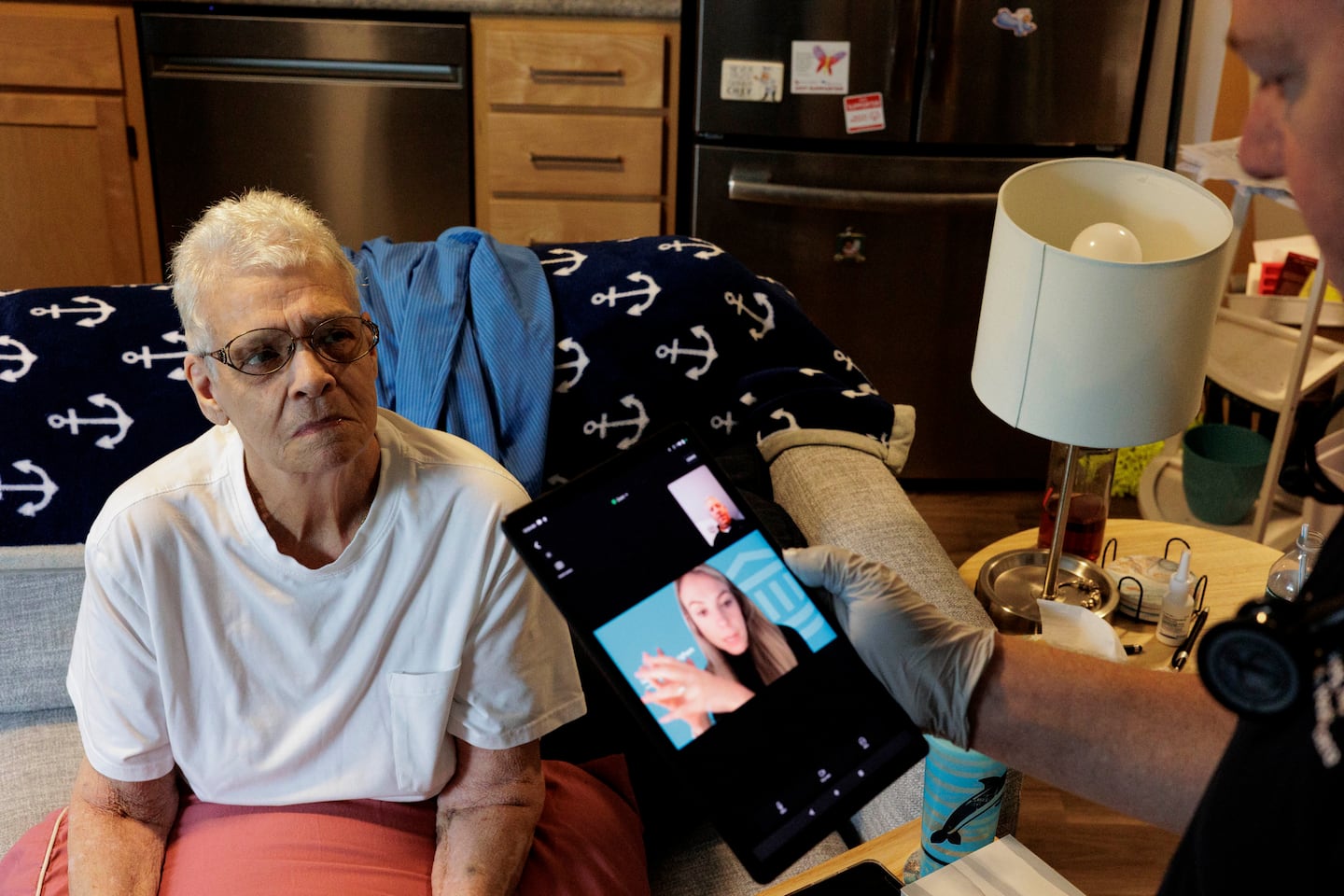
The most significant difference between brick-and-mortar and home hospital care is the physical presence of nurses. Patients at home are seen a few times a day by paramedics and nurses who administer medicines, draw blood, and facilitate video calls between the patient and their doctors. Patients’ vitals are also continuously checked by a remote monitoring system.
While the home hospital program reopening is a welcome reprieve for overburdened hospital systems, it’s not permanent. The waiver extension that allows them to reopen only goes until Jan. 30, leaving just a couple of months for Congress to pass another waiver before the programs would have to close again.
“We want Congress to instill a good dose of confidence in all of us, such that we can all continue to invest in and grow the program,” Michaelidis said. “That’s our real hope.”
Marin Wolf can be reached at marin.wolf@globe.com.