
The use of head CT scans has surged for diagnosing various conditions such as trauma and stroke, even though the procedure carries a known and elevated risk of cancer.
Neurologists at the Yale School of Medicine analyzed a national hospital database and found that the number of these scans performed in emergency departments across the country spiked from 7.8 million in 2007 to nearly 16 million in 2022.
A CT scan is essential for emergencies like stroke, but for other cases, it can be an unnecessary source of harmful radiation and cost.
Repeat CT scans in childhood, at least five and as many as 10 before the age of 15, were shown in a 2012 study to triple patients’ risks of developing leukemia and brain tumors, according to previous research.
The risk of leukemia in children is about one in 2,000, but researchers have concluded that having several CT scans bumps that up to about one in 600.
In fact, CT scans may be linked to five percent of all cancers in the US, according to another research team in California. The risk is three to four times higher than previously thought, especially for children who are the most vulnerable.
Dr Layne Dylla, author of the latest study, said: ‘Head CT scans are a critical tool for diagnosing neurological emergencies, but their growing use raises concerns about cost, radiation exposure and delays in the emergency department.
‘It’s important to balance the benefits of these scans with the risks and costs.’
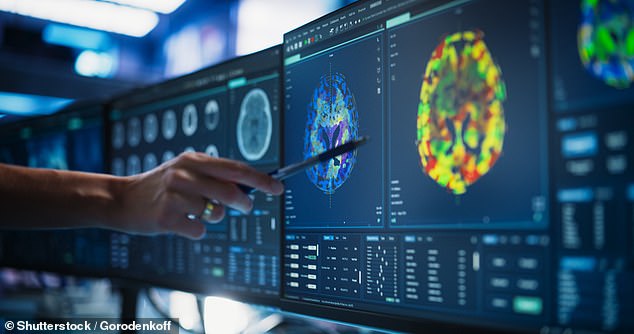
CT head scans are commonly prescribed medical tests used to diagnose neurological issues like head trauma and stroke (stock)
Your browser does not support iframes.
The radiation emitted from a single CT scan isn’t enough to cause cancer, but a history of many CT scans exposes the body to excess radiation that accumulates over time.
Patients 65 and older were the most likely to receive a head CT scan in any given year, with their highest rate reaching 20.6 percent in 2022. They accounted for the largest share of all head CT scans.
Patients over 65 were six times more likely to get a CT scan than younger patients.
Those scanned were far more likely to present with headaches, stroke symptoms, or seizures and were three times more likely to receive a neurological diagnosis.
The study authors added: ‘Notably, the rapid growth in head CT use raises the concern of unnecessary radiation exposure leading to increased cancer rates,’ including brain, thyroid, skin and eye cancers, as well as leukemia and salivary gland tumors.
In the same study that estimated five percent of cancers could be attributed to excess CT scans, researchers posited that CT scans performed on 2.5 million children in 2023 would result in 9,700 cancers.
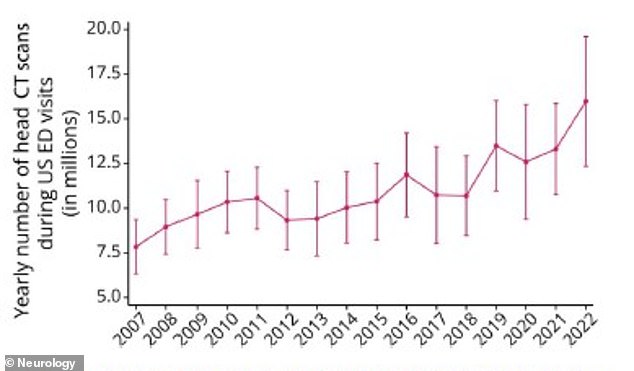
The graph shows the total number of head CT scans in the ED increase from 6.7 percent of all ER visits in 2007 to 10.3 percent in 2022
People 65 years old and older were six times more likely to receive a head CT scan than people younger than 18 years old (stock)
And as researchers identified a tripled risk of cancer in children and teens after repeat CT scans, they found 74 of them were diagnosed with leukemia, while 135 had brain tumors from 1995 to 2008.
Adults aged 50 to 79 are projected to bear the brunt of the radiation-induced cancers from CT scans. The highest number of projected cancers, 93,000, comes from adults aged 50 to 59.
Researchers at the Yale School of Medicine found that the rising rate of CT scans ordered in hospitals across the country shows no signs of slowing.
While seniors were more likely overall to be administered the scans, Black people were 10 percent less likely to get one than white people, potentially putting a large patient population at risk of dangerous misdiagnoses.
Medicaid patients were 18 percent less likely to receive a CT scan, largely because the program’s reimbursements are often below the actual cost of the procedure.
Dylla said: ‘Overall, these results highlight the need for more equitable access to neuroimaging in emergency care and further evaluation of the appropriateness of every head CT according to clinical recommendations.
‘It’s important to recognize the tension between underuse of scans, leading to missed diagnosis, and overuse, resulting in radiation exposure and additional financial and patient care strains on the health care system.’
People who received care in a rural hospital were also 24 percent less likely to receive a head CT scan than those in urban areas.
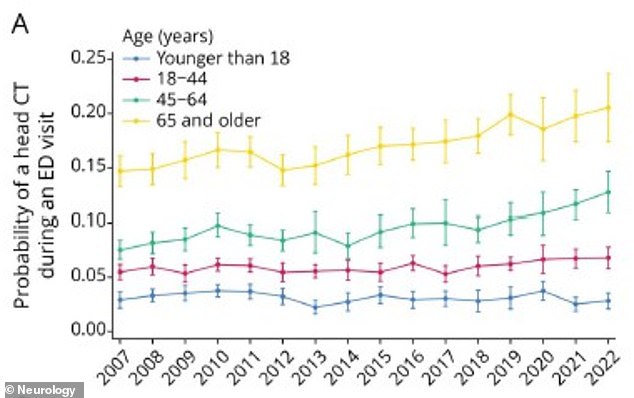
Seniors were the most likely to get head CT scans, peaking at 20.6 percent of all scans in 2022. This age group accounted for the majority, about 36 percent, of all head CTs
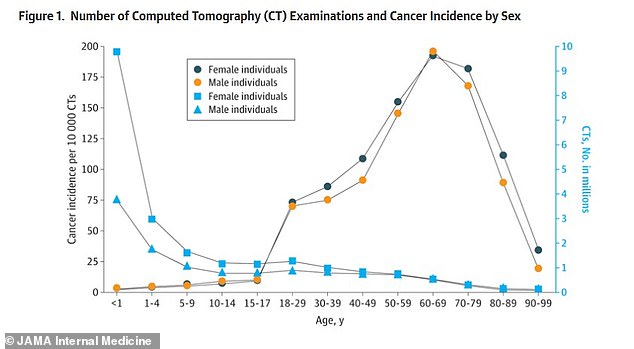
The graph from a Spring 2025 study found that the cancer risk from a single CT scan is highest for infants, the sheer number of scans performed on adults means they account for most future cancer cases. Adults aged 50-59 are projected to have the highest number of cancers
Unnecessary CT scans are common in the US, and up to one-third of scans are deemed medically unnecessary, often to confirm and reconfirm what doctors already know.
A CT scan is a valuable tool, but it should only be used when the benefits of diagnosis clearly outweigh the potential risks of radiation exposure.
If the scan will not alter a patient’s course of treatment, it is probably not needed. The doctor can also determine if an MRI or ultrasound, which do not use radiation, could be a suitable alternative.
The latest study was published in the journal Neurology.