
The Windup Newsletter ⚾ | This is The Athletic’s MLB newsletter. Sign up here to receive The Windup directly in your inbox.
Will there be a Class of 2026 in the Hall of Fame? Plus: qualifying offers are settled in record fashion, the Orioles could pursue Kyle Tucker and we ask: Why would baseball want to wreck its good momentum? I’m Levi Weaver, here with Ken Rosenthal — welcome to The Windup!
Anyone? Let’s talk Hall of Fame
Earlier this month, we weighed in on the Contemporary Era Hall of Fame ballot, which features Barry Bonds, Roger Clemens and others. Now let’s take a look at the “normal” ballot, which features 27 players and a few interesting storylines.
The biggest question in my mind is twofold:
Will anyone be elected? There was no intrigue about this the last couple of years. Ichiro Suzuki (2025) and Adrián Beltré (2024) saw to that. This isn’t the seven-year stretch from 2014-2020 in which one no-doubt Hall of Famer became eligible. The question is: Is this going to be more like 2023 — when Fred McGriff (Eras Committee) and Scott Rolen (BBWAA voters) made it in — or 2021, when voters collectively said “Ehhh, we’re good” and elected nobody?
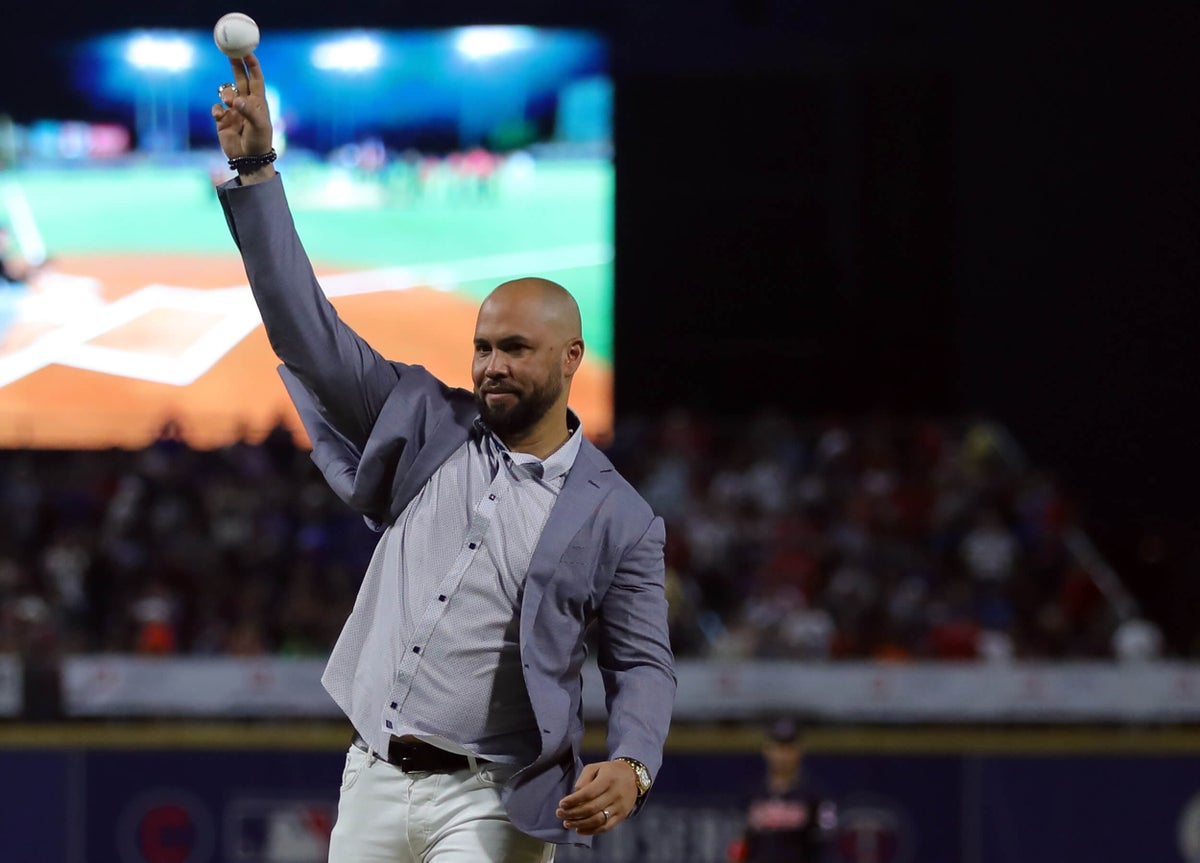
If anyone … Beltrán? The guy I think has the best shot at induction (at least from the BBWAA vote) is Carlos Beltrán. His numbers are certainly good enough. Take a look at his most similar hitters on Baseball Reference:

That’s eight Hall of Famers, Luis Gonzalez and Gary Sheffield. And that list doesn’t take into account Beltrán’s defense (three Gold Gloves) or speed (312 stolen bases).
Of the 47 players with more career home runs — Beltrán has 435 — 30 are in the Hall of Fame, four are not yet eligible and the remaining 14, well … take a look at the list and all will be illuminated.
For Beltrán, the biggest obstacle to his induction has likely been his role in the trash can scandal of the 2017 Astros. But his vote totals climbed each year, and he crested the 70 percent mark last year.
Andruw Jones also has a case. I’ll let you read Jayson Stark’s column for more on Jones — and the various storylines surrounding this year’s ballot.
Also, Tyler Kepner has the rundown on the 12 first-time members of the ballot, including Cole Hamels, Ryan Braun and the guy who is the answer to my new favorite baseball trivia question: In the 2010s, Robinson Canó got more hits than any other player. Who got the second-most? (Answer in Handshakes and High Fives.)
Ken’s Notebook: Baltimore could pursue Kyle Tucker
From my latest notes column with Will Sammon:
Even after acquiring Taylor Ward in a stunning trade Tuesday night, the Orioles are not necessarily set in their outfield. They still could upgrade in center over Colton Cowser and Leody Taveras. And though Ward will play left with Tyler O’Neill and Dylan Beavers potentially alternating in right, club officials are not ruling out a pursuit of right fielder Kyle Tucker, the top hitter on the free-agent market.
Pitching, both starting and relief, remains Baltimore’s top priority, according to sources briefed on the club’s plans. If the Orioles landed Tucker, their thinking would be: make him the anchor of a still-mostly youthful lineup, then figure out the rest.
The trade of right-hander Grayson Rodriguez to the Angels for Ward does not alter the Orioles’ pitching equation. They still want to acquire a starter to complement Trevor Rogers and Kyle Bradish at the top of their rotation, a closer to replace Félix Bautista, who underwent shoulder surgery last August, and additional bullpen help.
Stocked with infielders, the Orioles are not expected to pursue Bregman. Tucker and Valdez are more logical targets. The challenge for Elias will be outbidding teams from larger markets for top-end talent, whether it’s those players or others on the open market. But some of those teams aren’t thrilled with the quality of this free-agent class, perhaps giving Elias an opening
Qualifying Offers: Who’s sticking around?
The deadline to accept or decline qualifying offers was 4 p.m. ET on Tuesday. Of the 13 players with QOs, four — Trent Grisham (NYY), Shota Imanaga (CHC), Gleyber Torres (DET) and Brandon Woodruff (MIL) accepted. It was a record high.
A quick refresher: A QO is a way for teams to tell a potential free agent, “Hey, why don’t we give this one more year before you really test the waters?” The amount is different every year, as it is the average of the league’s top 125 salaries. This year, that figure is $22.025 million.
Not every player can be given a QO. First, the player must spend the entire previous season with the team making the offer (so, for instance, anyone acquired via trade midseason would be ineligible). Second, a player can get one QO in their career. That’s it.
If a player declines, the team that offered it is entitled to draft-pick compensation — though where the pick falls depends on a team’s payroll (here’s an explanation). The team that signs them loses its second-highest pick (or third-highest, or second-and-fifth highest — again, it depends on payroll) in the following draft.
The nine others who now join the free-agent pool are: Bo Bichette (TOR), Dylan Cease (SDP), Edwin Díaz (NYM), Zac Gallen (ARI), Michael King (SDP), Kyle Schwarber (PHI), Ranger Suárez (PHI), Framber Váldez (HOU) and Kyle Tucker (CHC).
CBA Talks: How much does payroll disparity matter?
Evan Drellich had a great story on Tuesday that I think really gets to the heart of the looming CBA negotiations between the league and the union. The topic that keeps coming up here is the salary cap.
The league’s argument is, well, I’ll just pull a section of Evan’s article:
(T)his year, a top-10 payroll club won the World Series for a fourth consecutive year, and the sixth time out of the last seven seasons. A bottom-15 market hasn’t won since the Kansas City Royals in 2015.
In that same period, MLB said that a combined 15 bottom-half teams by market size have won in the NFL, NBA and NHL. And payroll disparity, which the league defines here as the ratio of top-five to bottom-five payrolls, is 4.7, “the largest on record, dating back to 1985,” per MLB.
The union’s argument, again from Evan:
The union took umbrage with those calculations, however, because they’re based on salary figures that include what teams pay in luxury tax — the additional money they have to pay to exceed certain salary thresholds. This year, for example, the Dodgers totaled $509 in MLB’s calculation, with $168 million of that being paid to competitive balance tax.
“Those numbers are misleading on their face because they include as ‘payroll’ luxury-tax amounts that are not paid directly to players on those teams,” the Players Association said in a statement. “In fact, about half of the luxury tax proceeds are rerouted directly to small-market clubs as a form of revenue sharing. And the other half are used to fund benefits for players on all 30 teams.”
The union noted that since 2000, MLB has had 16 teams win a championship, compared to 14 in the NHL, 13 in the NFL and 12 in the NBA. Although the NBA and NFL have had caps for decades, 22 active teams still haven’t won a championship between those two sports, including several small-market clubs, the union added.
It should be noted that implementing a salary cap would also boost the value of franchises. Which would be nice for the owners, since the average price of an MLB franchise has only grown by about 782 percent over the last 20 years — from $332 million in 2005 to $2.59 billion in 2025.
It seems awfully short-sighted to squeeze for even more value, especially given how well the sport is doing in recent years, and how work stoppages impact the fans’ relationship to the sport. Does nobody remember 1994?
Handshakes and High Fives
It was a near billion-dollar blunder. But MLB’s Rob Manfred struck new TV deals with ESPN, NBC and Netflix.
New Nationals manager Blake Butera might be young at 33, but David Aldridge asks: What do the Nats have to lose?
Tyler Skaggs’ widow and mother gave testimony in the ongoing wrongful death suit against the Angels.
Japanese free-agent pitcher Tatsuya Imai was officially posted. He’s ranked No. 10 on our free agency Big Board.
And the answer to our trivia question: Nick Markakis. (No, I wouldn’t have gotten it either.)
On the pods: “The Roundtable” discusses how much the game has changed in the last 10 years.
Most-clicked in Monday’s newsletter: The All-MLB team.
📫 Love The Windup? Check out The Athletic’s other newsletters.