
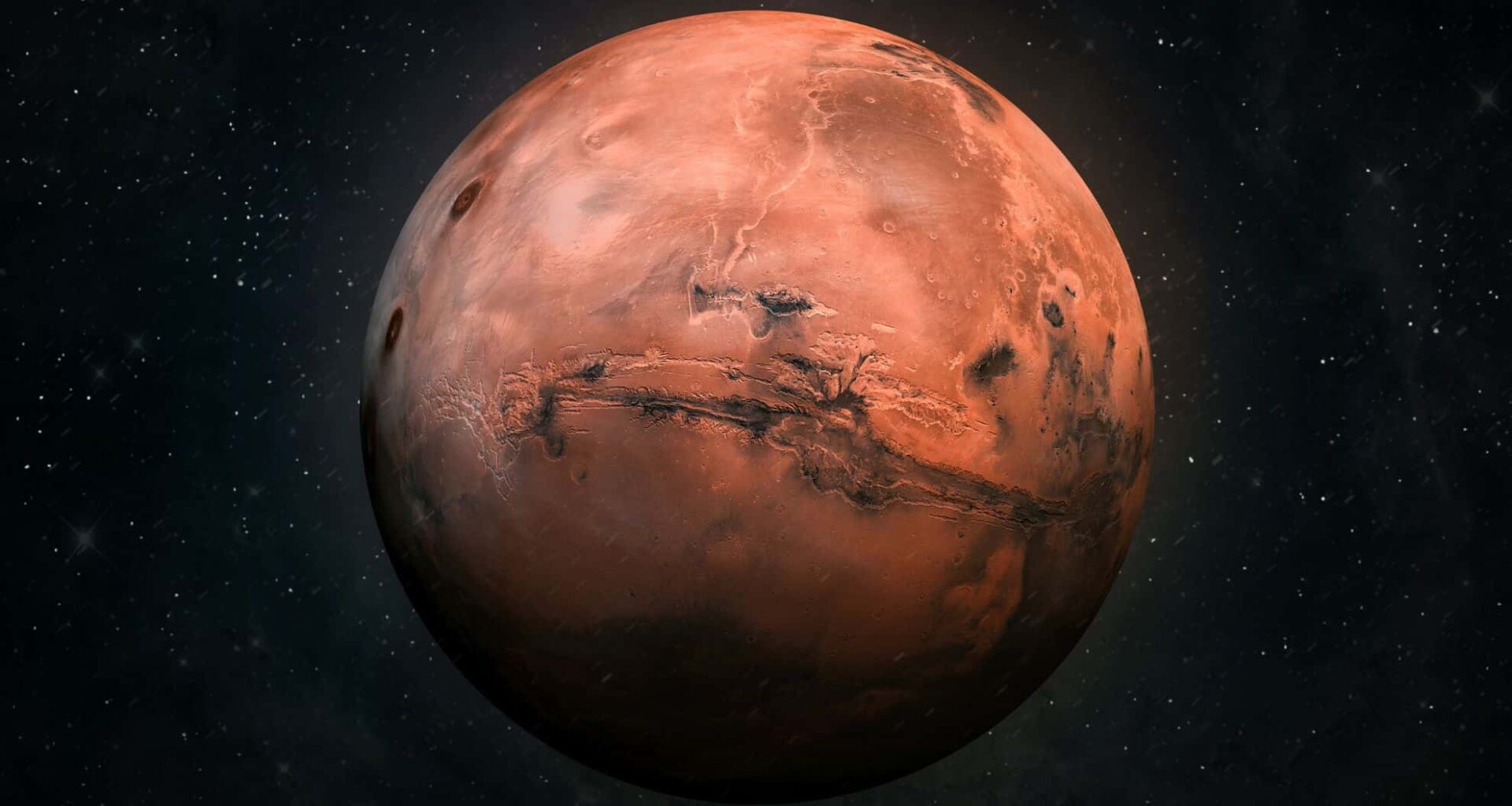
Mars’s Coloe Fossae region, previously little studied in such detail, is now providing important clues to the planet’s climatic past. As researchers delve deeper into the data from ESA’s Mars Express mission, these new images have shed light on the once cold, icy expanses of Mars that are now frozen in time. The evidence supports theories that Mars’s climate has fluctuated over the millennia, possibly through cycles driven by changes in its axial tilt.
Unveiling Ancient Glaciers on Mars
One of the most striking features visible in the new images is the lineated valley fill, a surface structure found in valleys, and concentric crater fill in impact craters. These formations were created by glaciers that carried mixtures of ice and debris, flowing slowly across the Martian surface. This process is remarkably similar to glacial activity on Earth, where ice masses carve out valleys and deposit debris as they move. According to the European Space Agency (ESA), these patterns indicate that Mars was once much colder and experienced icy flows much farther from the poles than it does today.
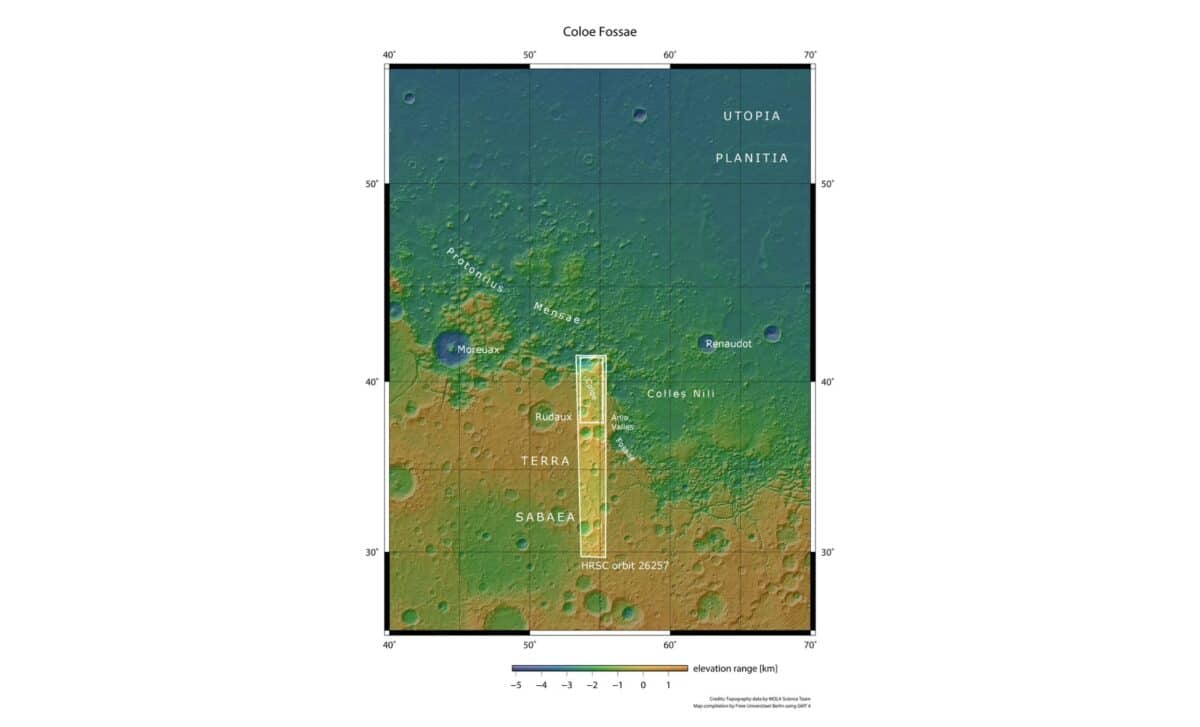 Map of Coloe Fossae ©ESA
These glacial remnants suggest that Mars experienced significant climate fluctuations, likely influenced by the planet’s axial tilt, which varies over time. During colder periods, ice from the poles would spread across the mid-latitudes, leaving behind traces of its presence, like the ones found in the Coloe Fossae region. These ice flows appear to have been covered by layers of rock, preserving the evidence for millions of years.
How Mars’s Axial Tilt Shaped Its Climate
Mars’s current climate is dry and harsh, but this hasn’t always been the case. Changes in the planet’s axial tilt, how much its axis tilts relative to its orbit around the Sun, are believed to have driven these cycles of freezing and melting. The tilt of Mars’s axis is unstable, fluctuating much more than Earth’s, which leads to significant shifts in the planet’s climate. According to ESA, during periods of higher axial tilt, the ice on Mars would spread from the poles into mid-latitudes, as seen in the Coloe Fossae area. When the tilt decreased, the ice would retreat back toward the poles, leaving clear evidence of its past movements.
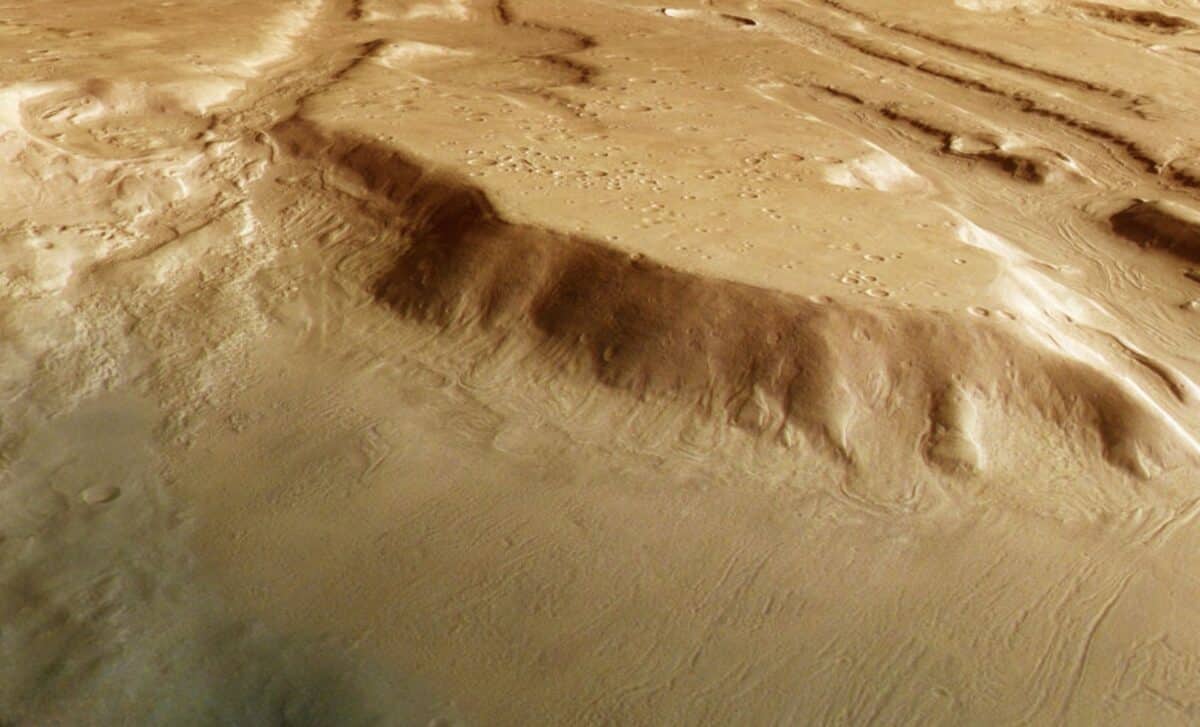 Bird’s-eye view of Coloe Fossae ©ESA/DLR/FU Berlin
The ice sheets and glaciers that once covered Mars’s surface are a testament to the planet’s changing climate. The preserved glacial patterns in the Coloe Fossae region highlight the ongoing impact of these climate cycles, revealing a Martian history much more dynamic than the planet’s current arid, frozen state.
Impact of Mars’s Ice Ages on Its Landscape
The Coloe Fossae region’s surface features, such as deep valleys and craters filled with ice debris, show the lasting effects of Mars’s ice age. These landscapes were shaped not only by glaciers but also by tectonic activity and impacts from space debris. The region marks a transition from the highlands to the lowlands of Mars, with striking topographical features that reveal both geological and climatic forces at play.
Impact craters found throughout the Coloe Fossae area are key indicators of the region’s age and its geological activity. These craters, ranging from well-defined to eroded, suggest that while some parts of Mars’s surface are ancient, others are much younger. The distribution of these craters and the visible ice flow patterns provide scientists with valuable data about the timing of these glacial events and the forces that shaped the landscape over time.
Through the high-resolution images provided by ESA’s Mars Express, researchers have been able to uncover these ancient traces of glacial activity, offering a more complete understanding of Mars’s climatic evolution. The data from the Coloe Fossae region not only enriches our knowledge of the planet’s past but also informs future exploration missions, helping scientists predict how the Martian environment might change over time.