
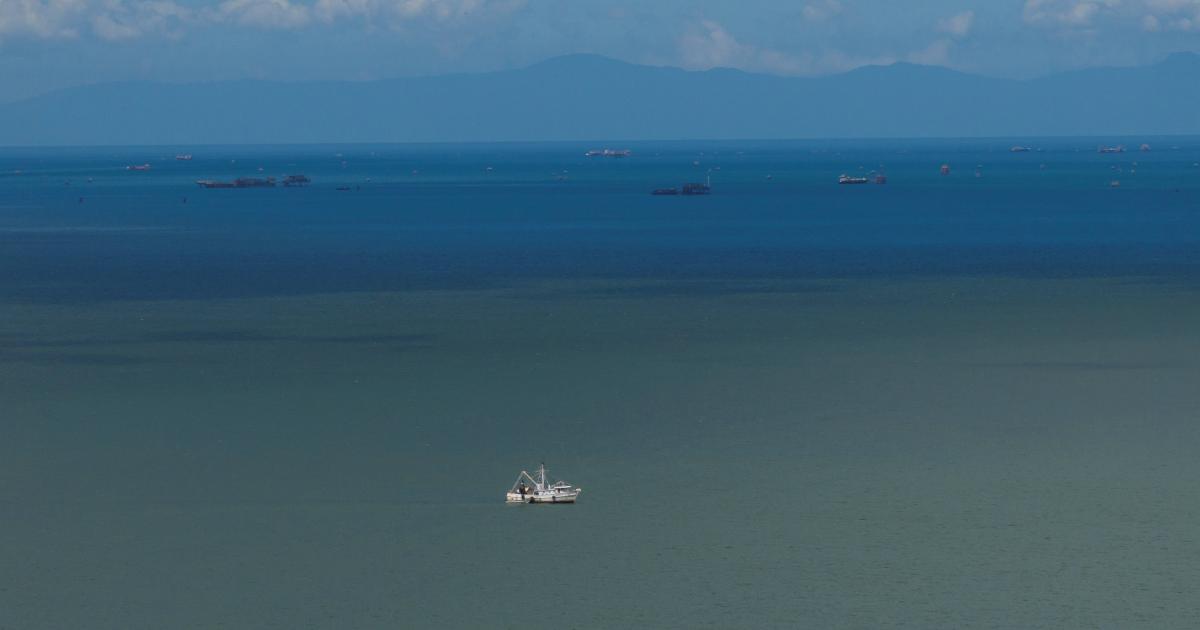
Since September, the Trump administration has conducted over 20 lethal strikes on vessels in the Caribbean and the eastern Pacific, alleging that the boats were carrying drugs from South America. The administration is attempting to cloak these maritime strikes in the guise of counterterrorism efforts, labeling the victims as narcoterrorists and equating the drug cartels to supposed terrorist organizations. And many Americans, who may be inured to lethal drone strikes and targeted killings after two decades of U.S. government action against Islamic militants, might simply regard the Trump administration’s boat attacks as more of the same.
In reality, however, they are a new and dangerous development in the use of force. Beyond the human toll—more than 80 individuals have been killed without due process over three months—and the risk that the strikes are a prelude to a direct U.S. military intervention in Venezuela, they signal a broader threat to security at home and abroad. The administration, by asserting its prerogative to use military force—not only without congressional authorization but also seemingly outside the law altogether—is tearing down the legal guardrails around the will of the U.S. president.
These attacks endanger the legal order both domestically and internationally. They suggest that the U.S. executive holds a license to kill—one that could potentially be wielded within U.S. borders. And internationally, this killing campaign damages the legal barriers that the United States itself helped build in order to restrain conflict and deadly violence. The United States’ turn against the law may well embolden other states to imitate it, possibly even by conducting their own extrajudicial killings. As Trump wields deadly force without constraints, he offers a model for lethal, lawless action, thereby posing a threat to international security that extends well beyond the Western Hemisphere.
WAVES OF TERROR
The Trump administration has repeatedly attempted to shoehorn its killing spree at sea into the framework of the U.S. war on terror, deploying terms such as narcoterrorists and “designated terrorist organizations” to characterize the individuals and entities it is targeting. Secretary of Defense Pete Hegseth has gone as far as to refer to these DTOs as the “Al Qaeda of the Western Hemisphere.” But as a legal matter, the maritime strikes are utterly distinct from the United States’ prior military campaigns against Islamic militants. On 9/11, the United States suffered an armed attack on its soil, which under international law gave it a right to self-defense. In response, in a resolution passed on September 12, 2001, the UN Security Council recognized that right. The United States has endured no similar attack to prompt this year’s maritime strikes, and neither the UN Security Council nor the broader international community has recognized the United States’ need to use lethal military force in response to drug trafficking. Indeed, in a 2023 congressional hearing, Richard Visek, then the top lawyer for the U.S. Department of State, noted that the State Department has never considered drug trafficking to constitute an armed attack. But the current Trump administration has simply asserted that, according to the president’s determination, there has been an armed attack against the United States. The administration has not publicly offered any analysis to substantiate that conclusion.
And unlike after 9/11, Congress has not authorized the use of military force. Within a week of the 9/11 attacks, Congress passed the 2001 Authorization for the Use of Military Force (AUMF), which empowered the president to “use all necessary and appropriate force against those nations, organizations, or persons he determines planned, authorized, committed, or aided the terrorist attacks.” Because the perpetrators’ identities were not fully known in the immediate aftermath of 9/11, that joint resolution delegated authority to the president to determine their identities. But crucially, it granted the executive branch only the freedom to pursue military action to “prevent any future acts of international terrorism against the United States” by those responsible for the 9/11 attacks.
Multiple U.S. presidents stretched and abused the 2001 AUMF to pursue new adversaries, including entities such as al-Shabab, an Islamic militant group in Somalia, which did not exist in September 2001 and which posed little direct threat to the United States. But the Trump administration has gone further, conducting its maritime bombing campaign entirely unilaterally and without seeking or referring to any congressional authorization for justification, including the AUMF. Instead, it has invoked the president’s authority as commander in chief of the U.S. military under Article 2 of the U.S. Constitution. The administration’s full legal rationale for using military force without a congressional authorization has not been made public. But according to The New York Times and other sources, an undisclosed Department of Justice opinion composed over the summer interprets this supposed Article 2 authority as permitting the president to use force against 24 DTOs—the narcoterrorists it claims to be striking. But the administration has also not publicly named the specific DTOs on the list.
Further, unlike during the post-9/11 military operations against al-Qaeda and its affiliates (and later the Islamic State, or ISIS), the United States is not currently in an armed conflict with drug cartels. Under international law, including as it has previously been applied by the U.S. government, for a state to engage in an armed conflict with a nonstate actor, that actor must possess military-type hierarchy, organization, and capabilities—in other words, it must be an “organized armed group.” The unreleased Department of Justice opinion, according to reporting by The New York Times, concluded that the United States was engaged in a “non-international armed conflict” based on the White House’s own factual assertions. But the administration has not publicly explained how any of the unspecified DTOs it is targeting qualify as organized armed groups.
The DTO label used in the Justice Department opinion appears to differ from the “foreign terrorist organization” designation, one with an established meaning in U.S. law and that the Trump administration applied to a number of gangs and drug cartels earlier this year. But if the groups on the DTO list are similar or the same as the FTOs it has already called attention to, then the legal conclusion that the United States is somehow in an armed conflict with these entities appears unfounded. Some of the groups to which the administration has referred in public remarks and social media posts, such as the Venezuelan gang Tren de Aragua, lack the hierarchy and organization needed to constitute an organized armed group with which the United States could fight an armed conflict. Moreover, the administration generally has not asserted that it is attacking the unnamed DTOs themselves. Instead, in reports to Congress and in social media posts, it refers loosely to striking vessels somehow “affiliated” with or operated by these organizations. According to reporting by the Associated Press and other outlets, as well as personal communications I have had with International Crisis Group analysts living in the region, it is unlikely that cartel members have actually been aboard many of the targeted vessels.
LAW AND DISORDER
To many legal experts, Trump’s boat strikes are patently unlawful. A range of former U.S. government lawyers, both civilian and military, who have advised on the use of force have publicly characterized the strikes as unlawful killings under both domestic and international law. The call may also be coming from inside the house. According to NBC News, the top lawyer at the U.S. Southern Command, the combatant command responsible for the region in which the strikes are occurring, warned in August that the maritime attacks could amount to extrajudicial killings and therefore result in legal exposure for the U.S. military personnel involved. In addition, Admiral Alvin Holsey, the officer in charge of U.S. Southern Command, announced after the bombing campaign began that he was leaving the position, a decision linked by The New York Times to Holsey having “raised concerns about the mission.”
International experts—including scholars, UN special rapporteurs, and the UN human rights chief—have also denounced the attacks as illegal, with some labeling the strikes as extrajudicial killings. A former chief prosecutor for the International Criminal Court even characterized the strikes as a crime against humanity—a grave offense involving widespread or systematic attacks on civilians. Close U.S. allies and partners also view the strikes as illegal. The French foreign minister, for instance, announced ahead of the recent G-7 foreign ministers’ meeting that U.S. military operations in the Caribbean “violate international law.” And according to reporting in CNN in early November, the United Kingdom has restricted intelligence sharing with the United States because it regards the maritime strikes as unlawful and seeks to avoid complicity, a decision of particular significance given the historically close military and intelligence relationship between the two countries.
Such retreating steps by the United States’ closest friends should raise red flags. During previous administrations, representing both parties, the U.S. government has engaged in legal diplomacy with its allies, conducting regular interagency legal discussions on issues related to counterterrorism. Through such diplomacy, the United States has explained its legal rationale for using force, including for targeted killings, and sought to convince allies and partners—particularly those who cooperated in military operations against al-Qaeda and ISIS—that such actions were lawful. American allies are therefore well aware of the United States’ long-standing positions with respect to lethal counterterrorism action. Even if they have not always agreed with the U.S. interpretation of international law, those allies are well positioned to judge just how much of an aberration these strikes are compared with the United States’ past legal positions.
LICENSE TO KILL
The strikes provide an alarming indicator of how the current U.S. government is approaching legal constraints, including those guiding matters of life and death. On their face, premeditated killings of this nature, without legal justification, constitute serious federal crimes, including murder on the high seas, conspiracy to commit murder outside the United States, and murder as an offense under the Uniform Code of Military Justice.
U.S. Secretary of State Marco Rubio discredited the potential justification of self-defense when he acknowledged after the first strike in September that the U.S. government could interdict vessels—intercept and search them—rather than strike them. But he said that the U.S. president deliberately chose to blow up the vessels in order to send a message. Although the administration’s official legal position is that the United States has supposedly suffered an “armed attack” and is engaged in “non-international armed conflicts,” it is telling that senior administration officials do not use those terms when discussing the strikes. In fact, Trump himself simply refers to “killings.” And the president appears to find some delight in the transgressive nature of the operations, publicly joking at an October press conference that they were instilling fear in fishermen. Whatever questionable attempts the administration is making to provide legal justification for these premeditated killings, in reality the Justice Department opinion cited in The New York Times serves as a permission slip for broad executive action, allowing the president to act on his whims no matter how violent or lawless.
An alternate factual and legal reality is taking shape within the U.S. executive branch—one in which otherwise illegal killings are not only permissible but obligatory because the president has ordered them. The bombing of these boats reveals that top officials in the U.S. government now believe that the law must be bent to the president’s will, not the other way around. Having established that the executive branch’s lawyers will bless such strikes and that the U.S. military will execute them, the administration is paving the way for further unconstrained military action. Given the number of countries that Trump has mused about attacking, the list of foreign targets is concerningly long. And ominously, in public statements the administration has applied the same “terrorist” label it uses for the victims of its boat strikes to immigrants and domestic political opponents, raising the prospect that Trump could use his supposed license to kill within U.S. borders.
FOLLOW THE LEADER
As troubling as the possibility of lethal domestic military action is, the U.S. strikes also risk degrading security globally. In the wake of World War II, the United States led the way in creating and maintaining the legal architecture intended to restrain deadly violence—an architecture that includes the UN Charter’s prohibition on the use of force, the Geneva Conventions and other customary laws of war that protect victims of armed conflict, and human rights treaties such as the International Covenant on Civil and Political Rights and the Convention Against Torture. The United States also played a central role in establishing international courts to enforce these rules, including to hold perpetrators of atrocities accountable at Nuremberg in the 1940s and, in the 1990s, in the former Yugoslavia and Rwanda. Certainly, the United States has not always been a reliable pillar of this international order; its notable violations include the Iraq war, the George W. Bush administration’s torture program during the “war on terror,” the unwillingness to enforce legal restrictions on military support to Israel amid the recent carnage in Gaza, and the current president’s shifting threats to unlawfully attack countries from Denmark to Nigeria. But rather than acting as a hypocrite, as it sometimes has in the past, the U.S. government has graduated to behaving as a shameless scofflaw.
That risks emboldening other countries that, in the past, might have hesitated to commit such blatant abrogations of international law to follow in the United States’ footsteps, taking their own military actions to serve domestic or foreign policy agendas. The unchecked use of force by the U.S. executive may diminish the inhibitions of other leaders with their own lethal designs. Indeed, Trump’s own actions may have been inspired by other foreign leaders’ killings. During his first term, Trump praised China’s executions of drug dealers and applauded President Rodrigo Duterte’s violent counternarcotics campaign in the Philippines, which may have killed thousands. It is not hard to imagine other leaders taking inspiration from the administration’s lethal escapades, particularly if those responsible for the slayings at sea face no repercussions.
Beyond the danger of direct inspiration, these strikes erode the broader frameworks built to check deadly violence. The Trump administration may intend for these premeditated killings to send a message to drug traffickers, but the message sent to other countries is that the United States is willing to brazenly flout the legal restraints on the use of lethal force. If the world’s most powerful country is seen to be disregarding both international law and its own domestic statutes, it risks further undermining the very legal order it built and encouraging transgressive behavior by others. The impetus to imitate the United States’ rule-breaking may arise not only in illiberal states but also potentially among other Western democracies. The norms, international reputational concerns, and fear of sanctions which encourage compliance with international law are likely to be degraded when the world’s superpower behaves lawlessly. By redefining what constitutes an “armed attack” that entitles a country to use force in the name of self-defense, the Trump administration risks creating a dangerous loophole in the prohibition on the use of force—what has previously functioned as a ban on war. In reframing crime as an act of war and alleged criminals as terrorists in order to justify premeditated killings, the U.S. government is providing a template for other countries to execute politically disfavored individuals without due process. This is a recipe for violence.
TROUBLED WATERS
Even if the Trump administration winds down its maritime bombing campaign, the strikes may serve as proof of concept for how a president’s lethal desires can be translated into action, regardless of the law. Trump continues to contemplate moving from strikes at sea to strikes on land, including recent commentary about ground-based military action not only in Venezuela but also in Colombia and Mexico. If any guardrails remain to prevent the president from making good on such unlawful military musings, they are unlikely to be the lawyers within the executive branch.
Some in Congress, and in the American public, may be willing to excuse the killings of purported drug smugglers. But they should not be so blasé about the lethal use of force without any serious legal justification. The barrier between these strikes and premeditated, extrajudicial killings elsewhere is weak, bordering on nonexistent. And without stronger pushback from the legislative branch, the White House may wield this lethal prerogative against other targets.
There have already been bipartisan efforts in Congress to halt the administration’s killing spree, including a resolution that would have required congressional authorization for any further military action. But the legislation did not pass the Senate, and it does not appear to have deterred the White House. More lawmakers, and the citizenry more broadly, need to recognize the stakes and rein in the president’s supposed lethal prerogative, including by advancing further legislation that signals strong political opposition to the administration’s actions.
A continued failure to check the U.S. executive’s lethal military action not only risks additional premeditated killings by this administration but also may well inspire other leaders around the world to kill outside the law. The United States’ transition from a law builder and sustainer, however flawed and hypocritical, to international scofflaw is more dangerous than many observers may think. Although the international legal order designed to prevent conflict and restrain violence has been far from fully effective, further undermining it invites even greater global bloodshed.
Loading…